


Outdoor Cupboard Waterproof: The Non-Negotiable Standard for Safe Energy Storage
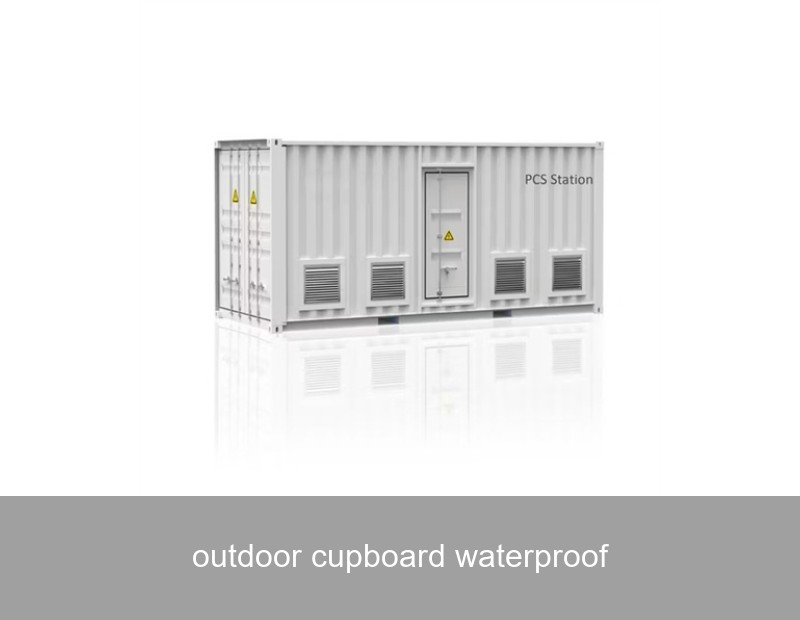
Imagine this: you've invested in a sleek battery system to power your business, store your solar energy, or provide backup for your home. The installer suggests placing it outside to save valuable indoor space. It sounds practical. But then, you think about the relentless autumn rain, the heavy winter snowmelt, or the humid summer air. A critical question emerges: Is my outdoor storage cupboard truly waterproof? This isn't just about keeping the box dry; it's about safeguarding a significant investment and ensuring uninterrupted, safe power. The shift towards decentralized energy, especially in Europe and the US, is pushing battery storage systems outdoors. The "outdoor cupboard waterproof" specification has thus moved from a nice-to-have feature to the absolute cornerstone of system reliability and safety.
The Hidden Challenge: When Outdoor Storage Meets Modern Energy
The trend is clear. A 2023 report by Wood Mackenzie highlighted that outdoor commercial and industrial energy storage deployments in Europe grew by over 75% year-on-year. Homeowners, too, are seeking space-saving solutions. The appeal is obvious: it frees up garages and basements, simplifies installation, and can improve thermal management. However, the outdoor environment is an unforgiving testing ground. An outdoor cupboard isn't just a metal box; it's the first and most critical line of defense for sensitive power electronics, lithium-ion batteries, and intricate monitoring systems against water ingress.

Image Source: Unsplash - An outdoor energy storage unit must withstand various weather conditions.
What Does "Outdoor Cupboard Waterproof" Really Mean for Energy Systems?
Let's get specific. In engineering terms, waterproofing is quantified by the Ingress Protection (IP) rating, an international standard (IEC 60529). For outdoor energy storage, the discussion starts at IP65 and goes upwards.
| IP Rating | Protection Against Solids | Protection Against Liquids | Suitability for Outdoor Energy Storage |
|---|---|---|---|
| IP54 | Dust protected (limited ingress) | Water splashes from any direction | Inadequate. Only for sheltered, covered locations. |
| IP65 | Dust tight | Low-pressure water jets (6.3mm nozzle) | Good. For general outdoor use, resistant to rain and weather. |
| IP66 | Dust tight | Powerful water jets (12.5mm nozzle) | Excellent. For exposed sites, coastal areas, or places with heavy driving rain. |
| IP67 | Dust tight | Immersion up to 1m for 30 minutes | Superior. Protects against temporary flooding or submersion. |
But here's the insight from Highjoule's nearly two decades of field experience: a true outdoor cupboard waterproof solution goes beyond the IP rating on paper. It's a holistic system encompassing material science, sealing integrity, thermal management, and corrosion resistance. A cabinet might survive a direct spray test (IP65/66) yet fail over five years due to UV degradation of seals, condensation buildup inside, or corrosion at weld points.
The High Cost of a Leak: Consequences of Waterproofing Failure
The risks are far more severe than a simple malfunction. Water ingress in a battery energy storage system (BESS) can lead to a catastrophic cascade of failures:
- Electrical Faults & Fire Risk: Water conducts electricity. It can cause short circuits, arcing, and potentially lead to thermal runaway in lithium-ion batteries—a dangerous, self-sustaining fire.
- Corrosion & Premature Aging: Moisture accelerates the corrosion of electrical connections, busbars, and internal components, leading to increased resistance, heat generation, and system failure.
- Voided Warranties: Every major battery and inverter manufacturer will void warranties if their equipment is installed in an environment not meeting specified protection levels. A leaky cupboard can invalidate tens of thousands in warranty coverage.
- Downtime & Revenue Loss: For a business relying on storage for peak shaving or backup power, a water-induced failure means unexpected downtime and lost revenue.
Engineering Mastery: Building a Truly Waterproof Outdoor Energy Cupboard
So, what separates a weather-resistant box from a purpose-built outdoor energy fortress? At Highjoule, our engineering philosophy is based on layered protection:
- The Foundation: Materials & Construction. We use marine-grade aluminum or galvanized steel with powder-coating finishes resistant to UV rays and salt spray. Seams are continuously welded or use specialized gasketed joining systems.
- The Seal: Gasketry & Penetration Management. High-performance EPDM or silicone gaskets on doors and access panels are designed for a wide temperature range (-40°C to +120°C). All cable entries use IP68-rated glands, and conduit entries are sealed with compression fittings.
- The Hidden Enemy: Condensation Control. A truly waterproof seal can trap moisture inside from air changes during temperature swings. Our integrated thermal management systems ensure proper ventilation with filtered air paths or include mild heating elements to prevent internal dew point formation, a feature often overlooked in standard cabinets.
The Highjoule Approach: Integrated Protection for Outdoor Battery Systems
This layered defense is built into our product DNA. For instance, the Highjoule VoltaShield Outdoor Cabinet Series is engineered from the ground up as a complete ecosystem. It's not just an empty box; it's a pre-engineered solution with an IP66 rating as standard (IP67 available), featuring:
- Integrated, isolated thermal management to maintain optimal battery temperature and control humidity.
- Pre-configured mounting for Highjoule's smart hybrid inverters and modular battery packs, ensuring all internal connections are protected.
- Passive safety systems, including vapor barriers and strategic drainage channels, as a final backstop.
This integrated approach means our customers—whether a homeowner in rainy Seattle or an industrial facility in windy Scotland—receive a solution where the outdoor cupboard waterproof integrity is guaranteed as part of the complete, high-performance system, not as an afterthought.

Image Source: Unsplash - Detail of a robust sealing gasket on an industrial enclosure.
Case Study: Waterproof Storage for a Coastal Microgrid in Cornwall, UK
Let's look at a real-world application. In 2022, a community-owned microgrid project in a coastal village in Cornwall faced a significant challenge. They needed a 250kWh battery storage system to balance local wind and solar generation, but space was limited, forcing an outdoor installation. The site is exposed to Atlantic gales, driving salt spray, and over 1500mm of annual rain.
The Problem: Standard outdoor enclosures quoted were only rated IP55, insufficient for the harsh maritime environment. Projections indicated a high risk of corrosion and failure within 5-7 years.
The Highjoule Solution: We deployed two of our VoltaShield IP67 cabinets configured in a parallel array. The design included:
- Stainless steel hardware and enhanced corrosion protection on all external fittings.
- Desiccant breathers to allow for pressure equalization while filtering moist, salty air.
- An integrated thermal management system set to maintain a stable internal temperature slightly above ambient to consistently prevent condensation.
The Result: After 18 months of operation, including a record-wet winter, internal inspection and data logs show zero moisture ingress, stable internal humidity below 40%, and 99.8% system availability. The community manager noted, "The peace of mind knowing the system is built for this specific environment is invaluable. We're not worried about the weather anymore." This case underscores that specifying the correct outdoor cupboard waterproof level, backed by complementary design features, is critical for long-term CapEx protection.
Choosing Your Outdoor Energy Storage Solution: A Practical Guide
When evaluating options for your project, move beyond brochure specifications. Ask these detailed questions:
- What is the tested and certified IP rating for the complete assembled cabinet, including all penetrations? (Request the certification report).
- How does the design manage internal condensation, not just external water? Look for active or passive humidity control features.
- What is the corrosion protection standard (e.g., ISO 12944 C4/C5-M for marine environments)?
- Is the thermal management system (heating/cooling) fully integrated and designed to work with the sealed environment?
- Does the manufacturer offer a single warranty covering both the cabinet and the internal energy components as one system?
As a global provider, Highjoule's advisory services help clients navigate these exact questions. We believe in transparency, providing detailed environmental suitability charts and working with you to assess site-specific risks like flood plains, sprinkler system overspray, or prevailing wind-driven rain direction.
Beyond the Box: A System-Level Philosophy
Ultimately, the goal isn't just to sell a waterproof box. It's to deliver resilient, worry-free energy independence. Our smart energy management software, HiQ, monitors internal cabinet environmental sensors alongside battery performance, providing early alerts on any deviation. This system-level thinking—where hardware protection, software intelligence, and service expertise converge—defines the modern standard for outdoor energy storage.

Image Source: Unsplash - Utility-scale energy storage requires the highest levels of environmental protection.
Your energy storage system is a long-term asset designed to perform for 15-20 years. Given the increasing volatility of weather patterns, what specific environmental challenge at your installation site keeps you up at night, and how are you planning to address it in your system specifications today?
 Inquiry
 Online Chat