


Solar Powered Cold Storage: The Future of Sustainable Food and Vaccine Preservation
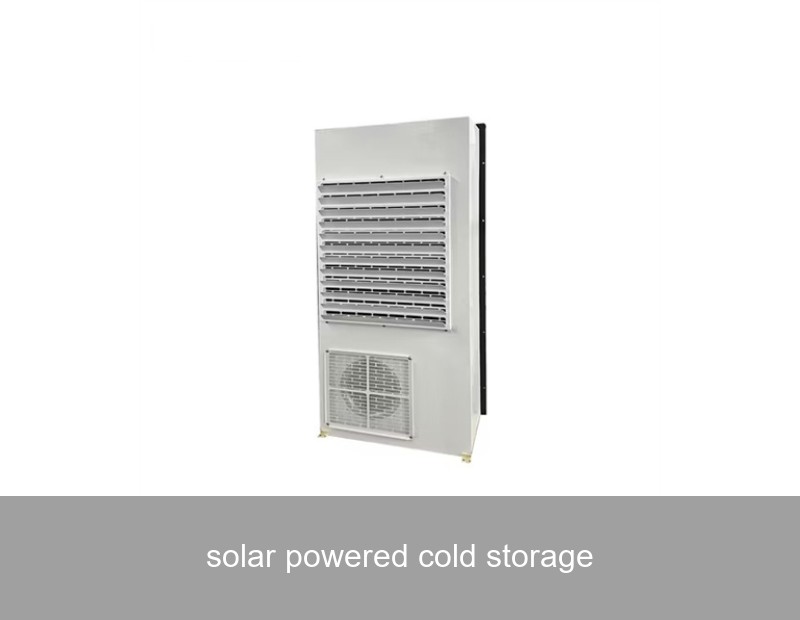
Imagine a world where life-saving vaccines remain potent in remote clinics, or where farmers in sun-drenched regions can store their harvest without relying on an unreliable grid. This isn't a distant dream; it's the reality being unlocked by solar powered cold storage. This innovative convergence of photovoltaic (PV) technology and advanced refrigeration is solving one of the most critical challenges in our global supply chains: providing reliable, sustainable, and off-grid cooling. For businesses and communities, it represents a leap from energy cost volatility to operational resilience and environmental stewardship. As a leading energy storage expert at Highjoule, I've seen firsthand how integrating intelligent battery systems with solar cold storage transforms feasibility into long-term success.
Table of Contents
The Cold Chain Crisis: More Than Just Spoiled Food
The global cold chain is a silent backbone of modern society. It ensures our food is safe, our medicines are effective, and our biological samples are viable. Yet, it faces a dual threat: its massive energy appetite and the fragility of centralized power grids. According to the Food and Agriculture Organization (FAO), roughly 14% of all food produced is lost between harvest and retail, with inadequate cold storage being a primary culprit in developing regions. In developed nations like the U.S. and across Europe, commercial refrigeration can consume up to 50% of a grocery store's total electricity. When the grid falters—during heatwaves, storms, or peak demand—the results are catastrophic, leading to millions in lost inventory and public health risks.
How Solar-Powered Cold Storage Actually Works
At its core, a solar-powered cold storage unit is an elegantly integrated system. It's not just a refrigerator with a solar panel slapped on top. The system comprises three key components:
- The Solar Array: PV panels convert sunlight into direct current (DC) electricity. Sizing is crucial—it must generate enough power to run the compressor and charge the battery bank, even on sub-optimal days.
- The Refrigeration Unit: Modern, highly efficient DC compressors are preferred as they avoid the energy loss from converting DC to AC power. These units are designed for variable power input.
- The Energy Storage System (ESS): This is the heart of reliable 24/7 operation. The battery bank stores excess solar energy generated during the day to power the cooling system throughout the night and during cloudy periods.

Image Source: Unsplash - Representative image of solar integration in an agricultural setting.
The Critical Battery Advantage: Beyond Daylight Hours
Here's where many early systems stumbled: without smart storage, cooling stops at sunset. Today's success hinges on advanced battery energy storage systems (BESS). Not all batteries are created equal. Lithium iron phosphate (LiFePO4) batteries, for instance, are a favorite for these applications due to their long cycle life, safety, and stability. But the real magic is in the energy management system (EMS).
Think of the EMS as the system's brain. It intelligently decides when to draw power directly from the panels, when to charge the batteries, and when to discharge them. It prioritizes keeping the cold storage at a setpoint temperature while optimizing battery health and lifespan. This is precisely where Highjoule's expertise becomes indispensable. Our Highjoule HPS Series commercial battery systems come with an integrated, AI-driven EMS that can predict solar yield and cooling demand, ensuring seamless operation and maximizing the return on investment.
Case Study: A California Berry Farm's Transformation
Let's look at a real-world example from California's Central Valley. "Sunset Berry Growers" (a pseudonym for privacy) faced two issues: skyrocketing electricity costs during peak summer months and frequent grid "brownouts" that risked spoiling 20 tons of highly perishable raspberries and blackberries before processing.
The Solution: They installed a 25kW rooftop solar array paired with a 40kWh Highjoule HPS battery system, directly powering a new 500-cubic-foot cold storage room.
The Data-Driven Results (After 12 Months):
| Metric | Result |
|---|---|
| Grid Energy Consumption for Cooling | Reduced by 92% |
| Post-Harvest Loss | Decreased from ~8% to under 1% |
| ROI Period | Estimated 4.2 years |
| CO2 Emissions Offset | Approx. 18 metric tons annually |
As the farm manager told me, "The system doesn't just save money. It saves our crop. The peace of mind knowing our cooling is self-sufficient during a heatwave is priceless." This case mirrors findings from the National Renewable Energy Lab (NREL), which highlights the resilience benefits of solar+storage for agricultural operations.
Highjoule's Role: The Brains Behind the Brawn
While the concept is straightforward, implementation is key. Highjoule doesn't just supply batteries; we provide intelligent, integrated power solutions. For solar-powered cold storage, our systems offer distinct advantages:
- Grid-Independence with Grid-Assist: Our systems can operate completely off-grid but are also configured for grid-connection. They can automatically switch to backup power during an outage in milliseconds, ensuring temperature integrity is never compromised.
- Thermal Load Management: Our EMS can communicate with compatible refrigeration units to implement "pre-cooling" strategies—aggressively cooling the space when solar generation is high to reduce the load on batteries later.
- Scalability: From a small 10kWh unit for a rural pharmacy to a multi-megawatt-hour system for a large food distribution warehouse, our modular design allows the storage capacity to grow with your needs.

Image Source: Unsplash - Representative image of modern battery energy storage hardware.
Choosing the Right System: Key Questions to Ask
If you're considering this technology, start by asking:
- What is my critical temperature range and tolerance for deviation?
- What is my peak cooling load (in kW), and how many hours per day must it run?
- What is my local solar insolation profile, and what are my site-specific constraints?
- Do I need pure off-grid capability, or is a grid-tied resilience system my goal?
Answering these helps experts like us at Highjoule design a system that is not just technically sound, but economically optimal.
Future Horizons: Vaccines, Data Centers, and More
The applications for solar-powered cooling extend far beyond agriculture. In remote healthcare clinics in Africa, solar direct-drive (SDD) vaccine refrigerators, supported by robust battery storage, are maintaining life-saving immunization programs. In urban settings, data centers are exploring solar-powered cooling to manage their immense thermal loads sustainably. The principle remains the same: use abundant solar energy, store it intelligently, and deliver precise, reliable cooling.
The technology is mature, the economics are increasingly favorable, and the need for resilience and sustainability has never been greater. As energy markets in Europe and North America continue to exhibit volatility, the business case for taking control of your critical cooling power supply only strengthens.
So, what's the most critical perishable—be it a product, a medicine, or a research sample—that your business depends on, and how would securing its temperature with the sun's power change your operational landscape?
 Inquiry
 Online Chat