


Sun Energy Per Square Meter: The Key to Unlocking Solar Potential
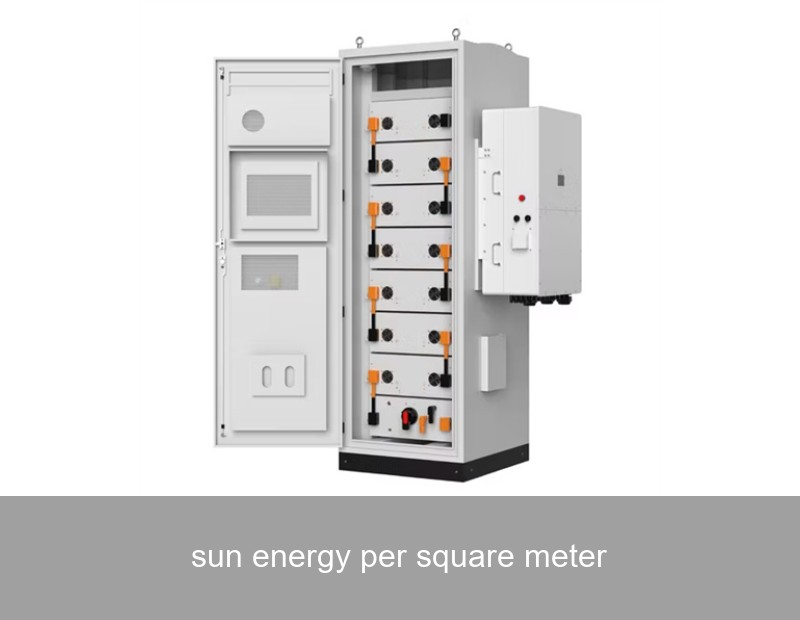
Ever looked at your roof or a vast, empty field and wondered, "Just how much power could the sun generate here?" The answer lies in a fundamental metric: sun energy per square meter. This isn't just a technical term; it's the starting point for every successful solar project, determining everything from system size to financial returns. For businesses, communities, and homeowners, understanding this concept is the first step toward energy independence. In this article, we'll demystify solar irradiance, explore its practical implications, and show how harnessing every last kilowatt-hour requires not just efficient panels, but an intelligent energy storage system to capture that potential.
Table of Contents
- What is Sun Energy Per Square Meter?
- The Global Variation: Why Location is Everything
- From Potential to Power: The System Efficiency Chain
- Case Study: Maximizing Output in Southern Spain
- The Critical Role of Energy Storage
- Highjoule Solutions: Intelligent Storage for Maximum Solar ROI
- Future Trends: Squeezing More from Every Square Meter
What is Sun Energy Per Square Meter?
In scientific terms, the energy we receive from the sun is called solar irradiance, measured in kilowatt-hours per square meter (kWh/m²). Imagine it as the raw fuel delivered to your doorstep by nature. One kilowatt-hour per square meter is a substantial amount of energy—enough to run a modern LED light bulb for over 100 hours. This incoming energy is influenced by factors like the time of day, season, weather patterns, and most importantly, geographic latitude.
For solar energy professionals, we break this down further into metrics like Global Horizontal Irradiance (GHI) and Plane of Array (POA) irradiance. GHI measures the total radiation on a horizontal surface, while POA is what actually hits your tilted solar panels. This distinction is crucial for accurate system design. As a global leader since 2005, Highjoule's design process always begins with a precise analysis of site-specific irradiance data to ensure our advanced battery energy storage systems (BESS) are perfectly sized to complement the solar generation profile.
The Global Variation: Why Location is Everything
The planet's "solar budget" is not distributed equally. This variation dramatically impacts project economics.
| Region / City | Average Annual Solar Irradiance (kWh/m²) | Comparative Potential |
|---|---|---|
| Phoenix, USA | ~2,200 | Exceptionally High |
| Southern Spain (Andalusia) | ~1,900 | Very High |
| Berlin, Germany | ~1,100 | Moderate |
| Seattle, USA | ~1,000 | Moderate to Low |
As the table shows, a square meter in Phoenix receives over twice the annual solar energy as one in Berlin. This doesn't mean solar is infeasible in less sunny climates—Germany is a world leader in total installed PV capacity—but it does mean system design and, critically, energy management strategies must be adapted. In regions with lower sun energy per square meter, maximizing the utility of every generated electron through storage becomes even more important for a strong return on investment.
From Potential to Power: The System Efficiency Chain
So, how does irradiance become usable electricity? It's a chain with several efficiency losses:
- Panel Efficiency (15%-23%): Modern photovoltaic cells convert only a portion of incoming sunlight to electricity.
- System Losses (5%-15%): Losses from inverters, wiring, dirt, and temperature effects further reduce output.
- Temporal Mismatch: The sun doesn't shine at night, but energy demand often peaks in the evening. This is the core challenge.
Therefore, the real question isn't just "How much energy hits my roof?" but "How much of that energy can I actually use on my terms?" This is where the conversation transitions from generation to intelligent storage and management.
Case Study: Maximizing Output in a Commercial Setting
Consider a real-world example: a medium-sized fruit packing cooperative in Andalusia, Spain. The facility has a large, flat roof with an excellent solar resource of approximately 1,950 kWh/m²/year. They installed a 500 kW solar array.
- Solar Potential: ~1,950 kWh/m²/year irradiance.
- Annual Generation: The system produces about 750,000 kWh annually.
- The Problem: Their packing lines and cold storage run most intensely from 4 PM to 10 PM, long after the solar peak. Over 40% of their solar generation was being exported to the grid at low feed-in tariffs, while they simultaneously bought expensive grid power in the evening.
- The Highjoule Solution: The cooperative integrated a Highjoule H2 Series Commercial BESS with 400 kWh capacity and advanced energy management software. The system now stores excess midday solar production and dispatches it during the high-demand evening hours.
- The Result: On-site consumption of solar power increased from 60% to over 90%. The project reduced their annual energy bills by an additional 35% beyond solar savings alone and provided critical backup power for their refrigeration units. This case illustrates that without storage, a significant portion of the valuable sun energy per square meter is not fully monetized.

Image: A commercial solar-plus-storage installation. Source: Unsplash (Representative image)
The Critical Role of Energy Storage
Battery storage is the game-changer. It breaks the fundamental constraint of solar power: its intermittency. By storing surplus daytime energy, storage effectively increases the utility of every square meter of your solar array. Think of it this way: a high-efficiency panel captures more of the sun's physical energy, but a smart battery system captures more of its economic value. This is especially vital in markets with time-of-use (TOU) rates or declining feed-in tariffs. For more on grid dynamics, see the U.S. Department of Energy's resources on solar grid integration.
Highjoule Solutions: Intelligent Storage for Maximum Solar ROI
At Highjoule, we don't just sell batteries; we deliver optimized energy sovereignty. Our products are engineered to ensure the energy you harvest is the energy you use.
- For Homes (Residential H-Series): Our compact, wall-mounted systems integrate seamlessly with home solar, allowing families to power their evenings with daytime sun, increase self-consumption, and gain peace of mind with backup power.
- For Business & Industry (Commercial H2 & I-Series): These scalable, containerized or rack-mounted BESS solutions feature advanced lithium-ion chemistry and sophisticated energy management systems. They perform peak shaving, demand charge reduction, and arbitrage, turning your solar asset into a round-the-clock revenue and savings center.
- For Microgrids & Utilities (Utility-Scale U-Series): Our largest systems provide grid stability, renewable firming, and deferred infrastructure investment, enabling higher penetrations of solar power on local grids.
Our proprietary JouleMind AI platform is the brain behind it all. It forecasts solar production based on irradiance and weather data, learns your consumption patterns, and autonomously optimizes charge/discharge cycles to maximize your financial return. This intelligent layer is what transforms raw sun energy per square meter into predictable, controllable, and low-cost power.
Future Trends: Squeezing More from Every Square Meter
The innovation frontier is exciting. Perovskite tandem solar cells promise efficiencies beyond 30%, potentially capturing more energy from the same footprint. Furthermore, the integration of artificial intelligence for predictive energy management, as highlighted by IRENA, is set to become standard. The future is about holistic system intelligence—where generation, storage, and consumption are orchestrated in real-time to create a truly resilient and efficient energy ecosystem. Highjoule is actively investing in these areas through our R&D partnerships, ensuring our clients always have access to the most effective technology to leverage their local solar resource.
Your Solar Potential, Realized
Understanding sun energy per square meter is the first step in your renewable journey. The next, and most decisive, step is choosing how to capture, store, and utilize that energy to its fullest potential. Whether you're a homeowner looking to cut bills, a factory manager targeting operational cost savings, or a developer building a resilient microgrid, the equation is no longer just about panels on a roof.
What could a detailed analysis of your site's specific solar potential, coupled with a tailored Highjoule storage solution, do for your energy independence and bottom line?
 Inquiry
 Online Chat