


Storage Container with Electricity: The Plug-and-Play Power Revolution
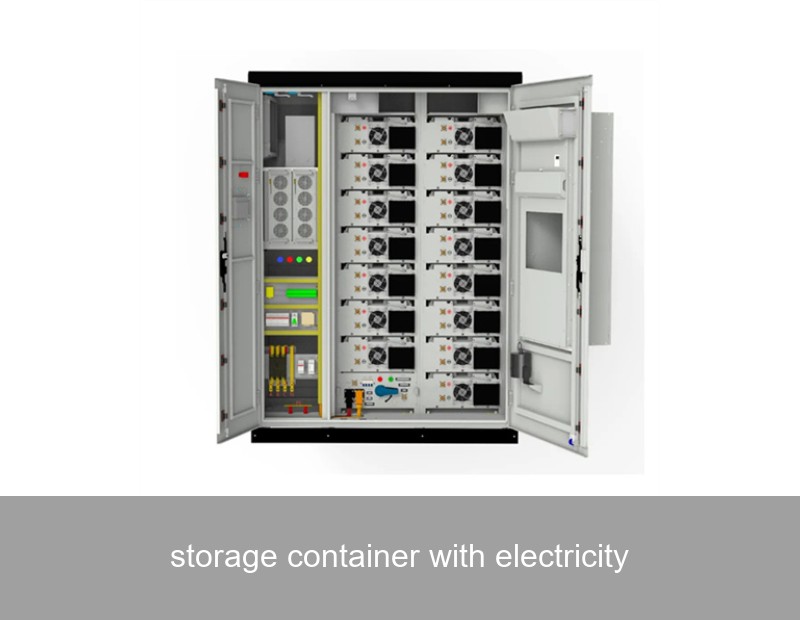
Imagine a standard shipping container arriving on site. But instead of goods, it's packed with a transformative capability: instant, clean, and controllable electricity. This is the reality of an energy storage container, a rapidly deployable storage container with electricity that is reshaping how businesses, communities, and grids manage power. From mitigating blackout risks to harnessing renewable energy, these modular powerhouses offer a compelling solution in an era of energy transition and uncertainty. As a leader in advanced energy storage, Highjoule has been at the forefront of designing and deploying intelligent containerized battery energy storage systems (BESS) that deliver reliability, sustainability, and significant economic value.
Table of Contents
- What is an Electricity Storage Container?
- The Driving Forces: Why This Solution is Booming Now
- Inside the Unit: More Than Just Batteries in a Box
- Real-World Impact: A Case Study from California
- The Highjoule Approach: Intelligent Power, Delivered
- Your Power, Your Control: Is a Storage Container Right for You?
What is an Electricity Storage Container?
At its core, an electricity storage container is a pre-engineered, modular battery energy storage system housed within a standardized ISO container frame. Think of it as a gigantic, ultra-sophisticated power bank. It stores electrical energy—typically from the grid during off-peak hours or directly from onsite solar panels—and discharges it when needed. This simple concept unlocks a multitude of applications: peak shaving to reduce utility demand charges, backup power, renewable energy time-shifting, and providing grid services like frequency regulation.
For commercial and industrial operators, this means turning electricity from a volatile cost center into a manageable asset. The containerized format is key. It allows for factory assembly, rigorous testing, and swift delivery. Once on location, it requires significantly less civil works compared to building a bespoke storage facility, leading to a faster ROI. It's a true plug-and-play storage container with electricity, designed for simplicity and scalability.
The Driving Forces: Why This Solution is Booming Now
The surge in demand for containerized storage isn't accidental. It's a perfect storm of market need and technological maturity. Let's break down the key drivers.
The Intermittency Challenge of Renewable Energy
Solar and wind power are crucial for decarbonization, but the sun doesn't always shine, and the wind doesn't always blow. This creates a mismatch between generation and consumption. According to the International Energy Agency (IEA), the global capacity of grid-scale storage needs to expand dramatically to support net-zero goals. Storage containers act as a buffer, soaking up excess renewable generation and releasing it during peak demand, making green energy reliable and dispatchable.
Grid Modernization and Resilience
Aging grid infrastructure, coupled with increasing extreme weather events, has exposed vulnerabilities in power networks. Think of the grid congestion in Europe or the wildfire-related outages in the western US. A deployable storage container with electricity can be strategically placed to reinforce weak points in the grid, defer costly upgrades, and provide critical backup power to essential facilities during outages, enhancing community resilience.
Economic Incentives and Policy Support
Governments worldwide are implementing policies and incentives to accelerate storage adoption. In the US, the Inflation Reduction Act (IRA) provides investment tax credits for standalone storage. In Europe, ambitious REPowerEU targets are pushing for energy independence. Simultaneously, the levelized cost of lithium-ion batteries has fallen drastically over the past decade, making projects financially viable without subsidies in many cases.
Inside the Unit: More Than Just Batteries in a Box
While the container shell provides structure and protection, the intelligence lies within. A high-quality system integrates several critical components:
- Battery Racks: The core energy storage medium, using advanced lithium-ion chemistries (like LFP for enhanced safety and longevity).
- Battery Management System (BMS): The "brain" of the battery pack, ensuring cell-level monitoring, balance, and safety.
- Power Conversion System (PCS): The bidirectional inverter that converts DC battery power to AC grid power and vice versa.
- Thermal Management System: A crucial climate control system (air or liquid cooling) to maintain optimal battery temperature, ensuring performance and lifespan.
- Energy Management System (EMS): The top-level control software that dictates when to charge and discharge based on weather, electricity prices, grid signals, or onsite load, maximizing financial return.
- Safety Systems: Comprehensive solutions including fire suppression, gas detection, and physical security.

Image Source: Unsplash (Representative image of industrial equipment)
This integrated design is where Highjoule's expertise shines. Our Highjoule CubeSeries containers are not mere assemblies of parts; they are engineered as cohesive systems. We use proprietary algorithms in our EMS to optimize every charge-discharge cycle, and our robust thermal design ensures stable operation from the deserts of Arizona to the colder climates of Scandinavia, maximizing the lifecycle value of your storage container with electricity.
Real-World Impact: A Case Study from California
Let's move from theory to practice. A compelling example comes from a commercial farming operation in California's Central Valley. The farm had invested heavily in solar to power its irrigation pumps and processing facilities. However, they faced two problems: 1) Their utility's time-of-use rates meant high costs when running pumps in the late afternoon/evening (after solar production dropped), and 2) They were subject to frequent Public Safety Power Shutoffs (PSPS) during wildfire season, risking crop loss.
The Solution: The farm deployed a 2 MWh Highjoule CubeSeries storage container, integrated with their existing solar array.
The Results (Data from the first year of operation):
| Metric | Result | Impact |
|---|---|---|
| Demand Charge Reduction | 40% | Direct reduction in monthly utility bills |
| Solar Self-Consumption Increase | From 60% to over 90% | Minimized solar energy export at low rates |
| Backup Power Coverage | 8+ hours for critical loads | Enabled continuous operation during 3 separate PSPS events |
| Estimated Payback Period | 4.5 years | With combined savings and state incentive (SGIP) |
This case, documented in a California Public Utilities Commission report on storage incentives, illustrates the multi-faceted value proposition. The farm didn't just save money; it secured its operational resilience and maximized its investment in solar. The Highjoule system's EMS automatically switched to backup mode during grid outages, ensuring the vital irrigation and cold storage systems never missed a beat.
The Highjoule Approach: Intelligent Power, Delivered
Founded in 2005, Highjoule has built a reputation as a global provider not just of hardware, but of complete, intelligent power solutions. We understand that a storage container with electricity is a significant capital investment, and our goal is to ensure it delivers maximum lifetime value.
Our process is consultative and comprehensive:
- Needs Analysis & System Design: Our experts work with you to analyze your energy profile, goals (savings, resilience, sustainability), and site specifics to design the optimal system size and configuration.
- Highjoule CubeSeries Product Line: We offer a range of standardized yet customizable container solutions, from 500 kWh to 4 MWh per unit, which can be combined for larger projects. All feature our latest LFP battery technology, active liquid cooling, and industrial-grade safety systems.
- Highjoule Horizon EMS Platform: This is the intelligence layer. Our cloud-connected platform allows for remote monitoring, performance analytics, and control. You can set custom strategies (e.g., maximize savings, maximize renewable use) and track your financial and carbon impact in real-time.
- Project Delivery & Lifelong Support: We manage the entire delivery, installation, and commissioning process. Our service package includes ongoing performance monitoring, preventative maintenance, and expert support to ensure your system operates at peak efficiency for years to come.

Image Source: Unsplash (Representative image of energy management software)
Whether for a manufacturing plant in Germany looking to participate in primary control reserve markets, a data center in Texas needing seamless backup, or a remote microgrid in Alaska integrating wind power, Highjoule provides the technology and the partnership to make it a success.
Your Power, Your Control: Is a Storage Container Right for You?
The era of passive energy consumption is ending. The tools to generate, store, and manage power independently are now accessible and economically sound. A containerized BESS represents a decisive step toward energy autonomy and operational efficiency.
So, how do you start the conversation? Ask yourself and your team: Where are our largest, most unpredictable electricity costs? What is the true cost of a one-hour or one-day power interruption to our business? Are we fully leveraging our solar or wind investment? How can we contribute to our organization's sustainability targets in a measurable, impactful way?
The answers to these questions often reveal the perfect use case for a storage container with electricity. What specific energy challenge could a modular, intelligent power solution solve for your operation today?
 Inquiry
 Online Chat