


Unlocking Grid Resilience: The Strategic Role of the 1.6 MW Energy Storage Cabinet
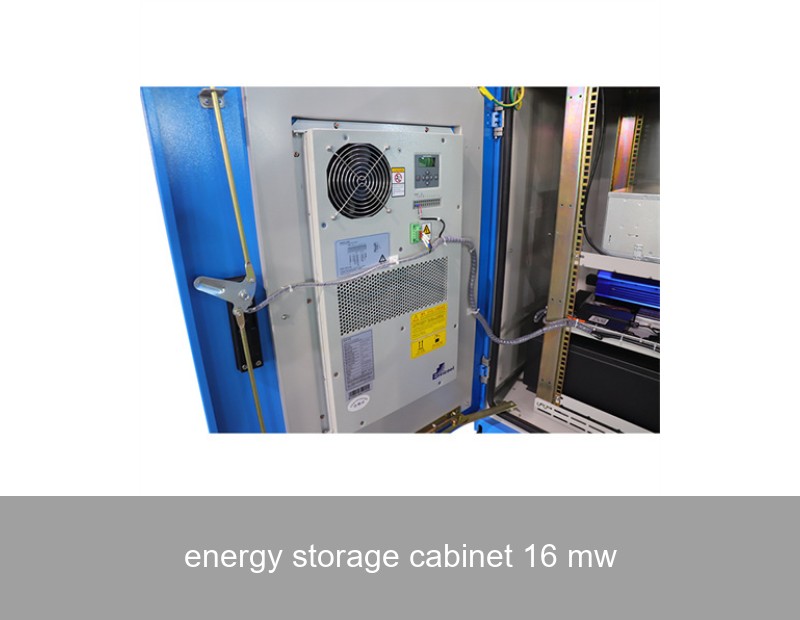
Have you ever wondered how modern businesses and communities ensure a constant, reliable power supply, even when the sun isn't shining or the wind isn't blowing? The answer increasingly lies in sophisticated, containerized energy storage solutions. At the forefront of this revolution is a specific, powerful unit: the 1.6 MW energy storage cabinet. This isn't just a battery in a box; it's a fully integrated power plant, designed to provide stability, savings, and sustainability. As a global leader in advanced energy storage, Highjoule has been pioneering these intelligent systems since 2005, helping commercial, industrial, and utility clients across Europe and the U.S. transform their energy management. Let's explore why this specific capacity has become a cornerstone for modern energy infrastructure.
Table of Contents
- The Grid Challenge: Why We Need Megawatt-Scale Storage
- Anatomy of a Powerhouse: What Makes a 1.6 MW Cabinet?
- The Highjoule Advantage: Intelligent Systems for Real-World Demands
- A Case Study in Action: California's Solar Smoothing Success
- Financial and Operational Benefits: Beyond Backup Power
- The Future of Energy: How Will You Integrate Storage?
The Grid Challenge: Why We Need Megawatt-Scale Storage
Our energy landscape is undergoing a seismic shift. The rapid deployment of intermittent renewable sources like solar and wind is a fantastic development for decarbonization, but it introduces volatility to the grid. a cloud passes over a large solar farm, causing a sudden dip in generation. Or, wind speeds drop unexpectedly. These fluctuations can cause frequency instability and even blackouts. Furthermore, energy demand peaks in the evenings, often when solar production is waning—a mismatch known as the "duck curve."
This is where utility-scale energy storage enters the scene. According to the U.S. Energy Information Administration (EIA), large-scale battery storage capacity in the United States has grown dramatically, with systems increasingly rated in the multi-megawatt range. The 1.6 MW energy storage cabinet represents a modular, scalable building block in this new architecture. It's a sweet spot in capacity—powerful enough to make a significant impact on grid services or a large facility's load, yet standardized enough for efficient deployment and scaling.

Image Source: Unsplash - A solar farm paired with battery storage cabinets for consistent output.
Anatomy of a Powerhouse: What Makes a 1.6 MW Cabinet?
So, what exactly is inside this critical piece of infrastructure? A 1.6 MW energy storage cabinet is a pre-engineered, containerized system that typically includes:
- Battery Racks: The heart of the system, using advanced lithium-ion (like LFP - Lithium Iron Phosphate) chemistry for safety, longevity, and high cycle life.
- Power Conversion System (PCS): The brain and muscle. This bi-directional inverter converts DC battery power to AC grid power and vice versa. The "1.6 MW" rating primarily refers to the continuous AC power output of this PCS.
- Thermal Management System: A crucial climate control system (liquid or air-cooled) to keep batteries at their optimal operating temperature, ensuring safety and maximizing lifespan.
- Energy Management System (EMS): The central intelligence. This software platform controls when to charge (from the grid or renewables) and when to discharge, optimizing for economics, grid support, or resilience.
- Safety & Grid Integration Components: Includes switchgear, fire suppression, and protective relays to ensure safe, code-compliant interconnection with the electrical grid or a local microgrid.
It's important to distinguish between power (MW) and energy (MWh). A 1.6 MW cabinet tells you how *fast* it can deliver electricity. Its energy capacity (e.g., 3.2 MWh) tells you for *how long* it can deliver that power. This ratio is a key design choice for different applications.
The Highjoule Advantage: Intelligent Systems for Real-World Demands
Not all storage solutions are created equal. At Highjoule, we've spent nearly two decades refining our approach. Our H-Series Megapack platform, which includes our flagship 1.6 MW cabinet configuration, is built for durability and intelligence. What sets it apart?
- Proactive Safety by Design: We utilize inherently stable LFP chemistry and integrate multi-layer protection, from cell-level fusing to cabinet-level isolation and gas-based fire suppression, exceeding international safety standards.
- Adaptive Thermal Management: Our liquid cooling system doesn't just react to heat; it anticipates it, maintaining a uniform temperature across all cells. This extends battery life by up to 20% compared to passively cooled systems.
- AI-Driven Energy Management: The Highjoule Neuron EMS doesn't just follow simple rules. It uses machine learning to forecast energy prices, renewable generation, and load patterns, making real-time decisions to maximize ROI. Whether participating in frequency regulation markets in Europe or managing demand charges for a factory in Texas, the system optimizes for value.
- Seamless Integration: Our cabinets are designed for plug-and-play scalability. Need 4.8 MW? Three cabinets can be seamlessly linked. They are also grid-forming capable, meaning they can help restart a microgrid or weak grid section without relying on external generation—a critical feature for resilience.
This holistic approach ensures our 1.6 MW energy storage cabinet is not just a commodity component but a reliable, value-generating asset for the long term.
A Case Study in Action: California's Solar Smoothing Success
Let's move from theory to practice. A compelling example comes from a commercial solar developer in California, a leader in renewable adoption facing acute grid congestion and the "duck curve."
The Challenge: A 20 MW solar farm was experiencing frequent curtailment—grid operators were ordering it to reduce output during times of oversupply, wasting clean energy and lost revenue. Additionally, its power output was highly variable on partly cloudy days, creating interconnection challenges.
The Solution: The developer partnered with Highjoule to deploy a 4.8 MW / 9.6 MWh storage system using three of our 1.6 MW cabinets. Integrated directly with the solar farm's inverter system, the Highjoule Neuron EMS was programmed with two primary objectives: smoothing the solar output to a steady, grid-friendly profile and storing curtailed energy for later injection.
The Results (Data-Driven Impact):
| Metric | Before Highjoule System | After Highjoule System |
|---|---|---|
| Annual Solar Curtailment | ~12% of potential generation | Reduced to <3% |
| Output Variability (Ramp Rate) | Up to 30% change per minute | Capped at a grid-compliant 5% per minute |
| Additional Revenue Streams | None from storage | Participation in CAISO's energy arbitrage and ancillary services markets |
The project achieved a full return on investment in under 5 years, showcasing the tangible financial and operational benefits of pairing renewables with intelligent, megawatt-scale storage like the 1.6 MW cabinet. As noted by the National Renewable Energy Lab (NREL), hybrid power plants combining solar and storage are becoming the new norm for maximizing value and reliability.

Image Source: Unsplash - Technician monitoring an industrial battery energy storage system.
Financial and Operational Benefits: Beyond Backup Power
The value proposition of a 1.6 MW energy storage cabinet extends far beyond emergency backup. For businesses and utilities, it unlocks multiple revenue and savings streams:
- Demand Charge Management: For commercial and industrial users, utility bills often include a charge based on the highest 15-minute power draw (peak demand). A storage system can discharge during these short peaks, dramatically cutting this portion of the bill.
- Energy Arbitrage: Buy electricity from the grid when prices are low (often at night), store it, and use it or sell it back when prices are high.
- Grid Services: In many markets, storage can provide valuable services like frequency regulation, voltage support, and black-start capability, for which grid operators pay. Our systems are certified for key markets in the EU and U.S.
- Renewable Integration & Firming: As seen in the case study, storage makes variable renewable generation predictable and dispatchable, turning solar and wind into firm, reliable power sources.
- Resilience and UPS: For critical facilities like data centers, hospitals, or manufacturing plants, a 1.6 MW cabinet can provide seamless transition to backup power during an outage, maintaining operations.
Highjoule's role is to ensure your storage asset maximizes its value across all these potential avenues through our intelligent software and ongoing performance monitoring services.
The Future of Energy: How Will You Integrate Storage?
The transition to a decarbonized, resilient energy system is not a distant future—it's happening now. The 1.6 MW energy storage cabinet is a pivotal tool in this transition, offering a modular, scalable, and intelligent solution to the challenges of modern grids and ambitious sustainability goals. From smoothing a solar farm's output in California to helping a German industrial plant achieve energy autonomy and cost control, the applications are as diverse as our clients' needs.
As you consider your organization's energy strategy, ask yourself: Where are the points of vulnerability or cost in our energy usage? How could predictable, controllable power transform our operations and sustainability profile? The journey begins with understanding the potential of a single, powerful building block.
What is the first application you would explore for a scalable, intelligent energy storage system in your context?
 Inquiry
 Online Chat