


Solar System Battery Bank: Your Key to Unlocking True Energy Freedom
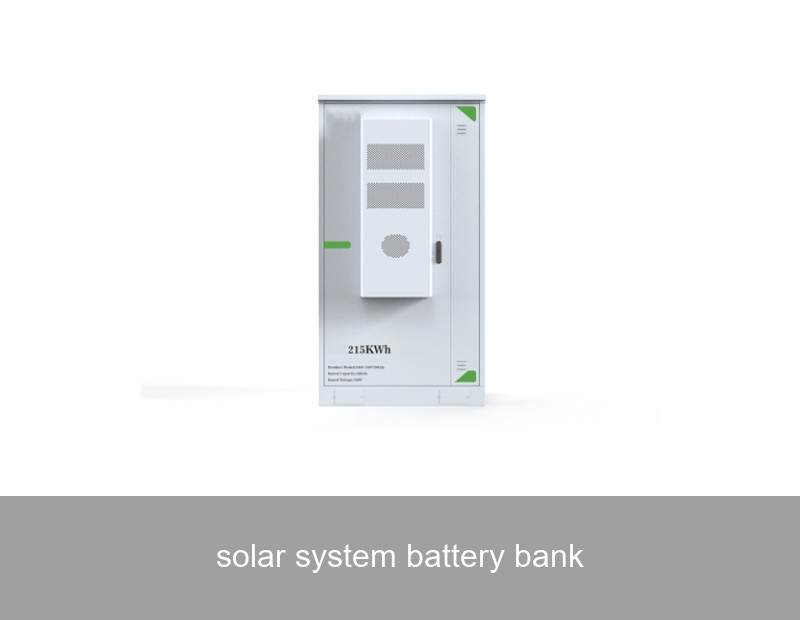
Imagine this: your rooftop solar panels are working hard under the midday sun, but you're at work. Much of that clean energy flows back to the grid, often for minimal compensation. Then, in the evening when you're home and need power most, you're drawing expensive electricity from the utility. This common disconnect is the very problem a solar system battery bank is designed to solve. By storing surplus solar energy for later use, these systems transform a solar installation from a partial solution into a comprehensive, resilient, and cost-effective energy ecosystem. For homeowners and businesses across Europe and the U.S., integrating a battery bank is the logical next step in maximizing their renewable investment and achieving true energy independence.
Table of Contents
- The Storage Gap: When Solar Production and Demand Don't Align
- How Does a Modern Solar Battery Bank Work? A Technical Rundown
- Beyond Backup: Key Benefits of Adding a Battery Bank
- Real-World Impact: A Case Study from California
- Choosing the Right System: Capacity, Power, and Intelligence
- The Highjoule Solution: Engineered for Performance and Simplicity
- The Future of Home Energy: Integrated Systems and VPPs
The Storage Gap: When Solar Production and Demand Don't Align
The fundamental challenge with solar power is its intermittency. The sun doesn't shine on a 9-to-5 schedule that matches typical household or business consumption patterns. This creates a "duck curve" phenomenon, well-documented by grid operators like California ISO (CAISO), where net demand plummets during sunny days and surges sharply in the evening. Without storage, this mismatch limits the value of solar for the owner and creates balancing challenges for the grid.
 Image Source: CAISO (California Independent System Operator) - Visualizing the "Duck Curve"
This is where the solar system battery bank enters as the game-changer. It flattens the duck curve at the individual property level, allowing you to consume more of the energy you produce. The result? A dramatic reduction in reliance on the volatile utility grid and a significant step toward a self-sufficient energy model.
How Does a Modern Solar Battery Bank Work? A Technical Rundown
Think of your solar system battery bank as a sophisticated energy savings account. It's far more than just a box of batteries. A modern residential or commercial system typically includes:
- Battery Modules: The core storage units, almost exclusively using Lithium Iron Phosphate (LFP) chemistry today for its safety, longevity, and stability.
- Battery Management System (BMS): The onboard brain that monitors cell voltage, temperature, and state of charge to ensure safe operation and maximize battery life.
- Hybrid Inverter or AC Coupler: This critical component manages the flow of energy between solar panels, the battery bank, your home's electrical panel, and the grid. It converts DC electricity from the panels or batteries to AC for your home.
- Energy Management System (EMS): The system-level intelligence that decides when to charge, discharge, or hold based on your habits, electricity rates, and weather forecasts.
During the day, surplus solar energy charges the batteries instead of being exported. When solar production falls, the system seamlessly discharges stored energy to power your home. In a grid outage, a properly configured system can island your home, providing critical backup power.
Beyond Backup: Key Benefits of Adding a Battery Bank
While backup power is a compelling feature, the economic and environmental benefits are often more impactful day-to-day:
| Benefit | Description | Direct Impact |
|---|---|---|
| Increased Self-Consumption | Use more of your own solar energy, reducing grid imports. | Lower electricity bills, higher ROI on solar. |
| Time-of-Use (TOU) Optimization | Store solar energy when rates are low, use it during peak price periods. | Maximizes savings in regions with TOU pricing (common in CA, EU). |
| Grid Resilience & Backup | Provides power during outages, keeping essential loads running. | Peace of mind, security, and continuity for homes/businesses. |
| Grid Support & Sustainability | Reduces evening peak demand on the grid, enabling higher renewable penetration. | Contributes to community-wide decarbonization efforts. |
Real-World Impact: A Case Study from California
Let's look at real data. A medium-sized winery in Napa Valley, California, installed a 50 kW solar array but faced high demand charges and unreliable grid power affecting its refrigeration units. In 2022, they integrated a solar system battery bank with 120 kWh of storage capacity.
- Problem: High evening energy use for lighting and cooling, coinciding with peak TOU rates and grid strain.
- Solution: A Highjoule commercial battery storage system was installed alongside their existing solar.
- Result (12-month post-installation):
- Bill Savings: Reduced grid energy consumption during peak periods by 85%, cutting their overall electricity bill by 62%.
- Demand Charge Reduction: Smoothed peak demand, slashing monthly demand charges by over 70%.
- Reliability: Successfully rode through three grid outages, keeping critical refrigeration online and preventing spoilage.
This case exemplifies the tangible, multi-faceted return on investment a well-sized battery bank can deliver, moving beyond theory into proven financial and operational resilience.
Choosing the Right System: Capacity, Power, and Intelligence
Selecting a solar system battery bank isn't one-size-fits-all. Key considerations include:
- Usable Capacity (kWh): How much energy can it store? This determines how long it can power your essential loads.
- Continuous Power Rating (kW): How much power can it deliver at once? This determines which appliances you can run simultaneously.
- Scalability: Can you add more batteries later as your needs grow?
- Software & Grid Services: Can it participate in utility Virtual Power Plant (VPP) programs for additional revenue? Does its software learn and adapt to your usage?
The Highjoule Solution: Engineered for Performance and Simplicity
At Highjoule, with nearly two decades of experience since 2005, we've engineered our solar battery storage systems to address these exact decision points. Our product philosophy centers on intelligent, safe, and user-friendly design.
For residential applications, our H-Joule HomePower series offers modular LFP battery cabinets that can be scaled from 10 kWh to 30 kWh+. Paired with our intelligent hybrid inverter, the system features an advanced EMS that automatically optimizes for self-consumption, TOU savings, or backup preparedness based on user priorities. The intuitive mobile app gives homeowners complete visibility and control.
 Image Source: Highjoule - Example of a installed HomePower residential battery system
For commercial and industrial clients, our H-Joule GridMax solutions provide containerized or skid-mounted storage from 100 kWh into the megawatt-hour range. These systems are designed not just for backup, but for active energy cost management through peak shaving and participation in demand response programs. Our robust cloud platform provides fleet management and performance analytics, a feature praised by microgrid operators and large facility managers across Europe and North America.
What sets Highjoule apart is our integrated system approach. We design the batteries, BMS, and energy management software in-house, ensuring seamless communication, superior safety protocols, and reliable long-term performance. Our systems are certified to the highest international standards, giving our customers in diverse markets like Germany, Italy, and Texas the confidence that their investment is protected.
The Future of Home Energy: Integrated Systems and VPPs
The evolution of the solar system battery bank is moving towards full home energy integration. Future systems will natively manage not just solar and storage, but also electric vehicle charging, heat pumps, and smart appliances, creating a truly autonomous home energy network. Furthermore, the rise of Virtual Power Plants (VPPs)—where utilities aggregate thousands of distributed home batteries to act as a single grid resource—presents a fascinating opportunity. Homeowners could earn significant incentives by allowing their battery to support the grid during times of extreme demand, as outlined in research by the National Renewable Energy Laboratory (NREL).
This turns the home solar battery bank from a personal asset into a community resilience tool, creating a more stable, renewable-powered grid for everyone.
Is your current solar installation only operating at half its potential? What would energy security and predictable monthly energy costs mean for your home or business budget this year?
 Inquiry
 Online Chat