


Navigating Your Solar Battery Storage Options for Energy Independence
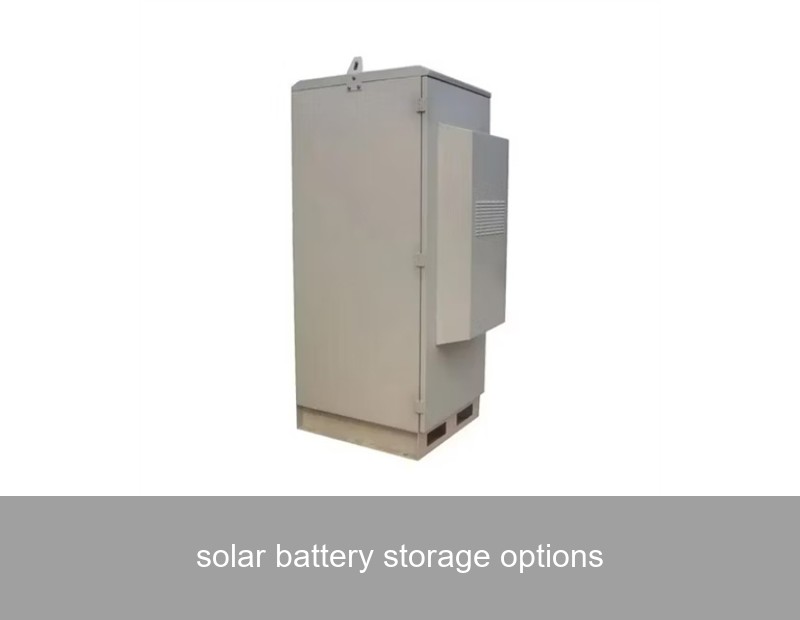
So, you've got solar panels on your roof, or you're planning to install them. You're generating clean energy, which is fantastic. But have you ever watched the sun go down and wondered where all that potential power went? This is where exploring solar battery storage options becomes not just interesting, but essential. A battery system captures that excess solar energy produced during the day, storing it for you to use at night, during peak tariff periods, or even during a grid outage. It's the key to unlocking true energy self-consumption and resilience. But with various technologies and specs on the market, how do you choose the right one for your home or business? Let's break down the critical aspects to consider.
Understanding Your Solar Battery Storage Options
The market for solar battery storage has evolved dramatically from simple, lead-acid backups to sophisticated, intelligent energy management systems. Today's options are defined by their chemistry, their capabilities, and most importantly, how seamlessly they integrate with your existing or new solar PV system. Choosing the right one isn't a one-size-fits-all decision; it depends on your primary goals: Is it to maximize self-consumption and save on bills? To ensure backup power during outages? Or to participate in grid services? Understanding this hierarchy of needs is the first step in your selection process.

Image Source: Unsplash - A modern home energy storage system.
Key Considerations for Choosing a Battery
When evaluating solar battery storage options, you'll encounter a series of technical terms. Don't let them intimidate you. Think of it like buying a car—you consider the engine type, fuel tank size, and horsepower. For batteries, the parallel considerations are chemistry, capacity, and power.
Battery Chemistry: The Heart of the System
The core technology inside the battery determines its performance, lifespan, and safety. The two dominant players are:
- Lithium-ion (Li-ion): The current market leader. Within this category, Lithium Iron Phosphate (LFP or LiFePO4) has become the preferred chemistry for stationary storage. Why? It offers excellent thermal and chemical stability, meaning it's inherently safer with a lower risk of thermal runaway. It also boasts a long cycle life (often over 6,000 cycles) and performs well across a wide temperature range.
- Lead-Acid: The traditional technology. While cheaper upfront, it has a shorter lifespan (3-5 years typically), lower depth of discharge (DoD), and requires more maintenance. For daily cycling in a modern solar self-consumption setup, lithium-based options are almost always the more economical and effective long-term choice.
For instance, at Highjoule, our H-Joule Home and H-Joule Commercial series exclusively utilize premium LFP chemistry. We prioritize safety and longevity, ensuring our systems provide reliable service for 15+ years, backed by robust warranties.
Capacity vs. Power: Knowing the Difference
This is a crucial distinction often confused:
| Term | What It Means | Analogy | What to Ask |
|---|---|---|---|
| Usable Capacity (kWh) | The total amount of electrical energy the battery can store. | The size of your fuel tank. | "How many kilowatt-hours can I use to run my appliances overnight?" |
| Power Rating (kW) | The rate at which the battery can deliver (or accept) electricity at one time. | The horsepower of your engine. | "Can it simultaneously power my 3kW air conditioner, 1kW fridge, and 0.5kW lights?" |
A battery with high capacity but low power might store a lot of energy but struggle to run multiple high-wattage appliances at once. Conversely, high power with low capacity would run those appliances but only for a short time. Your energy audit will determine the right balance for your load profile.
System Integration & Intelligence
A battery isn't just a box; it's the centerpiece of a smart energy ecosystem. The inverter and energy management system (EMS) are the brains. Look for:
- AC-coupled vs. DC-coupled: AC systems are often easier to retrofit to existing solar. DC systems can be slightly more efficient for new installations.
- Smart EMS: Can it learn your consumption patterns? Can it be set to charge from solar only, or from the grid during off-peak rates? Can it participate in virtual power plants (VPPs)?
This is where Highjoule excels. Our Neurio™ Energy OS turns a simple battery into an intelligent asset. It automatically optimizes for self-consumption, can be configured for time-of-use arbitrage, and in supported markets, allows homeowners to contribute to grid stability through VPP programs, potentially creating an additional revenue stream.
A Real-World Case: The German Bakery
Let's look at a concrete example from Bavaria, Germany. A family-run bakery with a 50kW rooftop solar array was producing surplus energy during midday, only to buy expensive grid electricity in the early morning during baking hours and in the evening. Their goal was to reduce operational costs and ensure refrigeration security.
They evaluated several solar battery storage options and opted for a tailored solution: a Highjoule H-Joule Commercial 100 system with 105 kWh capacity and 50 kW power output. The system was DC-coupled for high round-trip efficiency and managed by the Neurio™ OS.
The results after one year (data anonymized from case study):
- Self-consumption rate increased from 35% to over 80%.
- Grid electricity purchases during peak times reduced by 90%.
- Annual energy bill savings: €8,200.
- Payback period: Estimated at under 7 years, well within the system's warranty.
Furthermore, the system provides seamless backup power for their cold storage, protecting thousands of euros worth of inventory. This case highlights how the right storage solution directly impacts the bottom line for businesses. For more on commercial energy storage trends, you can review reports from the Energy Storage News portal.

Image Source: Unsplash - A commercial bakery, a prime candidate for solar and storage.
Highjoule's Tailored Solar Battery Storage Solutions
Founded in 2005, Highjoule has been at the forefront of the energy transition. We understand that every energy profile is unique. That's why we don't just sell boxes; we provide end-to-end solar battery storage options designed for specific applications:
- For Homes (H-Joule Home Series): Scalable from 5kWh to 30kWh, with integrated inverter and Neurio™ OS. Perfect for maximizing solar self-consumption, providing backup power, and preparing for smart grid participation.
- For Businesses (H-Joule Commercial Series): Modular, rack-mounted systems scalable from 30kWh to multiple megawatt-hours. Designed for peak shaving, demand charge reduction, and ensuring business continuity.
- For Microgrids & Utilities: Containerized, utility-scale solutions for grid stabilization, renewable integration, and off-grid communities.
Our global service network in Europe and North America ensures professional installation, commissioning, and long-term support. We adhere to the highest international safety standards, a non-negotiable aspect of our design philosophy. You can compare foundational safety standards for battery systems through resources like the UL Safety Standards website.
How to Future-Proof Your Investment
The energy landscape is changing rapidly. When choosing among solar battery storage options, think about where the grid is heading. Will your system be able to adapt? Consider modularity—can you easily add more capacity later? Ensure the software is updatable to access new features and grid service markets. A system that is "smart grid ready" protects your investment against tomorrow's energy paradigms.
Ultimately, the best choice marries the right technology with a deep understanding of your energy habits and aspirations. It's about partnering with a provider that offers not just a product, but a pathway to a more resilient and sustainable energy future.
What's the first energy-dependent appliance you would want to secure during a power outage, and how would that priority shape the capacity and power requirements of your ideal battery system?
 Inquiry
 Online Chat