


Solar Inverter HD Images: More Than Just Pictures, A Window into System Health and Performance
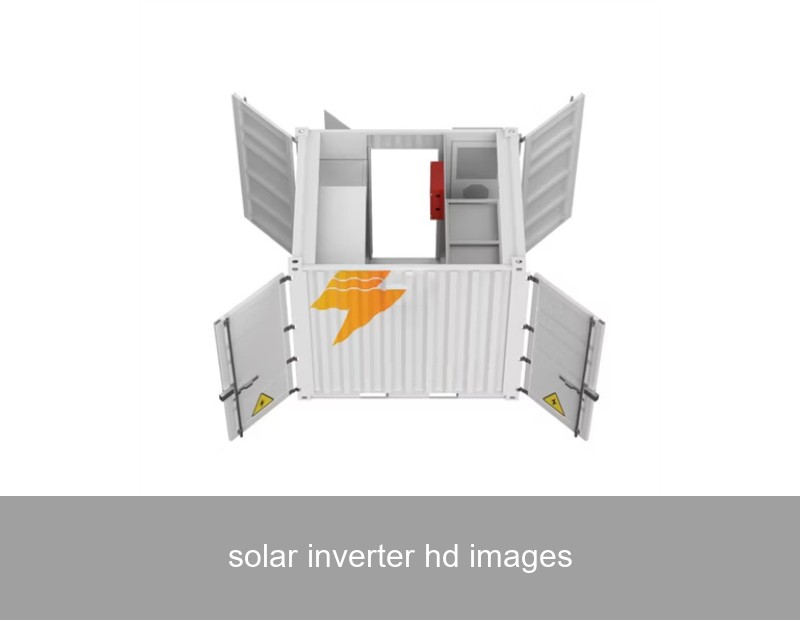
When you search for "solar inverter HD images," you're likely looking for clear, detailed visuals. Perhaps you're a homeowner considering an installation, a technician troubleshooting, or a student researching. But what if I told you that these high-definition images represent something far more profound? They are a gateway to understanding the heart of your photovoltaic system—the critical component that transforms raw sunlight into usable, clean electricity for your home or business. In today's energy landscape, simply having solar panels isn't enough. Maximizing every kilowatt-hour requires intelligent technology, and it all starts with a deep visual and technical understanding of key hardware like inverters.
The Visual Phenomenon: Why We Crave Clarity
Let's be honest: a blurry, pixelated image of a solar inverter does no one any good. You can't read the model number, decipher the status LEDs, or identify connection points. High-definition images satisfy a fundamental need for clarity and trust. For the end-user, a clear product image builds confidence in the technology's quality and design. For installers and engineers, HD diagrams and photos are indispensable tools for planning, installation, and maintenance. They allow for precise identification of components like DC isolators, AC breakers, communication ports, and cooling systems. This visual clarity is the first step in demystifying a technology that is often seen as a "black box" on the wall.

Image Source: Wikimedia Commons (Creative Commons)
Beyond Aesthetics: What HD Imagery Reveals About Inverter Technology
Zooming into a high-resolution image of a modern solar inverter, you begin to see the story of technological evolution. The sleek, often minimalist exterior hides a complex universe of power electronics. Here’s what visual cues can tell us:
- Heat Sinks & Cooling Fins: Visible, robust heat dissipation features indicate an inverter designed for high efficiency and long lifespan, as managing heat is critical to performance.
- Ports & Connectivity: The presence of multiple communication ports (Ethernet, Wi-Fi, RS485) signals a "smart" inverter capable of detailed monitoring and grid services.
- Display & Interface: A clear digital display or intuitive LED array is the user's window into real-time power generation, system health, and error codes.
This tangible, visual understanding bridges the gap between abstract concepts and physical hardware. It prepares system owners to engage with their energy data meaningfully.
The Data Narrative: How Inverter Intelligence Powers Real Savings
The true value of a modern inverter isn't captured in a static image; it's in the dynamic data it produces. Think of the inverter as the brain of your solar array. While panels capture sunlight, the inverter optimizes, converts, monitors, and communicates. Key performance metrics it manages include:
| Metric | What It Means | Impact on You |
|---|---|---|
| Conversion Efficiency | Percentage of DC power from panels converted to AC power for your home. | Directly determines your system's financial return. A 98% vs. 95% efficiency can mean significant energy gains over 25 years. |
| Maximum Power Point Tracking (MPPT) | The algorithm that constantly adjusts to draw maximum power from the panels under varying weather. | Ensures you get the most energy from dawn to dusk, even on partly cloudy days. |
| Real-time Monitoring & Reporting | Granular data on daily, monthly, and yearly yield, often accessible via an app. | Empowers you to track savings, identify anomalies (like shading issues), and verify system health. |
According to a report by the National Renewable Energy Laboratory (NREL), advanced inverter functions are pivotal for enabling higher penetrations of solar on the grid, providing services like voltage and frequency regulation.
Case Study: A Bavarian Dairy Farm's Transformation
Let's move from theory to practice. Consider the case of Hofgut Müller, a medium-sized dairy farm in Bavaria, Germany. Facing high and volatile energy costs for milking machines, cooling, and ventilation, they installed a 120 kWp solar array. Initially, they used a standard string inverter system.
The Phenomenon: They noticed their energy bills were dropping but not as much as projected, especially in the afternoons when partial shading from a silo occurred.
The Data: Their monitoring showed a "cliff-edge" drop in production for entire strings when shading hit just a few panels—a classic limitation of traditional string inverters.
The Solution & Result: The farm partnered with Highjoule to upgrade their system with a Highjoule HES Series Hybrid Energy Storage system, which integrates advanced, multi-MPPT string inverters with a battery bank. The power optimizers (effectively mini-inverters at each panel) in the revised design mitigated shading losses. Furthermore, the intelligent inverter within the HES system now:
- Maximizes self-consumption, using solar power directly during the day and storing excess in the battery for use at night.
- Provides backup power for critical farm operations during grid outages.
- Allows the farm to participate in a virtual power plant program, earning revenue by providing grid flexibility.

Image Source: Unsplash (Free to use)
Highjoule's Integrated Approach: Where Visual Clarity Meets Operational Brilliance
At Highjoule, we believe understanding starts with clarity, but it must be followed by performance. Our product philosophy ensures that what you see—in images, specifications, and user interfaces—is a true reflection of the robust technology within. Our HIS (Highjoule Inverter Series) for commercial applications, for example, is engineered for visual and functional transparency:
- Modular Design: Clean, stackable units visible in our installation guides allow for scalable power.
- High-Resolution Touchscreen: Provides an HD window into complex system data with intuitive navigation.
- Comprehensive Monitoring: The Highjoule Energy Portal turns inverter data into actionable insights with crystal-clear charts and alerts, accessible from anywhere.
For residential and small commercial clients, our HES Series combines a sophisticated hybrid inverter with lithium-ion storage into a single, visually streamlined unit. It’s designed not just to be installed, but to be understood and interacted with by the user, promoting greater energy awareness and control.
The Future, Visualized: Smart Inverters and Grid Stability
The next generation of solar inverters, often called "smart" or "grid-forming" inverters, will be the unsung heroes of the renewable energy transition. As mandated in markets like California and Hawaii, these devices do more than just convert power. They can proactively stabilize the grid by injecting or absorbing reactive power, adjusting voltage, and providing inertia—services traditionally offered by fossil-fuel power plants. The U.S. Department of Energy's Solar Futures Study highlights the critical role of such inverter-based resources in achieving a decarbonized grid.
This means the inverter on your wall or in your garage could soon be an active participant in a cleaner, more resilient energy network. The clarity we seek in HD images today foreshadows the transparent, intelligent, and interactive energy systems of tomorrow.
So, the next time you look at a high-definition image of a solar inverter, what will you see? Will it be just a piece of hardware, or will it be the intelligent core of your personal energy revolution, the key to unlocking resilience, savings, and a sustainable future? What role do you envision this technology playing in your energy independence journey?
 Inquiry
 Online Chat