


Finding the Right Supplier of IP66 Type 4X Energy Storage Systems: A Guide to Unwavering Resilience
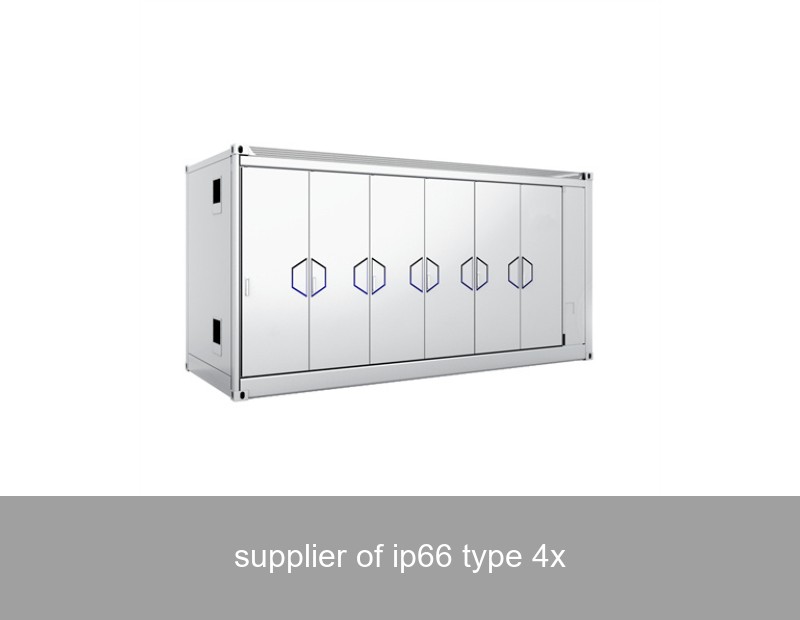
a state-of-the-art battery energy storage system (BESS), the heart of your renewable energy setup, humming away efficiently. Now, imagine it installed outdoors—exposed not just to a gentle breeze and sunshine, but to driving rain, blowing dust, industrial hose-downs, and even corrosive elements. This isn't a hypothetical; it's the daily reality for commercial, industrial, and utility-scale projects. This exposure is precisely why the specification of an IP66 Type 4X enclosure has become non-negotiable for serious players. But what does this alphabet soup mean, and more importantly, how do you choose a supplier of IP66 Type 4X systems that delivers on the promise of true resilience? Let's break it down.
Decoding the Standards: IP66 and Type 4X Explained
First, let's demystify the code. These ratings are your system's first line of defense, and understanding them is key.
- IP66 (Ingress Protection): This international standard (IEC 60529) defines protection against solids and liquids. The first digit '6' means "dust-tight"—no ingress of dust. The second digit '6' is crucial: it means protection against powerful water jets from any direction. Think heavy seaside rain or a direct hit from a cleaning hose.
- Type 4X (NEMA Rating): A common U.S. standard from the National Electrical Manufacturers Association. "Type 4" indicates protection against hose-directed water and windblown dust, similar to IP66. The "X" denotes additional protection against corrosion. This is vital for coastal environments with salty air or sites near industrial processes.
In essence, when a supplier offers an IP66 Type 4X energy storage system, they are committing to a product built to withstand some of the harshest outdoor and industrial conditions without missing a beat.

Image: Outdoor energy storage systems must endure extreme weather. Source: Unsplash
Why This Level of Protection Isn't Just "Nice-to-Have"
The shift to decentralized energy is pushing storage systems out of the controlled confines of dedicated indoor spaces. Rooftops, parking lots, remote microgrid sites, and factory yards are now common homes for BESS. The financial and operational stakes are incredibly high.
The Phenomenon: A standard indoor-rated cabinet is installed in a semi-sheltered location. Over time, fine dust infiltrates, coating sensitive electrical components and insulating heat sinks. Seasonal storms force moisture past seals. The result? Increased risk of thermal runaway, reduced efficiency, premature component failure, and ultimately, catastrophic system downtime.
The Data: According to a 2023 report by the National Renewable Energy Laboratory (NREL), environmental factors and improper commissioning are significant contributors to field failures in early-stage storage deployments. Robust mechanical and environmental design is cited as a critical mitigation factor for long-term reliability and safety.
Case Study: A Coastal Microgrid in Northern Europe
Let's look at a real-world scenario. A community on the North Sea coast aimed for energy independence with a solar-plus-storage microgrid. The challenge? Salt-laden air (highly corrosive), constant high humidity, and frequent, intense wind-driven rain.
The initial proposal included standard outdoor cabinets. However, a rigorous consultant specified IP66 Type 4X for the entire battery storage system. The installed system, from a supplier of IP66 Type 4X solutions, featured:
- Stainless steel hinges and latches (for corrosion resistance).
- Multi-layered sealing gaskets on all doors and cable entries.
- An integrated thermal management system designed to maintain optimal temperature and humidity inside the enclosure, regardless of external conditions.
The Result: After three years of operation, including multiple severe storm events, the system has maintained 99.2% availability. Internal inspections show zero corrosion on electrical components and no moisture ingress. The upfront investment in the higher-spec enclosure has prevented an estimated €150,000 in potential downtime and repair costs, proving that the right enclosure is a value driver, not just a cost.
The Highjoule Standard: Engineering Resilience into Every System
At Highjoule, our journey since 2005 has taught us that true reliability is engineered from the outside in. We don't just place battery racks into a box and stick a rating on it. Our designation as a leading supplier of IP66 Type 4X systems comes from a holistic design philosophy.
Our H-Series Commercial & Industrial ESS is a prime example. Built around the IP66 Type 4X principle, it incorporates features that go beyond the basic rating:
- Unibody, Welded Enclosure: Minimizes seams where water or dust could penetrate, unlike modular, bolted cabinets.
- Corrosion-Resistant Materials: We use powder-coated, galvanized steel or aluminum alloys specifically chosen for harsh environments.
- Sealed Thermal Runoff Paths: Our liquid-cooled or advanced air-cooled systems manage heat internally, preventing the need for large, unprotected external vents that compromise the seal.
- Smart Monitoring: Integrated sensors monitor internal humidity and temperature, providing early alerts long before a problem can affect the batteries.
This approach allows us to deliver systems that are not only intelligent and efficient but are fundamentally durable. They are designed to be installed and forgotten about in terms of weather worries, performing reliably for decades from the sun-scorched landscapes of Southern Europe to the snowy, salted winters of the Northeastern U.S.

Image: Detail of robust sealing and corrosion-resistant hardware on an outdoor enclosure. Source: Unsplash
Choosing Your Supplier: Key Questions Beyond the Rating
So, you're evaluating a supplier of IP66 Type 4X equipment. The rating is a starting point, not the finish line. Here are critical questions to ask:
| Question to Ask | What a Good Answer Looks Like | Why It Matters |
|---|---|---|
| "Is the entire system rated IP66 Type 4X, or just the cabinet?" | The entire system, including all cable entry points, cooling vents, and viewing windows, is designed and tested as a complete unit to the standard. | A single weak point (like a poorly sealed cable gland) can invalidate the entire enclosure's protection. |
| "Can you provide test certification from an independent lab?" | Yes, and they can share relevant excerpts from certification bodies like UL or TÜV. | This verifies the claim isn't just a marketing specification but a proven, tested performance. |
| "How does the thermal management system work without compromising the seal?" | Explanation of a sealed, closed-loop cooling system or a labyrinthine air path with internal heat exchangers. | This is the trickiest engineering challenge. A proper answer shows deep design expertise. |
| "What is your track record in environments similar to mine?" | Specific case studies or references from coastal, desert, or cold climate installations. | Real-world proof trumps all datasheets. Experience in your geography is invaluable. |
The Integration Imperative
Remember, the enclosure protects the brain as well as the brawn. A superior supplier of IP66 Type 4X systems, like Highjoule, integrates the power conversion system (PCS), battery management system (BMS), and fire suppression into the protected environment. This ensures all critical components share the same defensive shield, simplifying installation and guaranteeing cohesive performance. For more on integrated system design, the U.S. Department of Energy's Energy Storage Systems research publications offer valuable technical insights.
Your System's First and Last Line of Defense
Specifying an IP66 Type 4X energy storage system is one of the most concrete decisions you can make to de-risk your project and ensure long-term return on investment. It’s a commitment to resilience that pays dividends in uptime, safety, and total cost of ownership. In a world where extreme weather is becoming more frequent, as noted by agencies like NASA's Climate Change division, this level of protection transitions from best practice to essential practice.
As you plan your next project, we leave you with this question: When you visit your site during the worst weather of the year, will you look at your energy storage system with confidence, or with concern? The choice of your supplier of IP66 Type 4X technology will determine the answer.
 Inquiry
 Online Chat