


Solar Panel Individual Inverter: Unlocking Maximum Energy Harvest and System Resilience
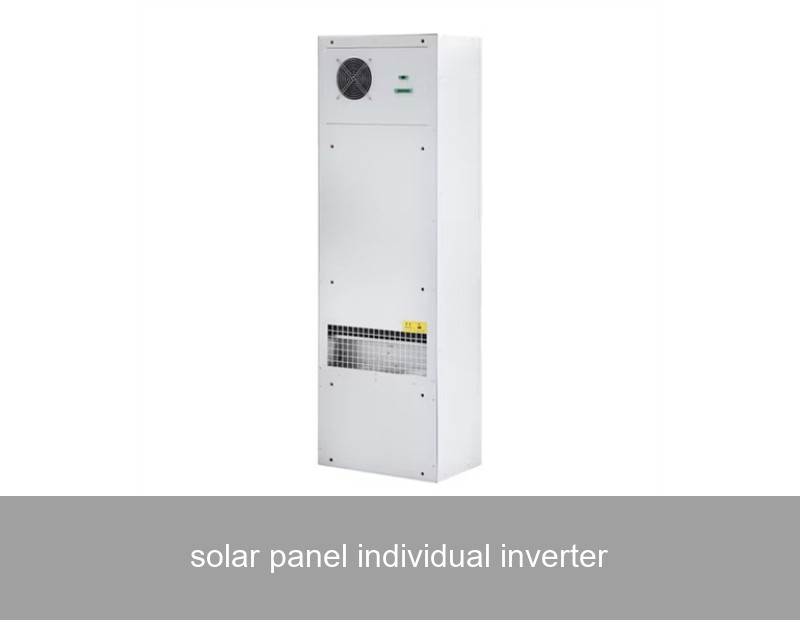
If you've looked into solar power, you've likely encountered a critical choice: a traditional string inverter or a system using a solar panel individual inverter (often called microinverters). This isn't just a technical detail; it's a decision that impacts your system's efficiency, safety, and long-term value. As energy prices remain volatile and extreme weather events become more common, homeowners and businesses are seeking solutions that squeeze every possible kilowatt-hour from their roof while ensuring reliability. This article dives deep into the world of individual inverters, explaining why they are becoming the preferred choice for modern solar installations and how they form the intelligent heart of a truly resilient energy system.
Table of Contents
- What is a Solar Panel Individual Inverter?
- The Phenomenon: The "Weakest Link" Problem in Solar
- By the Numbers: The Performance Data Advantage
- Case Study: Real-World Performance in Dappled Sunlight
- Highjoule's Integrated Approach: Beyond the Inverter
- The Future is Modular and Resilient
What is a Solar Panel Individual Inverter?
Let's break it down simply. A solar panel individual inverter is a small, powerful device attached directly to the back of each solar panel. Its job is to convert the direct current (DC) electricity produced by that single panel into grid-compatible alternating current (AC) right at the source. This is a fundamental shift from the old-school method where 10-20 panels are wired in a "string" to one central inverter. Think of it as giving each solar panel its own dedicated power manager, rather than having all panels report to a single, central boss.
This architecture unlocks a cascade of benefits: panel-level optimization, enhanced safety, granular monitoring, and superior design flexibility. For companies like Highjoule, which specializes in holistic energy storage and management systems, individual inverters represent the ideal building block. They seamlessly integrate with our smart battery systems and energy management platforms, creating a responsive and efficient home or business energy ecosystem.
The Phenomenon: The "Weakest Link" Problem in Traditional Solar
You've probably seen it: a beautiful solar array on a roof, but one section is in the shade from a chimney in the afternoon, or a few panels are soiled by fallen leaves. In a traditional string inverter system, this common scenario creates a significant problem known as the "weakest link" effect.
Because panels are connected in series, the entire string's output is limited by the performance of its lowest-producing panel. If one panel is shaded and producing 30% less power, it drags down the output of every other panel on that string. Furthermore, a single point of failure exists—if the central inverter fails, the entire solar production stops. In an era where we depend on electricity for everything from work to food preservation, this lack of redundancy is a growing concern.

Image: A solar panel individual inverter (microinverter) mounted directly on a rail. Source: Unsplash
By the Numbers: The Performance Data Advantage
The theoretical advantages of individual inverters are backed by compelling data. Independent studies and real-world performance metrics consistently show:
- Energy Harvest Gain: Systems with individual inverters can produce 5-25% more energy annually than string inverter systems, primarily by mitigating shading and mismatch losses. This percentage directly translates to faster payback and higher utility bill savings.
- Enhanced Safety: Individual inverters convert DC to AC at the panel, meaning there is no high-voltage DC wiring running through your property. This eliminates the risk of dangerous DC arc faults, a recognized fire hazard in high-voltage DC systems.
- Granular Monitoring: Homeowners and installers can monitor the performance of each individual panel via a user-friendly app. This allows for rapid identification of issues—like a panel underperforming due to dirt or a technical fault—saving time and maintenance costs.
Research from the National Renewable Energy Laboratory (NREL) highlights how module-level power electronics (MLPE), like microinverters, significantly improve system performance in partially shaded conditions. This isn't just a marginal improvement; it's a fundamental upgrade in how we capture solar energy.
Case Study: Real-World Performance in Dappled Sunlight
Let's look at a concrete example from the target market. A medium-sized bed-and-breakfast in the countryside of Bavaria, Germany, installed a 15 kW solar system in 2021. The charming, historic building and surrounding trees created a complex roof with varying sun exposure throughout the day.
The Challenge: A significant portion of the array faced intermittent shading from deciduous trees in the morning and late afternoon. A quote for a string inverter system projected substantial production losses during these periods.
The Solution: The installer recommended a system built with solar panel individual inverters. Each of the 42 panels was equipped with its own microinverter.
The Data-Driven Outcome: In the first full year of operation, the system's monitoring data revealed the impact:
| Metric | Projected (String Inverter) | Actual (Individual Inverters) |
|---|---|---|
| Annual Energy Production | 12,800 kWh | 14,700 kWh |
| Self-Consumption Rate | 35% | 48%* |
*Increased self-consumption was further enhanced by adding a Highjoule HarmonyHome battery system mid-year, which seamlessly integrated with the microinverter platform.
The system outperformed the string inverter projection by nearly 15%, generating an extra 1,900 kWh of clean electricity. This not only covered more of the B&B's operational load but also provided excess energy to charge their newly installed battery, maximizing independence from the grid. The owner can now see the performance of each panel, noting how the east-facing modules peak in the morning while the west-facing ones take over later, all contributing optimally to the whole.
Highjoule's Integrated Approach: Beyond the Inverter
At Highjoule, we view the solar panel individual inverter as the first critical layer of intelligence in a modern energy system. While the inverters maximize harvest, true energy resilience and cost optimization come from integration with storage and smart management.
Our HarmonyHome (for residential) and IntelliGrid ESS (for commercial) battery storage systems are engineered to communicate flawlessly with leading microinverter platforms. This creates a unified system where:
- Excess solar energy is intelligently stored rather than sold back to the grid at lower rates.
- During an outage, the system can island itself, using solar and batteries to keep critical loads running—a feature that is more complex and often impossible with traditional string inverters without additional equipment.
- Our AI-driven energy management software forecasts weather and consumption patterns, deciding the optimal time to charge the battery, power the home, or export to the grid, maximizing financial return.
For businesses and microgrids, this modular, panel-level approach is even more crucial. It allows for easy system expansion and ensures that production issues in one part of a large rooftop array don't cripple the entire investment. Highjoule's solutions are designed for this scalability from the ground up.
Image: A modern home with a solar and storage system. Source: Unsplash
The Future is Modular and Resilient
The trend in renewable energy is clear: systems are becoming more distributed, more intelligent, and more resilient. The solar panel individual inverter is at the forefront of this shift. It transforms a static array of panels into a dynamic network of independent power generators. When paired with sophisticated storage like Highjoule's systems, this architecture doesn't just save money—it provides peace of mind and energy independence.
As grid dynamics change and the frequency of extreme weather events increases, as noted by agencies like the U.S. Environmental Protection Agency, the ability to produce, manage, and store your own power at the most granular level becomes not just an economic choice, but a strategic one.
Is your current or planned solar system designed to handle the real-world challenges of shade, debris, and equipment failure without sacrificing your entire energy production? What would a 15% increase in your solar output mean for your annual energy bills and your path to energy independence?
 Inquiry
 Online Chat