


Understanding and Choosing the Right Sistema Solar Off Grid Bateria for Energy Independence
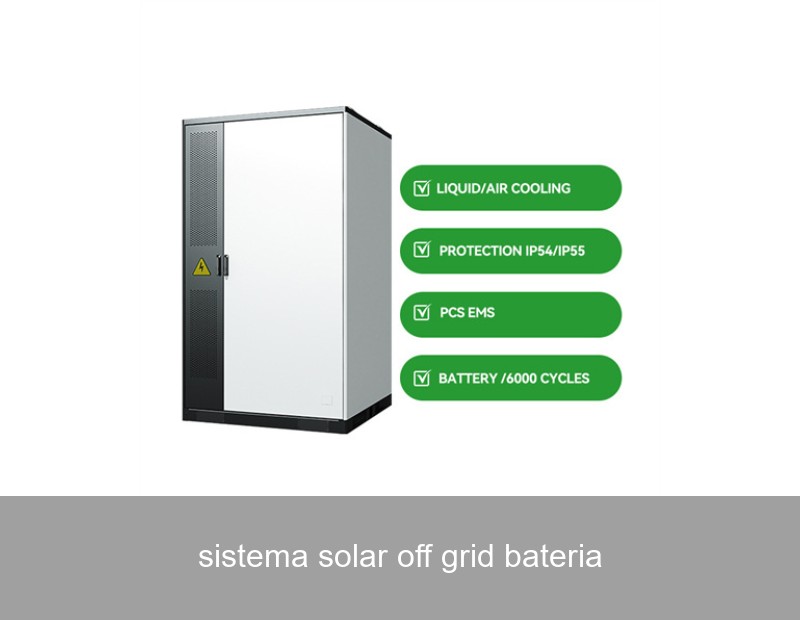
Have you ever imagined a home or business completely free from the grid, powered silently and reliably by the sun? For property owners in remote locations, eco-conscious communities, or regions with unstable power infrastructure, this is not just a dream but a practical solution. The sistema solar off grid bateria, or off-grid solar battery system, is the cornerstone of true energy autonomy. Unlike grid-tied systems, these setups operate independently, capturing solar energy, storing it in batteries, and managing its use around the clock. This article will guide you through the essential components, critical considerations, and real-world applications of these powerful systems, helping you understand how they can provide secure, sustainable power.
Table of Contents
- The Phenomenon: Rising Demand for Energy Self-Sufficiency
- Core Components of a Robust Off-Grid Solar Battery System
- Data Matters: Sizing Your System Correctly
- Case Study: A Mountain Retreat in the Colorado Rockies
- Expert Insights: Key Considerations for a Successful Installation
- How Highjoule Empowers Your Off-Grid Vision
The Phenomenon: Rising Demand for Energy Self-Sufficiency
Across Europe and the United States, a quiet revolution is underway. Homeowners, farmers, and businesses are increasingly seeking independence from traditional utility grids. The drivers are diverse: escalating electricity prices, a desire for resilience against increasing climate-related power outages, and the simple practical need to power locations where grid connection is prohibitively expensive or impossible. An off-grid solar battery system is the definitive answer. It's a self-contained power plant on your property. But here's the crucial part: not all systems are created equal. The heart of its reliability and longevity lies in the sophistication of its bateria (battery) technology and the intelligence of its energy management.
Core Components of a Robust Off-Grid Solar Battery System
Think of your off-grid system as a living ecosystem. Each part must work in harmony with the others for optimal performance.
- Solar Panels (PV Array): The primary energy harvesters. Their size (in kW) determines how much "fuel" you can collect on a sunny day.
- Charge Controller: The guardian of your batteries. It regulates the voltage and current from the panels to safely charge the battery bank, preventing overcharging and damage.
- Battery Bank (The Crucial "Bateria"): This is your energy reservoir. It stores surplus solar energy for use at night, on cloudy days, or during high-demand periods. The choice between advanced Lithium-Ion (like LiFePO4) and traditional lead-acid is a critical decision impacting cost, lifespan, and usable capacity.
- Inverter: The translator. It converts the direct current (DC) electricity stored in your batteries into the alternating current (AC) that powers your household appliances and devices.
- System Monitoring & Management: The brain. Modern systems include smart monitors that provide real-time data on energy production, consumption, and battery state of charge, often accessible via a smartphone app.

Image Source: Unsplash - A modern solar and storage installation.
Data Matters: Sizing Your System Correctly
Under-sizing leads to blackouts; over-sizing wastes money. Proper design starts with data. You must calculate your daily energy consumption in kilowatt-hours (kWh). For example, a typical off-grid home in the US might use 15-30 kWh per day. Next, you analyze your location's solar insolation—how many peak sun hours you receive on average, which varies greatly between Arizona and Scotland. This data, combined with desired days of autonomy (how many cloudy days you want to weather), directly dictates the size of your solar array and, most importantly, the capacity of your sistema solar off grid bateria. A professional installer will use this data to model year-round performance.
Case Study: A Mountain Retreat in the Colorado Rockies, USA
Let's look at a real-world application. A family built a 2,000 sq ft year-round cabin near Telluride, Colorado, at an elevation of 9,500 feet. Grid connection was quoted at over $120,000. They opted for a custom sistema solar off grid bateria.
- Challenge: Harsh winters with heavy snow, temperature swings, and the need to power heating systems, a well pump, and essential appliances without fail.
- Solution & Data:
Component Specification Rationale Solar Array 12 kW To capture ample energy despite lower winter sun angle and potential snow cover. Battery Bank 40 kWh LiFePO4 To provide 3+ days of autonomy during storms. Lithium was chosen for its better performance in cold temperatures, longer cycle life (6,000+ cycles), and higher depth of discharge. Inverter/Charger Dual 10 kW inverters with generator support For high surge power (well pump start) and backup via a propane generator for extreme conditions. - Outcome: The system has operated flawlessly for three years. The family monitors performance via an app, noting they are 100% energy self-sufficient from April to October and use the backup generator for less than 50 hours total during the deepest winter months. Their calculated payback period versus the grid connection fee is under 8 years.
Expert Insights: Key Considerations for a Successful Installation
Based on thousands of deployments, here are the non-negotiable factors for a reliable system:
- Battery Chemistry is King: While lead-acid has a lower upfront cost, Lithium Iron Phosphate (LiFePO4) batteries are now the industry standard for serious off-grid applications. They last 2-3 times longer, require no maintenance, can be discharged more deeply without damage, and are safer. This is a long-term investment where quality pays dividends.
- Don't Skimp on the Inverter: This is the workhorse. Choose a pure sine wave inverter with sufficient continuous and surge power ratings. A quality inverter ensures sensitive electronics run safely and efficiently.
- Professional Design & Installation: This is not a DIY project for most. Electrical codes, proper wiring, ventilation, and system programming are critical for safety, performance, and warranty compliance. Always work with certified professionals.
For more on the science behind solar potential in different regions, reputable resources like the National Renewable Energy Laboratory (NREL) provide excellent maps and data.
How Highjoule Empowers Your Off-Grid Vision
At Highjoule, with nearly two decades of experience since 2005, we understand that an off-grid system is more than just hardware—it's a commitment to reliability. We provide integrated, intelligent solutions that take the complexity out of energy independence. Our Atlas Series of off-grid and hybrid energy storage systems are engineered for demanding applications. They combine high-density, UL-certified LiFePO4 batteries with our proprietary Helios Energy Management System in a single, sleek enclosure.
What does this mean for you? Our system intelligently prioritizes loads, seamlessly integrates backup generation, and provides you with crystal-clear visibility into your energy ecosystem through the Highjoule app. For the Colorado cabin case study, a system like our Atlas 40 would have been a perfect, streamlined fit, reducing installation time and complexity while delivering the robust performance needed. Whether for a remote residential homestead, an agricultural operation, or a critical microgrid for a small community, Highjoule designs systems that are built to last and smart by design.

Image Source: Unsplash - Technician inspecting a modern battery storage system.
Looking Ahead: The Future is Integrated and Intelligent
The next evolution of the sistema solar off grid bateria is already here. We are moving towards systems that can dynamically manage multiple power sources (solar, wind, generator) and loads (including electric vehicle charging) with predictive weather analytics to optimize battery cycles and extend system life even further. The goal is maximum efficiency with minimal user intervention.
What is the first step you would take to understand if your home or project could truly be powered by a self-sufficient, off-grid solar and battery system?
 Inquiry
 Online Chat