


Solar Power for Off-Grid Cabin: Your Complete Guide to Energy Independence
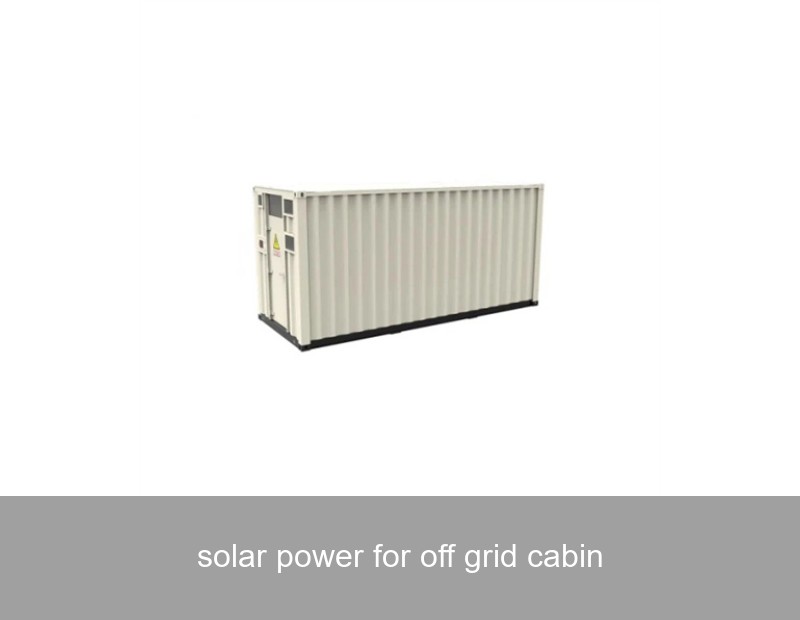
Dreaming of a cozy retreat far from the power lines? You're not alone. The allure of the off-grid cabin is stronger than ever, but it hinges on one critical question: how do you keep the lights on? The answer, increasingly, is harnessing the sun. Solar power for off-grid cabin living has evolved from a niche hobby to a robust, reliable solution, thanks to dramatic advances in photovoltaic panels and, crucially, battery storage technology. This guide will walk you through everything you need to know to power your sanctuary sustainably and intelligently.
Table of Contents
- The Phenomenon: Why Off-Grid Solar is Booming
- The System: Anatomy of an Off-Grid Solar Power Setup
- The Data: Costs, Savings, and Real-World Performance
- Case Study: A Year-Round Retreat in the Swedish Woods
- Expert Insights: Choosing the Right Technology
- Your Power Solution: Highjoule's Role in Off-Grid Living
The Phenomenon: Why Off-Grid Solar is Booming
Gone are the days of dim, unreliable cabin power. Today's systems are sophisticated energy hubs. The driver? A powerful combination of desire for sustainability, technological advancement, and in some regions, rising costs or logistical challenges of connecting to a distant grid. It's about more than just electricity; it's about self-reliance and a lighter footprint.
The System: Anatomy of an Off-Grid Solar Power Setup
An effective off-grid system is more than just panels on the roof. It's a carefully balanced ecosystem with four key components:
- Solar Panels (PV Array): Capture sunlight and convert it to direct current (DC) electricity.
- Charge Controller: Regulates the voltage and current from the panels to safely charge the batteries.
- Battery Energy Storage System (BESS): The heart of off-grid living. This stores excess solar energy for use at night or during cloudy days.
- Inverter: Converts the stored DC electricity from the batteries into the alternating current (AC) that powers your appliances.
Think of it like a water system: panels collect the rainwater (sun), the charge controller ensures the flow isn't too strong, the battery is your large storage tank, and the inverter is the pump that delivers water at the right pressure for your taps.

Image Source: Unsplash - A modern cabin powered by solar energy.
The Data: Costs, Savings, and Real-World Performance
Let's talk numbers. According to the U.S. Department of Energy, the cost of solar panels has dropped by over 60% in the last decade. For a typical off-grid cabin system in Europe or the U.S., you might be looking at an initial investment of $15,000 to $30,000, heavily dependent on your energy needs and battery capacity. The payoff? Decades of near-zero electricity bills and immunity from utility rate hikes.
Here’s a simplified breakdown of a weekly energy cycle for a well-designed cabin:
| Day Type | Solar Production | Battery Usage | Key Takeaway |
|---|---|---|---|
| Sunny Day | High | Minimal (Batteries charge fully) | Excess power fills the battery bank for later. |
| Cloudy Day | Moderate | High (Batteries supplement solar) | A robust battery bank is critical for continuity. |
| Night | None | 100% (All power from batteries) | Battery depth of discharge and lifespan are key metrics. |
Case Study: A Year-Round Retreat in the Swedish Woods
Consider the real-world example of the Lindström family cabin in Jämtland, Sweden. Their goal was year-round usability, despite harsh winters with only 4-5 hours of daylight. Their previous lead-acid battery system failed repeatedly, unable to handle deep discharges and cold temperatures.
- Upgraded Solar Array: 8 kW of north-facing, cold-optimized panels.
- Core Upgrade - Battery System: They installed a 28 kWh lithium iron phosphate (LiFePO4) battery system from Highjoule, specifically the Highjoule HESS-C model for its exceptional cold-weather performance and long cycle life.
- Outcome: The system now provides uninterrupted power for heating (heat pump backup), lighting, refrigeration, and communications. Even during the polar night period, careful energy management coupled with the battery's 95% efficient discharge ensures comfort. Data from their first full winter showed a 99.8% energy availability, a stark contrast to their previous 70%.
This case highlights that the choice of battery technology isn't just a detail—it's the defining factor for off-grid reliability.
Expert Insights: Choosing the Right Technology
As a specialist at Highjoule, I often tell clients that your solar panels capture the energy, but your battery system *defines* your off-grid experience. Here’s what to prioritize:
- Battery Chemistry: Lithium Iron Phosphate (LiFePO4) is now the gold standard for off-grid. It's safer, lasts 3-5x longer than traditional lead-acid (often 6,000+ cycles), and performs well in a wider temperature range. NREL research consistently underscores its advantages for stationary storage.
- System Intelligence: Can your system manage itself? Look for smart battery management systems (BMS) that optimize charging, prevent damage, and can be monitored remotely via an app—a game-changer for remote cabins.
- Scalability: Your needs may grow. Can you easily add more battery capacity later? Modular systems are a future-proof investment.

Image Source: Unsplash - A modern lithium-ion battery storage unit.
Your Power Solution: Highjoule's Role in Off-Grid Living
At Highjoule, we've been engineering advanced energy storage solutions since 2005, and off-grid applications are close to our heart. Our products are designed to meet the unique challenges you face. For the cabin owner, our Highjoule Home Energy Storage System (HESS) series offers the perfect blend of robustness and intelligence.
Why does this matter for your cabin? Our HESS systems use LiFePO4 chemistry for safety and longevity. They feature an integrated, weather-resistant design suitable for installation in garages or utility rooms, and their smart BMS allows you to check your cabin's power status from your phone in the city. You can set usage profiles to prioritize essential loads during low sun, ensuring your freezer and security system always have power. For larger cabins or micro-grid applications, our commercial-scale systems provide the same rugged reliability.
We don't just sell hardware; we partner with a network of certified installers across Europe and North America who understand the nuances of off-grid design. They can help you size a system that matches your true consumption, avoiding both underperformance and overspending.
Ready to Design Your System? Start With This Question
The journey to energy independence starts with an honest audit. What does "living" in your cabin truly mean? Is it weekend summer visits, or do you envision working remotely there through a snowy January? Listing your essential appliances (fridge, lights, water pump, heating backup) and their wattage is the first, most crucial step. From there, the puzzle of panel count and battery capacity begins to solve itself.
What's the one non-negotiable appliance you can't imagine your off-grid cabin without, and how will you ensure it has power even after three stormy days?
 Inquiry
 Online Chat