


Proyectos Fotovoltaicos en Ecuador: Powering a Sustainable Future with Solar and Storage
Have you ever wondered how a country blessed with some of the most consistent solar radiation on the planet is harnessing that power? The growth of proyectos fotovoltaicos en Ecuador is more than just an energy trend; it's a transformative movement. From the Galápagos Islands to the industrial hubs of Quito and Guayaquil, solar energy projects are illuminating the path toward energy sovereignty and sustainability. However, the true potential of these projects isn't fully realized until we address the sun's only flaw: it sets. This is where advanced energy storage systems become the critical linchpin, ensuring that the clean energy generated during the day powers homes, businesses, and industries around the clock. As a global leader in this field, Highjoule is at the forefront of integrating intelligent storage with proyectos fotovoltaicos worldwide, bringing reliability and intelligence to sustainable energy solutions.
Table of Contents
- The Solar Landscape in Ecuador: More Than Just Sunshine
- The Storage Imperative: Why Solar Alone Isn't Enough
- Case Study: Stabilizing the Grid in the Galápagos
- The Technology Behind Reliable Solar-Plus-Storage Projects
- Highjoule's Role in Advanced Solar-Plus-Storage Solutions
- Future Horizons for Ecuador's Energy Matrix
The Solar Landscape in Ecuador: More Than Just Sunshine
Ecuador's geographical positioning is a solar engineer's dream. With an average solar irradiance of 4.5 to 5.5 kWh/m²/day across most regions, the country possesses a natural resource far more sustainable than fossil fuels. The government's push, through initiatives like the Ley Orgánica de Eficiencia Energética and tenders for renewable energy projects, has accelerated the development of both utility-scale and distributed proyectos fotovoltaicos en Ecuador.
But here's the phenomenon we often see: high daytime generation can lead to grid congestion or curtailment if not managed properly. The data tells a compelling story. According to the International Renewable Energy Agency (IRENA), Ecuador increased its solar PV capacity significantly in recent years, yet the intermittent nature of this power source poses integration challenges. The key metric isn't just installed capacity in megawatts (MW); it's usable capacity in megawatt-hours (MWh). This distinction is where the conversation shifts from simply capturing sunlight to intelligently managing its energy.
The Storage Imperative: Why Solar Alone Isn't Enough
Think of a solar PV plant without storage like a powerful waterfall that only flows during the day. Anyone needing water at night is out of luck. Similarly, solar generation peaks at midday, which may not align with Ecuador's evening energy demand peak. This mismatch creates a dual problem:
- Grid Instability: Sudden drops in solar output due to cloud cover or sunset can strain conventional power plants tasked with ramping up quickly.
- Wasted Potential: Excess solar energy generated when demand is low is often lost or "curtailed," representing a direct financial and resource loss for project owners.
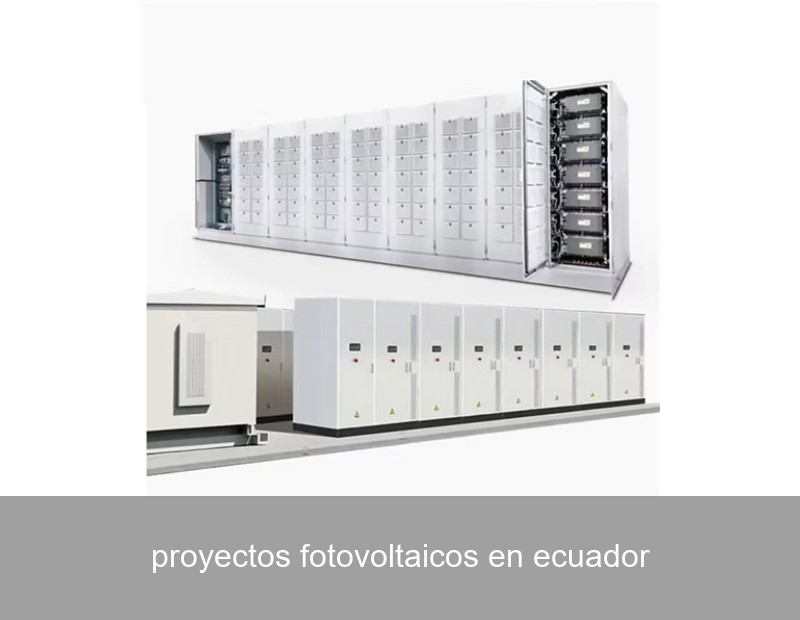
The solution is a seamless marriage between photovoltaic generation and Battery Energy Storage Systems (BESS). A BESS acts as a shock absorber and a time-shifting device for the grid, storing surplus solar energy and dispatching it when it's needed most. This transforms a variable resource into a firm, dispatchable one.

Image Source: Unsplash - Representative image of a utility-scale solar project.
Case Study: Stabilizing the Grid in the Galápagos
Let's look at a real-world example that highlights the critical role of storage. The Galápagos Islands, a UNESCO World Heritage site, have been working to eliminate diesel generation and protect their fragile ecosystem. A landmark proyecto fotovoltaico on the island of Santa Cruz incorporated a battery storage system to address the island's small, isolated grid.
The Challenge: The existing solar PV installation helped reduce diesel consumption, but its variable output risked causing frequency fluctuations on the microgrid.
The Solution: Integration of a containerized BESS specifically designed for island grids. This system provides:
- Frequency Regulation: The batteries respond in milliseconds to balance supply and demand, maintaining a stable grid frequency.
- Ramp Rate Control: It smooths out the sharp increases and decreases in solar power output caused by passing clouds.
- Short-Term Energy Dispatch: It stores energy for use during early evening hours, further displacing diesel.
The Results: This project, documented in part by reports from the World Bank which has supported renewable initiatives in the region, demonstrated a reduction in diesel consumption by over 40% during peak solar hours and significantly improved grid reliability. The storage system ensured that the clean solar energy was not only generated but also effectively utilized, setting a benchmark for other islands and remote communities in Ecuador and beyond.
The Technology Behind Reliable Solar-Plus-Storage Projects
What makes a modern BESS the ideal partner for proyectos fotovoltaicos en Ecuador? It goes beyond just the battery cells. An advanced system like those developed by Highjoule is built on three pillars:
| Pillar | Description | Benefit for Solar Projects |
|---|---|---|
| 1. Cell Chemistry & System Design | Utilizing proven, safe Lithium Iron Phosphate (LFP) chemistry in a modular, containerized design. | Long cycle life, high safety standards, and scalable capacity to match any project size from commercial to utility-scale. |
| 2. Intelligent Energy Management System (EMS) | The "brain" of the operation, using algorithms to forecast solar generation and optimize charge/discharge cycles. | Maximizes self-consumption of solar energy, reduces energy costs, and can provide grid services like frequency response. |
| 3. Robust Power Conversion System (PCS) | Efficiently converts DC battery power to AC grid power and manages the flow between solar arrays, batteries, and the grid. | Ensures high round-trip efficiency (minimal energy loss) and seamless integration with existing solar inverter infrastructure. |
Highjoule's Role in Advanced Solar-Plus-Storage Solutions
With nearly two decades of experience since our founding in 2005, Highjoule has positioned itself as a pivotal partner for developers of proyectos fotovoltaicos en Ecuador and globally. We understand that each project has unique demands—whether it's a large industrial plant in Manabí seeking to cut operational costs or a remote community in the Andes aiming for energy independence.
Our product suite, including the HJ Cube commercial & industrial storage system and the HJ Megapack for utility-scale applications, is designed for simplicity and performance. These turnkey solutions come with our proprietary JouleMind AI platform, which provides real-time monitoring, predictive analytics, and remote management. For a solar project developer, this means you can focus on energy generation while we ensure its optimization, storage, and reliable delivery, thereby enhancing your project's bankability and long-term return on investment.

Image Source: Unsplash - Representative image of a technician maintaining a BESS.
Future Horizons for Ecuador's Energy Matrix
The integration of storage with proyectos fotovoltaicos en Ecuador is not the endgame; it's the foundation. The future points toward hybrid renewable plants, virtual power plants (VPPs) aggregating distributed resources, and microgrids that can operate independently from the national grid. These advancements promise greater resilience against extreme weather events and geopolitical energy shocks.
For international investors and local stakeholders alike, the question is evolving from "How much solar can we build?" to "How can we build a smarter, more resilient energy system?" The expertise of companies like Highjoule, which bring global experience in grid integration and storage optimization to the local context of Ecuador's energy landscape, will be indispensable in answering this question.
 Inquiry
 Online Chat