


Off-Grid Electrical Solutions: Powering Independence and Resilience in the Modern World
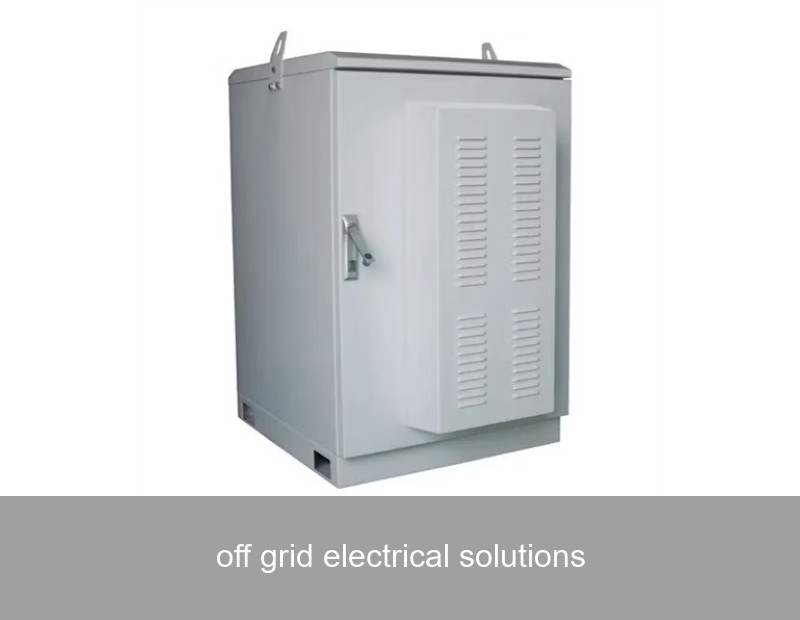
Imagine a world where your power supply is immune to grid outages, fluctuating energy prices, and remote locations. This is the promise of modern off-grid electrical solutions. Once considered a niche choice for remote cabins, today's off-grid systems represent a sophisticated fusion of renewable energy generation, intelligent battery storage, and smart management. For businesses, communities, and homeowners across Europe and the US, going off-grid is no longer just about disconnection—it's about achieving ultimate energy autonomy, sustainability, and operational resilience. In this article, we'll explore how advanced technology is redefining what it means to live and work off the grid.
Table of Contents
- The Rise of the Modern Off-Grid Paradigm
- Core Components of a Robust Off-Grid System
- Case Study: An Alpine Retreat's Year-Round Power
- Highjoule's Role in Advanced Off-Grid Solutions
- The Future of Energy Independence
The Rise of the Modern Off-Grid Paradigm
Traditionally, "off-grid" conjured images of basic solar panels and noisy diesel generators. The modern reality is dramatically different. The convergence of three key factors has propelled off-grid systems into the mainstream: dramatically falling costs for solar PV and lithium-ion batteries, increased frequency of grid instability due to extreme weather events, and a strong societal push towards decarbonization. It's a shift from a compromise to a premium choice for reliability.

Image Source: Unsplash - A modern home powered by solar, emblematic of contemporary off-grid living.
Core Components of a Robust Off-Grid System
Building a reliable off-grid power system is like assembling a high-performance team. Each component has a critical role:
- Energy Generation (The Producers): Typically solar PV arrays or wind turbines. Solar is the most common due to its modularity and low maintenance. Sizing is critical—you must generate enough in your worst month (e.g., a cloudy December in Bavaria or a short-day winter in Montana).
- Energy Storage (The Bank): This is the heart of the system. Battery banks store surplus daytime energy for use at night and during low-generation periods. Lithium-ion batteries, particularly Lithium Iron Phosphate (LFP), are now the standard for their long lifespan, depth of discharge, and safety.
- Charge Controller & Inverter (The Brain & Interpreter): The charge controller manages the flow of power from the panels to the batteries, preventing overcharging. The inverter converts the stored DC battery power into AC power for your household or business appliances. In advanced systems, these are often integrated into a single, intelligent unit.
- Backup Generator (The Insurance Policy): For extended periods of poor weather, a quiet, efficient biodiesel or propane generator can provide a top-up charge to the batteries, ensuring continuous power. The best systems automate this process.
The Data Driving the Shift: More Than Just a Backup
Let's talk numbers. According to the International Energy Agency (IEA), global renewable capacity is set to expand by 2,400 GW between 2022-2027. A significant portion of this is in distributed, behind-the-meter systems. In the US, the National Renewable Energy Laboratory (NREL) notes that the levelized cost of solar+storage has fallen by over 70% in the last decade. This isn't just about cost savings; it's about risk mitigation. For a business, a single grid outage can mean tens of thousands in lost revenue. An off-grid or grid-resilient system transforms that risk equation entirely.
Case Study: Sustainable Winery in Tuscany, Italy
The Challenge: A prestigious winery in rural Tuscany aimed to become 100% energy independent. Their operations—including refrigeration, irrigation pumps, and processing equipment—were vulnerable to grid fluctuations and sought to eliminate their carbon footprint from energy use.
The Solution: A custom-designed off-grid microgrid was installed:
| Component | Specification |
|---|---|
| Solar PV Array | 250 kWp canopy installation over parking and vineyard land |
| Battery Energy Storage System (BESS) | Highjoule H3-Stack modular system, 500 kWh capacity |
| Energy Management System | Highjoule Neuron AI-powered platform for load forecasting & optimization |
| Backup Generator | Automated biodiesel generator (used less than 50 hours/year) |
The Results: Within the first year:
- Achieved 99.8% energy independence from the national grid.
- Reduced operational energy costs by 100%, with a projected ROI of 6 years.
- Prevented an estimated 85 tonnes of CO2 emissions annually.
- Gained a powerful marketing story for their "fully sun-powered wine."
Highjoule's Role in Advanced Off-Grid Solutions
At Highjoule, with nearly two decades of experience since 2005, we've moved beyond simply providing components. We engineer integrated, intelligent power ecosystems. For clients seeking true off-grid independence, our solutions are built around our core Highjoule H-Series Battery Systems. These modular, LFP-based storage units are designed for the rigorous charge/discharge cycles of off-grid living and are scalable from a single residential property to a large industrial microgrid.
What truly differentiates our off-grid electrical solutions is the Highjoule Neuron AI Platform. Think of it as the autonomous conductor of your personal energy orchestra. It doesn't just react; it predicts. By analyzing weather forecasts, historical consumption patterns, and seasonal trends, it proactively manages energy flow—prioritizing critical loads, scheduling high-energy tasks for peak production times, and seamlessly activating backup sources only when absolutely necessary. This intelligence maximizes system lifespan and ensures not a single watt-hour is wasted.

Image Source: Unsplash - Representative image of advanced battery system monitoring and control.
Our services encompass everything from initial feasibility analysis and custom design to installation support and remote system health monitoring. We partner with you to navigate local regulations (a key consideration in both the EU and US) and ensure your system is not just powerful, but also compliant and future-proof.
The Future of Energy Independence
The trajectory is clear. As battery densities improve and AI-driven management becomes even more precise, the efficiency and appeal of off-grid systems will only grow. We're beginning to see the integration of electric vehicle (EV) batteries as bidirectional assets in these systems, further enhancing resilience. The line between off-grid and "grid-resilient" homes/businesses is blurring, creating a new standard: the energy-independent property.
Is Your Organization Ready to Redefine Its Energy Foundation?
The journey to energy independence starts with a question: What are the true costs—financial, operational, and environmental—of your current reliance on the traditional grid? We invite you to explore what a tailored off-grid electrical solution could look like for your remote facility, agricultural operation, or new sustainable development project. What critical load would you secure first if you had guaranteed power?
 Inquiry
 Online Chat