


Emergency Backup Power Supply: Your Shield Against Modern Grid Instability
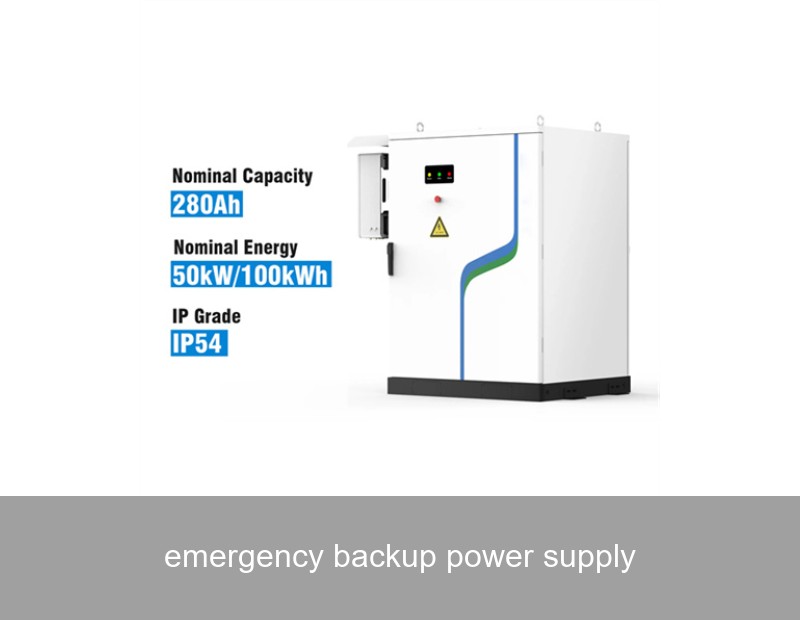
a severe storm knocks out the power in your neighborhood. For a few hours, it's an inconvenience. But what if the outage lasts for days? For businesses, hospitals, data centers, and families, this isn't just a scenario—it's a costly and potentially dangerous reality. An emergency backup power supply has evolved from a luxury for a few to a critical necessity for many. It's no longer just about keeping the lights on; it's about ensuring continuity, safety, and resilience in an era of increasing climate volatility and aging grid infrastructure. In this article, we'll explore why modern backup power is essential, how innovative technologies like battery storage are revolutionizing it, and what you should consider to protect what matters most.
Table of Contents
- The New Normal: Why Backup Power is No Longer Optional
- Beyond Generators: The Rise of Battery Energy Storage Systems (BESS)
- Key Components of a Modern Emergency Backup System
- A Real-World Case Study: Resilience in Action
- Choosing the Right System for Your Needs
- Building Your Future Resilience
The New Normal: Why Backup Power is No Longer Optional
The phenomenon of power outages is intensifying. It's a trend backed by hard data. In the United States, the U.S. Energy Information Administration (EIA) reports that the average annual duration of power interruptions per customer has been increasing in recent years. Major events like Winter Storm Uri in Texas or recurring wildfires in California highlight systemic vulnerabilities. In Europe, the energy landscape is transforming rapidly, with a push for renewables sometimes creating grid balancing challenges, and geopolitical factors underscoring the need for energy independence.
The impact is stark. For a homeowner, a prolonged outage can mean spoiled food, lack of heating or cooling, and security risks. For a commercial enterprise, it translates directly to lost revenue, operational shutdown, and data vulnerability. The cost of downtime can be astronomical. This isn't fear-mongering; it's a simple risk assessment. The modern emergency backup power supply is the insurance policy against this tangible and growing risk.
Beyond Generators: The Rise of Battery Energy Storage Systems (BESS)
Traditionally, diesel or propane generators have been the go-to solution. They work, but they come with significant drawbacks: noise, emissions, fuel storage concerns, maintenance needs, and a brief delay before they kick in. Today, there's a smarter, cleaner, and more instantaneous alternative: Battery Energy Storage Systems (BESS).
Think of a BESS as a giant, intelligent battery for your home or business. It's permanently installed, silent, and emits no fumes. Its core advantage is its speed—it can switch to backup power in milliseconds, so your computers and sensitive electronics never even flicker. When paired with solar panels, it transforms from a mere backup into a comprehensive energy management system. It stores excess solar energy produced during the day to power your home at night or during an outage, maximizing your self-consumption and slashing your energy bills.
This is where Highjoule excels. As a leader since 2005, we design and manufacture integrated BESS solutions that are more than just backup. Our H-Joule Commercial & Industrial (C&I) Series and H-Joule Residential Series are intelligent platforms. They don't just provide power during an outage; they optimize your energy usage daily, allow for peak shaving to reduce demand charges (a huge benefit for businesses), and can even participate in grid services in some regions. It's an emergency backup power supply that pays for itself over time.

Image Source: Unsplash (Representative image of a residential battery storage unit)
Key Components of a Modern Emergency Backup System
A robust backup system is an ecosystem. Here’s what makes it work:
- The Battery Bank: The heart of the system. Highjoule uses advanced lithium iron phosphate (LFP) chemistry, known for its safety, long lifespan (typically over 6000 cycles), and stability.
- The Hybrid Inverter: The brain. This critical device manages energy flow between the grid, solar panels, the battery, and your home's circuits. It converts DC power from batteries and solar to AC for your appliances and decides when to charge or discharge based on your settings.
- The Critical Loads Panel (Optional but Recommended): A dedicated electrical sub-panel that powers your essential circuits (refrigeration, lights, internet, medical equipment). This allows a smaller, more cost-effective battery system to support your most important needs for longer periods.
- Energy Management Software (EMS): The intelligence layer. Highjoule's proprietary EMS lets you monitor and control your system via a smartphone app. You can set backup priorities, track energy savings, and receive system status alerts.
| Feature | Traditional Generator | Modern Battery Storage (BESS) |
|---|---|---|
| Startup Time | Seconds to minutes | Milliseconds (seamless) |
| Noise & Emissions | Loud, produces fumes | Silent, zero on-site emissions |
| Maintenance | Regular (oil, filter, fuel) | Minimal, mostly software updates |
| Fuel Source | Diesel/Propane (purchased) | Stored electricity (solar/grid) |
| Daily Utility | Only during outages | Daily energy bill management |
A Real-World Case Study: Resilience in Action
Let's look at a concrete example from California, USA—a region familiar with Public Safety Power Shutoffs (PSPS) due to wildfire risk.
The Challenge: A mid-sized organic farm and cold storage facility in Sonoma County faced repeated multi-day grid outages. Their existing diesel generator was expensive to run, unreliable for sensitive refrigeration controls, and violated their sustainability ethos. Spoiled produce meant direct financial loss and broken supply chains.
The Solution: Highjoule deployed a turnkey H-Joule C&I Microgrid System. The system included:
- A 250 kW / 500 kWh battery storage unit.
- Integration with their existing 150 kW rooftop solar array.
- A dedicated backup circuit for the critical refrigeration and HVAC loads.
- Grid-forming inverters capable of "black start" – meaning the system can restart on its own without grid support.
The Results: During a 60-hour PSPS event the following season:
- The facility operated at 100% capacity on solar and battery power.
- Zero produce was lost, saving an estimated $85,000 in inventory.
- The generator was kept as an ultra-backup but never needed to start.
- Beyond backup, the system's peak shaving feature reduced their monthly demand charges by ~30%, accelerating ROI. According to a National Renewable Energy Lab (NREL) report, such combined benefits are key to the economic viability of storage.

Image Source: Unsplash (Representative image of a C&I-scale battery system)
Choosing the Right System for Your Needs
Selecting an emergency backup power supply isn't one-size-fits-all. Ask yourself these questions:
- What are my critical loads? List the appliances and circuits you must keep running (e.g., sump pump, furnace blower, refrigerator, medical device). Calculate their total wattage to estimate your power (kW) and energy (kWh) needs.
- What is my outage profile? Are outages typically short (hours) or long (days)? This determines your required battery capacity.
- Do I have or want solar? Pairing storage with solar is synergistic. If you have solar, storage ensures you can use your own power during an outage (most grid-tied solar shuts off during blackouts for safety without a battery).
- What are my financial goals? Are you purely seeking peace of mind, or do you want a system that also reduces your energy bills? A solution like Highjoule's is designed for both.
Highjoule's approach is consultative. Our experts work with you to assess these factors, design a system tailored to your specific site and goals, and handle installation through our network of certified partners, ensuring a seamless transition to greater energy independence.
Building Your Future Resilience
The conversation around power is shifting from mere consumption to control. An emergency backup power supply is the cornerstone of this controlled, resilient energy future. It empowers you to take charge, protect your assets, and contribute to a more stable, sustainable grid.
The technology is here, it's proven, and it's more accessible than ever. Whether you're a homeowner tired of anxiety during storm season or a business owner calculating the true cost of downtime, the question is no longer if you need a backup plan, but what kind of modern, intelligent system you will choose.
What's the first thing in your home or business that you would prioritize protecting during the next power outage, and how long would you need it to run?
 Inquiry
 Online Chat