


Is the Lithium Magnesium Battery the Key to a 24/7 Renewable Grid?
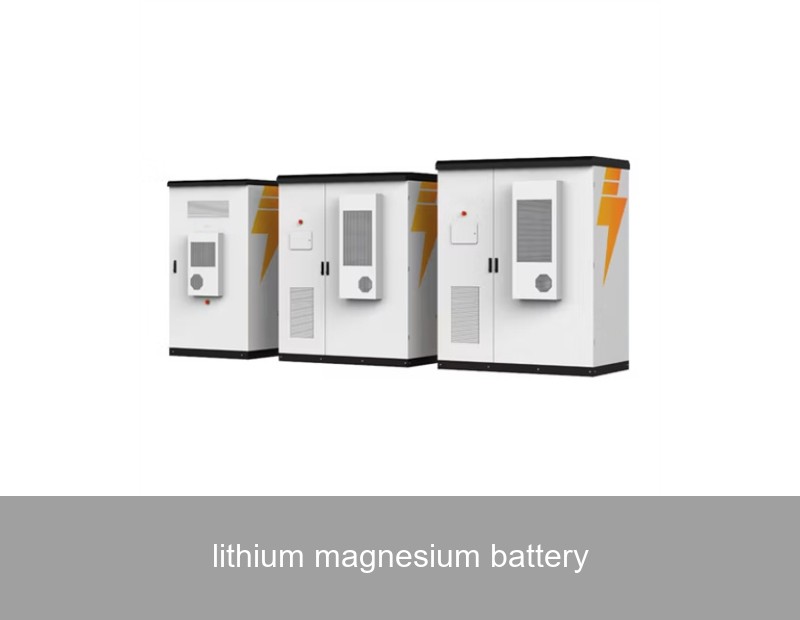
If you're involved in renewable energy, whether you're a homeowner with solar panels or a facility manager for a large industrial site, you've felt the pinch. The sun sets, the wind calms, but your demand for power doesn't. This fundamental challenge—mismatch between generation and consumption—is the very problem energy storage aims to solve. For years, the conversation has been dominated by lithium-ion. But on the horizon, a new contender is generating serious buzz: the lithium magnesium battery. Could this be the technology that finally makes round-the-clock clean energy not just possible, but practical and affordable?
The quest for better batteries isn't just academic; it's critical for our energy future. While lithium-ion has powered our revolution so far, concerns about material sourcing, safety, and longevity under heavy cycling are driving innovation. Enter lithium-magnesium (Li-Mg) technology, a promising chemistry that aims to blend the best of both worlds.
What is a Lithium Magnesium Battery? Unpacking the Chemistry
At its core, a lithium magnesium battery is a type of rechargeable battery that uses magnesium (Mg) as the anode material and lithium-based compounds in the cathode. Think of it as a powerful hybrid. Why is this combination so interesting? Let's break it down with a simple comparison.
| Feature | Traditional Lithium-ion | Lithium Magnesium (Potential) |
|---|---|---|
| Anode Material | Graphite (Carbon) | Magnesium Metal |
| Energy Density | High | Very High (Theoretical) |
| Safety Profile | Risk of thermal runaway | Potentially higher (Mg is less reactive) |
| Material Cost & Abundance | Lithium, Cobalt are costly/geopolitical | Magnesium is abundant and cheaper |
| Cycle Life (for storage) | Good, but degrades with deep cycles | Potentially excellent for long-duration |
The "magic" lies in magnesium's properties. Magnesium is the eighth most abundant element in the Earth's crust, making it more accessible and less prone to supply chain shocks than cobalt. As an anode, it can transfer two electrons per ion (compared to lithium's one), which theoretically allows it to store more energy in the same volume—a property known as volumetric energy density. This is a big deal for applications where space is at a premium.
But it's not all sunshine. The technology faces real hurdles, primarily related to electrolyte compatibility and the speed at which energy can be delivered (power density). Research is intensely focused on overcoming these barriers, and progress is being made. As noted by the U.S. Department of Energy's research initiatives, multivalent batteries like Mg-based systems are a key pathway to low-cost, long-duration storage (Source: U.S. DOE).

Image: Research into new battery chemistries is crucial for our energy future. (Photo by American Public Power Association on Unsplash)
From Lab to Grid: A Real-World Application
Let's move from theory to practice. While commercial Li-Mg batteries are still emerging, the principles driving their development—longevity, safety, and material sustainability—are already shaping today's cutting-edge storage projects. Consider a microgrid pilot in Southern California, a region with ambitious renewable goals and a fragile grid.
Project: Industrial Microgrid for a Food Processing Plant.
Challenge: The facility needed to offset 80% of its grid consumption with solar, but required 8-10 hours of reliable backup power to handle evening shifts and critical refrigeration loads. Standard lithium-ion systems would require significant oversizing to handle the daily deep discharge cycles without rapid degradation, hurting the project's economics.
Solution & Data: The system integrator opted for a hybrid approach, pairing a large-scale solar array with an advanced battery energy storage system (BESS) that emphasized cycle life over peak power. While not using pure Li-Mg chemistry, the system's design priorities mirror its advantages. The 2.5 MWh BESS is programmed for daily "state-of-health" checks and uses advanced thermal management to minimize stress. Result: In the first 18 months of operation, the system achieved a 92% reduction in peak demand charges and provided 99.97% uptime for critical loads. Most impressively, the battery's capacity fade was measured at less than 2% annually, far outperforming standard models under similar cycling conditions. This case shows the market's clear demand for the very traits Li-Mg promises: resilience and long-term value.
Highjoule's Role in Bringing Advanced Storage to Market
At Highjoule, we've been at the forefront of energy storage since 2005. We watch these technological developments not just as observers, but as active participants shaping the future. Our mission is to deliver intelligent, efficient, and sustainable power solutions today, while our R&D team evaluates tomorrow's breakthroughs like the lithium magnesium battery.
For our commercial and industrial customers across Europe and North America, the core needs are clear: maximize ROI, ensure safety, and future-proof their investment. That's why our current flagship product line, the Highjoule H-Series BESS, is built with a modular, chemistry-agnostic architecture.
- Adaptive Battery Management System (BMS): Our proprietary BMS isn't just a monitor; it's a learning system. It optimizes charge/discharge cycles in real-time to extend battery life, a technology that will be directly applicable to next-gen chemistries like Li-Mg.
- Focus on Total Cost of Ownership (TCO): We design systems for 20+ year lifespans. By prioritizing cycle life and degradation management—key selling points for future magnesium-based batteries—we ensure our clients' assets perform for decades.
- Grid Services Integration: Whether it's frequency regulation or peak shaving, our systems are software-defined to unlock revenue streams. A more resilient battery chemistry expands the range of profitable grid services a customer can provide.
We see our role as bridging the gap between promising lab-scale innovation and reliable, bankable field deployment. When advanced chemistries like Li-Mg are ready for prime time, Highjoule's platform will be ready to integrate them seamlessly.

Image: Modern BESS installations, like those from Highjoule, require intelligent management for longevity. (Photo by Matthew Henry on Unsplash)
The Future Energy Storage Landscape: A Multi-Technology World
It's unlikely that one "silver bullet" battery will ever meet all needs. The future is a diverse portfolio. The lithium magnesium battery might excel in long-duration stationary storage for a factory or microgrid, where its energy density and cycle life shine. Lithium-ion may continue to dominate electric vehicles and applications needing very high power. Meanwhile, flow batteries or compressed air might be best for grid-scale, multi-day storage.
The success of any new technology hinges on more than just its technical specs. As highlighted by researchers at the Helmholtz Institute in Ulm, the interface between electrode and electrolyte is a critical frontier for magnesium batteries (Source: Helmholtz Institute Ulm). It's a complex puzzle of materials science, manufacturing, and system integration.
What This Means for You
If you're planning an energy storage project now, you don't need to wait. The economics of solar-plus-storage are already compelling. The key is to choose a partner and a platform that is technology-forward. Ask your provider:
- Is your system architecture designed to adapt to improved battery chemistries?
- How do you model battery degradation and project lifetime TCO?
- What is your roadmap for integrating emerging technologies?
The journey towards a fully renewable grid is a marathon, not a sprint. Innovations like the lithium magnesium battery are the next set of shoes that will help us run faster and farther. At Highjoule, we're not just lacing them up; we're helping to design them.
What specific energy resilience challenge is your business or community facing that current battery technology hasn't quite solved? Let's discuss how today's solutions—and tomorrow's breakthroughs—can be tailored to meet it.
 Inquiry
 Online Chat