


Demystifying the Solar Panel 1.5 kW Price: Your Guide to Smart Investment
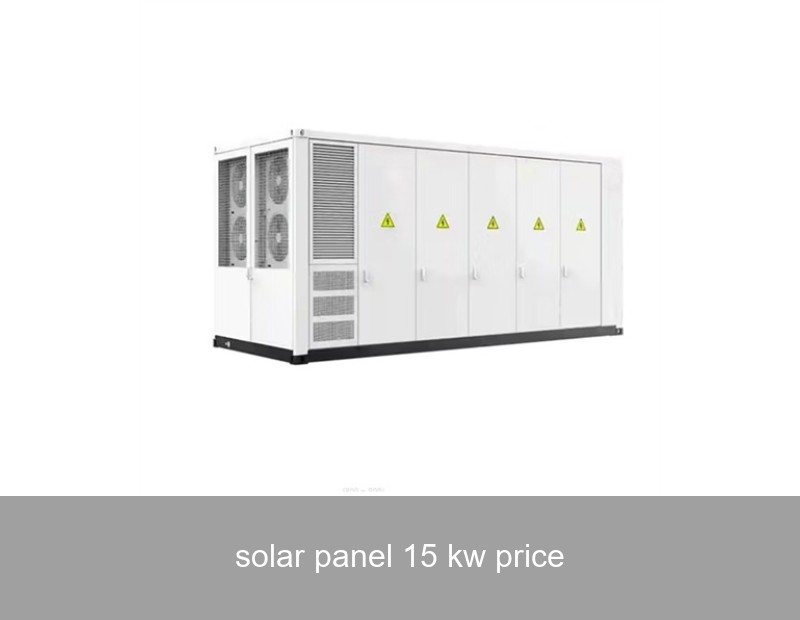
So, you're thinking about harnessing the sun's power and you've likely typed "solar panel 1.5 kW price" into a search engine. The figure that pops up might seem straightforward, but here's the first ray of insight: that number is just the beginning. A 1.5 kW system is a popular entry point for many homeowners, perfect for offsetting a significant portion of daily energy use. But the true cost—and more importantly, the true value—encompasses a complete ecosystem designed to power your home intelligently. As a leader in advanced energy storage, Highjoule understands that the journey to energy independence starts with clarity. Let's peel back the layers of that initial price quote and explore what you're really investing in.
Understanding the Solar Panel 1.5 kW Price Tag
When we talk about a "1.5 kW solar system," we're referring to its power output under ideal conditions. In practice, across Europe and the US, such a system can generate approximately 1,200 to 2,000 kWh of electricity per year, depending heavily on your location. That's enough to run a refrigerator, lighting, and essential electronics for a typical household. The initial sticker price for the panels themselves can range from $1,500 to $3,000. However, this is a classic case of "if it seems too good to be true, it probably is." Purchasing only the panels is like buying a car engine without the chassis, wheels, or transmission. The real-world price you'll discuss with an installer is a system price.

Image Source: Unsplash - Professional photography of residential solar installation.
The Real Cost Breakdown: More Than Just Panels
The complete installed cost of a 1.5 kW solar system typically falls between $4,500 and $7,500 before incentives. Why the significant jump from the panel-only price? Let's break it down with a logical cost structure.
| Cost Component | Description | Approx. Share of Total Cost |
|---|---|---|
| Solar Panels (Modules) | The actual photovoltaic panels that convert sunlight to DC electricity. | 20-25% |
| Inverter & Power Electronics | The "brain" that converts DC electricity to usable AC for your home. | 15-20% |
| Mounting Hardware & Balance of System | Racks, wiring, connectors, and safety equipment. | 10-15% |
| Installation Labor & Permitting | Professional installation, inspections, and grid connection paperwork. | 30-40% |
| Sales & Customer Acquisition | Costs associated with system design and company overhead. | 10-15% |
This breakdown reveals a critical insight: focusing solely on the per-watt panel cost is a common pitfall. The quality of the inverter, the expertise of the installation crew, and the robustness of the mounting system are paramount for long-term performance and safety. A cheaper installation can lead to higher maintenance costs or reduced energy harvest over the system's 25+ year lifespan.
From Quote to Kilowatt: A Real-World Case Study
Let's look at a concrete example from Munich, Germany. The Müller family wanted to reduce their carbon footprint and electricity bill. They received three quotes for a 1.5 kW rooftop system:
- Quote A: €5,200 - Basic panels with a string inverter.
- Quote B: €6,100 - Higher-efficiency panels with microinverters (optimizing for partial shading).
- Quote C: €8,500 - Premium panels integrated with a Highjoule HomePower 2.0 battery storage system (3 kWh capacity).
The Müllers chose Quote C. Here’s the data-driven outcome after one year:
- Solar Generation: 1,650 kWh.
- Self-Consumption Rate (without battery): Estimated 30% (~495 kWh used directly).
- With Highjoule Battery: Self-consumption jumped to 85% (~1,402 kWh used directly).
- Grid Electricity Purchased: Reduced by over 70% compared to pre-solar levels.
- Impact: Despite the higher upfront "solar panel 1.5 kW price," their annual electricity bill dropped from €850 to under €200. The battery also provided backup power during two short grid outages. Their system, with intelligent storage, is on track to pay for itself in under 9 years, compared to an estimated 11 years for a storage-less system, especially as feed-in-tariffs decline and grid prices rise.
Maximizing Your Investment: The Key to True Value
The Müller family's case highlights the evolving equation. The goal is no longer just to generate cheap kilowatt-hours, but to maximize self-consumption—using the solar energy you produce. This is where the conversation transcends the panel price. Modern energy solutions, like those pioneered by Highjoule, integrate solar generation with intelligent battery storage and energy management software. This turns a simple production unit into a resilient home energy system.
Consider this: without storage, excess solar energy produced in the midday sun is often sold back to the grid at a low rate. Then, you buy expensive grid power in the evening. A battery flips this script, storing your surplus for use when you need it most. According to data from the U.S. Department of Energy, pairing storage with solar can increase the portion of solar energy used directly in the home from 20-40% to over 80%.
The Highjoule Advantage: Intelligent Storage for Your Solar Investment
This is precisely where Highjoule's expertise transforms your solar investment. When evaluating the total price for your 1.5 kW system, consider its synergy with a storage solution. Highjoule's HomePower Series of lithium iron phosphate (LiFePO4) battery systems are designed to seamlessly integrate with new or existing solar installations.
Our systems aren't just dumb batteries; they are intelligent energy managers. The Highjoule Energy Hub software platform constantly learns your home's energy patterns, weather forecasts, and utility rate schedules (like time-of-use rates common in California or Italy) to autonomously optimize when to store energy, when to use it, and when to potentially sell it back for maximum financial return. This turns your system from a cost into a smart, grid-interactive asset.

Image Source: Unsplash - Example of a sleek home battery installation.
For commercial clients, our Industrial & Microgrid Solutions provide scalable, high-power storage that manages demand charges, ensures power quality, and can even form independent microgrids. Whether for a home or a factory, the principle is the same: we help you capture the full value of every kilowatt-hour your solar panels produce, making that initial "solar panel 1.5 kW price" part of a much more valuable and resilient energy ecosystem.
Making Your Decision: The Final Calculation
So, how should you approach your decision? First, shift your mindset from seeking the lowest panel price to evaluating the highest system value. Request detailed quotes that include all balance-of-system components and labor. Crucially, ask installers about storage-ready inverters or bundled storage options. Explore federal tax credits (like the US ITC), state incentives, and local rebates, which can significantly reduce the net cost of a solar-plus-storage system. The DSIRE database is an excellent resource for North American incentives.
Remember, the energy market is dynamic. As noted by the International Energy Agency (IEA), solar PV remains the champion of new electricity capacity additions globally, and coupling it with storage is the logical next step for energy security. Your "1.5 kW price" is the entry ticket to this future.
 Inquiry
 Online Chat