


How Much Does a Solar Panel Arm Cost? Unpacking the True Price of Solar Mounting
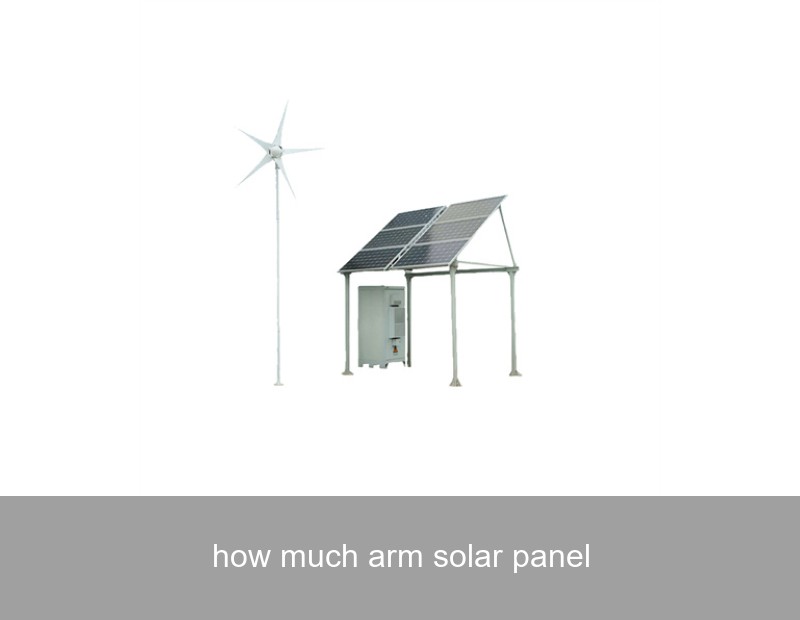
If you're researching solar panels for your home or business, you've likely encountered a whirlwind of terms and component prices. One question that often pops up is, "how much arm solar panel" systems require. While this phrasing might be a bit of shorthand, it points to a crucial and sometimes overlooked part of any solar installation: the mounting structure, or the "arms" that hold your panels securely to the roof or ground. As a product technology expert at Highjoule, I spend my days not just on batteries, but on the entire ecosystem of renewable energy. Let's demystify the cost and importance of these structural components and explore how they fit into a truly intelligent energy system.
What Exactly is a Solar Panel's "Arm"?
In solar industry terminology, the "arm" typically refers to the mounting rack or framework. This isn't a single piece but a system of rails, clamps, brackets, and supports. Think of it as the chassis and skeleton of your solar array. Its primary jobs are:
- Structural Integrity: Securely fastening panels to withstand decades of wind, snow, and weather.
- Optimal Angle: Positioning panels at the correct tilt to maximize sunlight capture for your geographic location (like optimizing for European or US latitudes).
- Roof Protection: Providing a secure, non-penetrating or properly sealed attachment to protect your roof's warranty and integrity.
So, when you ask "how much," you're really asking about the cost of the entire mounting hardware system. This cost is rarely quoted as a standalone item; it's integrated into the total installation price per watt or as a line item in a detailed quote.
The Components of a Mounting System
| Component | Function | Material (Typical) |
|---|---|---|
| Rails (Longitudinal Beams) | The primary "arms" that run along the roof, supporting the panels. | Anodized Aluminum |
| Clamps & Brackets | Attach the solar panels to the rails without drilling into the glass. | Aluminum/Stainless Steel |
| Flashings & Attachments | Seal and secure the rack to the roof rafters. | Stainless Steel with Sealant |
| Ground Mounts (for ground systems) | Steel or aluminum frameworks anchored into the earth. | Galvanized Steel or Aluminum |
The Real Cost Breakdown: More Than Just Hardware
Pinning down an exact figure for "solar panel arm cost" is tricky because it varies dramatically. However, data from the U.S. National Renewable Energy Laboratory (NREL) provides a reliable benchmark. In a typical residential installation in the US or Europe, the hardware for the mounting system itself often represents 8-12% of the total gross cost of the system. The labor to install it adds another significant portion.
Let's put this in perspective with a hypothetical 8 kW system, a common size for a larger home:
- Total System Cost (Avg. US/EU): $20,000 - $28,000
- Mounting Hardware Cost (10%): $2,000 - $2,800
- This breaks down to roughly $0.10 - $0.15 per watt for the hardware.
Why such a range? A simple, low-pitch composite shingle roof in Arizona is far less expensive to mount on than a historic, steep-slate tile roof in Bavaria. Ground-mounted systems have lower hardware costs for the "arms" but add significant costs for earthworks and concrete foundations.

Image Source: Unsplash (Professional solar installation hardware)
From Theory to Practice: A German Commercial Case Study
Let's move beyond averages to a real-world example that highlights the importance of quality mounting and, more critically, the system behind the panels.
Project: Mid-sized dairy processing plant in Lower Saxony, Germany.
Challenge: Reduce grid energy costs and achieve operational sustainability targets. The factory had a large, flat roof area suitable for solar, but energy usage was highest in the early morning and evening, not during peak solar hours.
Solution: A 250 kWp rooftop solar array. The mounting system was a ballasted, non-penetrating flat-roof solution to preserve the roof membrane. The critical addition? A Highjoule HI-Cube 250 commercial battery energy storage system (BESS).
Data & Outcome:
- Solar Mounting & Panel Cost: ~€180,000
- Highjoule BESS Integration Cost: ~€95,000
- Result: The solar array generates power during the day. The HI-Cube system stores excess generation, releasing it during high-price evening peaks. The plant now achieves 85% self-consumption of its solar power (versus an estimated 35% without storage), slashing its grid draw during expensive periods. The mounting system ("arms") was a vital, but passive, component. The active intelligence of the Highjoule storage system unlocked the true financial return.
Beyond the Arm: Maximizing Your Solar Investment's Value
Focusing solely on "how much arm solar panel" costs is like buying a high-performance car and only worrying about the cost of the tires. They are essential, but the real value lies in the entire drivetrain. For solar, the modern drivetrain includes intelligent storage.
Here’s the logical progression every energy buyer should consider:
- Phenomenon: Solar panels only produce when the sun shines. This often misaligns with your energy consumption patterns.
- Data: Without storage, a typical home or business may only use 30-50% of its solar generation directly. The rest is exported to the grid at a low feed-in tariff.
- Case Insight: As seen in our German case, adding storage can more than double your self-consumption, protecting you from volatile energy prices and increasing your independence.
- Expert Conclusion: Therefore, your project's budget planning should shift from "cost per panel + arm" to "value of an integrated generation + storage system."
How Highjoule's Smart Energy Storage Completes the Picture
This is where Highjoule's expertise transforms a simple solar installation into a resilient power asset. Since 2005, we've focused on making storage systems that are not just battery containers, but intelligent energy managers.
For residential clients in the US and Europe, our Home Energy Stack seamlessly integrates with new or existing solar. Its AI-driven software learns your consumption habits and weather patterns to optimize when to store solar energy and when to use it, ensuring you get the most value from every watt your panels produce—rain or shine.
For commercial and industrial applications, like the dairy plant, our HI-Cube series provides scalable, containerized storage. It doesn't just store energy; it can provide services like peak shaving (reducing demand charges, a major cost for businesses) and backup power, ensuring critical operations continue during an outage. By integrating with your solar array's "arms," a Highjoule system becomes the brain and battery of your entire energy setup.

Image Source: Unsplash (Modern home with solar and storage)
Key Questions to Ask Your Installer
Instead of just "how much for the mounting?", empower your conversation with these questions:
- "What is the total cost per watt for a fully installed system, including mounting hardware?"
- "What is the estimated annual self-consumption rate for my solar-only system?"
- "Can you provide a quote that includes a scalable battery storage solution, like Highjoule's, to maximize that self-consumption?"
- "How does the mounting system warranty (often 10-25 years) compare to the product and performance warranties on the panels and storage?"
Your Energy Independence Journey
The journey to energy independence starts with the right foundation—both physically with a well-engineered mounting system, and strategically with a plan that captures the full value of your solar harvest. The initial cost of the "arms" is a small but critical investment in a decades-long asset.
So, I leave you with this open question: As you evaluate your solar project, are you planning just for the cost of installation, or are you designing for a lifetime of optimized energy savings and resilience? The most successful projects we see at Highjoule are those where the customer viewed storage not as an add-on, but as the essential component that makes their solar investment truly intelligent and complete.
 Inquiry
 Online Chat