


Why Partnering with the Right Inverter Manufacturing Company is Critical for Your Energy Future
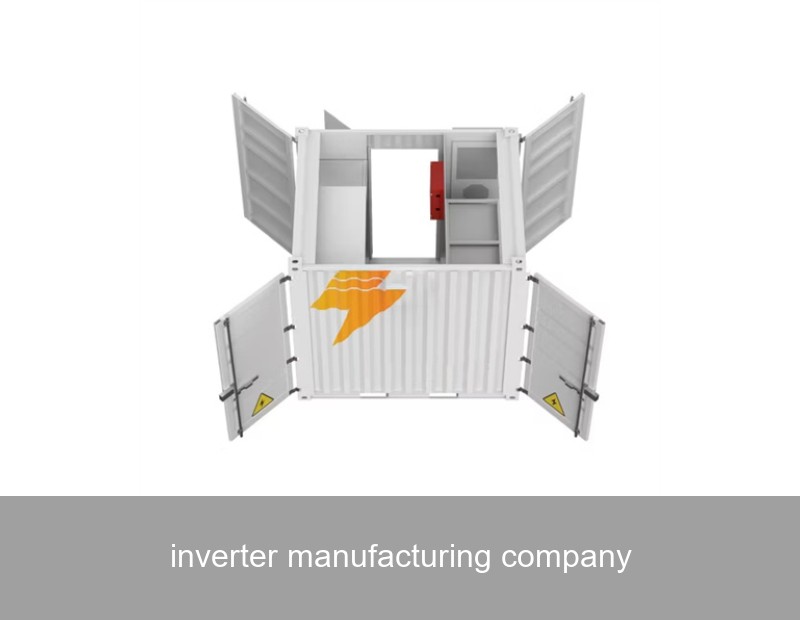
You've decided to invest in solar or a battery storage system. You've researched panels, calculated your energy needs, and are ready for a cleaner, more resilient power supply. But there's one crucial component that often doesn't get the spotlight it deserves: the inverter. The choice of your inverter manufacturing company can be the single biggest factor determining your system's efficiency, longevity, and return on investment. This isn't just about a box on the wall; it's about choosing the brain of your entire energy ecosystem.
Table of Contents
The Silent Heart of Your Power System
Let's start with the basics. What does an inverter actually do? In a solar or battery storage setup, it performs the essential role of energy translation. Solar panels produce direct current (DC) electricity, and your home or business runs on alternating current (AC). The inverter's primary job is to convert that DC into usable AC. But here's the phenomenon: if you think that's all it does, you're missing 95% of its value.
The data is telling. According to a report by the National Renewable Energy Laboratory (NREL), advanced inverter functionalities—like voltage regulation, frequency support, and reactive power control—are now critical for maintaining grid stability as renewable penetration grows. A basic inverter simply converts power. An advanced inverter from a leading inverter manufacturing company actively manages, communicates, and optimizes it.

Think of it this way: a basic inverter is like a simple translator converting one language word-for-word. An advanced inverter is a seasoned diplomat, understanding context, negotiating with the grid, managing energy flow from multiple sources (solar, battery, grid), and ensuring the entire conversation is efficient and harmonious.
Beyond Conversion: Key Differentiators of a Top Inverter Manufacturer
So, what separates a market-leading inverter manufacturing partner from a mere component supplier? The distinction lies in software, grid intelligence, and system integration.
- Grid Services & Software Intelligence: The best inverters are software-defined. They come with sophisticated energy management systems (EMS) that can participate in demand response, peak shaving, and even virtual power plant (VPP) programs. This turns your system from a cost center into a potential revenue stream.
- Efficiency & Durability: Look beyond the peak efficiency number. Consider weighted efficiency (like European Efficiency or CEC efficiency), which reflects real-world performance across various load levels. Durability, backed by long warranties (often 10+ years), and the ability to operate in harsh temperatures are hallmarks of quality engineering.
- Safety & Compliance: A reputable manufacturer designs to the strictest international standards (UL, IEC, VDE). Features like arc-fault circuit interruption (AFCI), rapid shutdown for firefighter safety, and robust cybersecurity for communication protocols are non-negotiable.
- Scalability & Hybrid Readiness: Can the inverter easily integrate with batteries added later? Does it support multiple MPPT trackers for complex roof layouts? Future-proofing is a key consideration.
Choosing a Partner, Not Just a Product
This is where the partnership aspect becomes critical. A top-tier inverter manufacturing company provides comprehensive support: detailed technical documentation, accessible training for installers, and reliable after-sales service. They are invested in the success of your project for the long haul.
From Theory to Practice: A European Microgrid Case Study
Let's ground this discussion with a real-world example. Consider a mid-sized dairy farm in Bavaria, Germany. The farm had high, consistent energy needs for cooling and processing. Their goal was energy independence and cost predictability.
The Challenge: Fluctuating solar generation, high midday grid costs, and the need for uninterrupted power for refrigeration.
The Solution: A 250 kW solar array coupled with a 500 kWh battery storage system. The core of this installation was not just the panels or the battery cells, but the central inverter and energy management system that tied everything together.
The Results (Data-Driven Impact):
| Metric | Before Installation | After Installation |
|---|---|---|
| Grid Energy Consumption | 100% | 35% |
| Energy Cost Volatility | High (exposed to spot prices) | Minimal (predictable, self-consumed solar) |
| Grid Services Revenue | €0 | ~€3,500/year (frequency regulation) |
| Backup Power | None (risk of spoilage) | Up to 48 hours for critical loads |
The inverter's intelligent software was programmed to prioritize self-consumption of solar, charge the batteries during low-cost off-peak hours, and even sell small amounts of regulated power back to the grid during times of high demand, creating a new income line. This holistic outcome was only possible because the inverter was designed as an intelligent grid citizen from the outset.
The Highjoule Approach: Intelligent Inversion for a Complex Grid
At Highjoule, with nearly two decades of experience since 2005, we view the inverter as the central nervous system of any modern energy installation. Our philosophy is that hardware excellence must be matched by software brilliance.
Our product lines, such as the Highjoule H-Series Commercial Inverters and the integrated H-Stack Modular Storage System, are built on this principle. We don't just manufacture inverters; we engineer comprehensive power conversion and management platforms. For instance, our inverters feature:
- Adaptive Grid Code Compliance: They can be configured for specific grid requirements across different U.S. states or European countries, future-proofing against evolving regulations.
- Seamless Multi-Source Integration: Managing input from solar, wind (for microgrids), battery, and generator sources simultaneously, optimizing for cost and carbon footprint.
- Highjoule EMS Cloud Platform: A proprietary platform that provides owners and operators with granular control, performance analytics, and the ability to participate in aggregated grid service markets.

For a hospital in California requiring critical backup, a manufacturing plant in Italy aiming for carbon neutrality, or a residential community in Texas forming an energy cooperative, our role as an inverter manufacturing company is to provide the robust, intelligent hardware and the insightful software that makes these ambitious projects reliable and financially sound.
The Future of Inverter Manufacturing: What's Next?
The trajectory is clear. The next generation of inverters will be even more active in grid formation. Concepts like "grid-forming" inverters, which can independently create a stable voltage and frequency waveform (essentially starting a microgrid from black start), are moving from research labs to commercial products. The U.S. Department of Energy's Solar Energy Technologies Office highlights this as a key priority for a resilient, decarbonized grid.
Furthermore, interoperability and open standards (like SunSpec Alliance protocols) will be crucial. Your inverter should communicate seamlessly with equipment from other best-in-class manufacturers, avoiding vendor lock-in and ensuring you can always choose the best battery or monitoring tool for your needs.
An Open Question for Your Next Project
As you plan your energy transition, the question is no longer simply "What size inverter do I need?" The more strategic questions are: How intelligent is the inverter platform? Can it adapt to future market and regulatory changes? Is the manufacturer a long-term partner invested in the system's performance over its 20+ year lifespan?
What specific grid challenge or energy goal is driving your next project, and how might the intelligence of the inverter be the key to solving it?
 Inquiry
 Online Chat