


Demystifying the 120 Ah Solar Battery Price: Value Beyond the Sticker
If you're researching solar energy storage, you've likely typed "120 Ah solar battery price" into a search engine more than once. That simple search reveals a dizzying range, from a few hundred to several thousand dollars. It's enough to make any homeowner or business owner pause and wonder: "What am I actually paying for?" As a product technology expert at Highjoule, I speak with customers daily who are navigating this exact question. The truth is, the Amp-hour (Ah) rating is just the starting point. The real value—and the justification for the price—lies in the technology, longevity, and intelligence built into the battery system. Let's unpack what truly defines the cost and worth of a 120 Ah solar battery.

Credit: Unsplash / Photo by Kindel Media. A modern home energy storage system, similar to Highjoule's residential solutions, integrates seamlessly into living spaces.
What Truly Influences a 120 Ah Solar Battery Price?
Think of the Ah rating like the size of a fuel tank. A 120 Ah battery tells you capacity, but not the quality of the engine, the efficiency of the fuel system, or how many miles you'll reliably get. The price variation stems from several critical engineering and material factors.
Core Battery Chemistry: The Foundation of Cost
The chemical makeup of the battery is the single largest cost driver. Here’s a quick comparison of the most common types for solar storage:
| Chemistry | Typical Cycle Life | Depth of Discharge (DoD) | Impact on Price |
|---|---|---|---|
| Flooded Lead-Acid (FLA) | 500-1,000 cycles | ~50% | Lowest upfront cost |
| Absorbent Glass Mat (AGM) | 600-1,200 cycles | ~80% | Moderate upfront cost |
| Lithium Iron Phosphate (LFP) | 3,500-6,000+ cycles | ~100% | Higher upfront, lower lifetime cost |
While a 120 Ah lead-acid battery may have a tempting sticker price, its usable capacity is halved (to ~60 Ah) if you want it to last. A Lithium Iron Phosphate (LFP) battery, like those used in Highjoule systems, offers nearly the full 120 Ah usable capacity for thousands more cycles, fundamentally changing its long-term value proposition.
The "Brain" of the System: Built-in Battery Management (BMS)
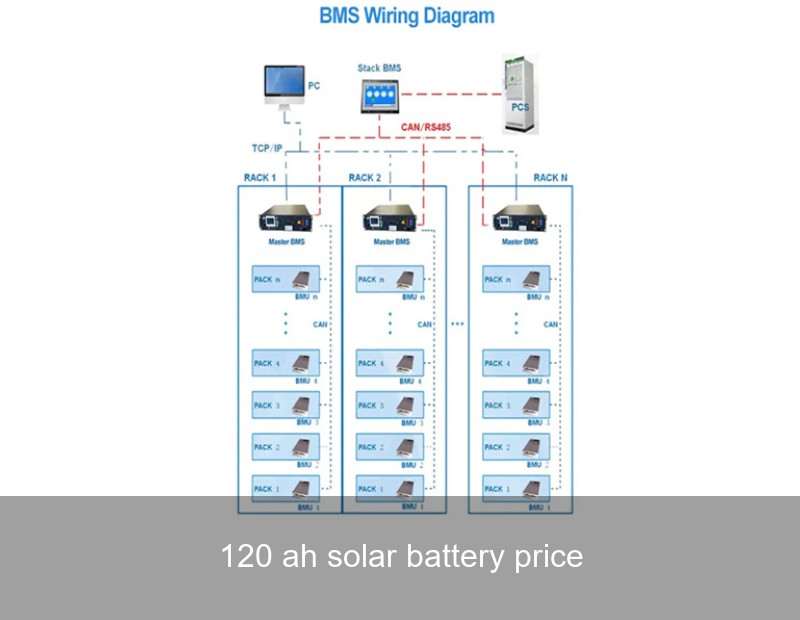
A cheap battery is just a collection of cells. A premium battery is an integrated power unit. A sophisticated Battery Management System (BMS) is the onboard computer that monitors voltage, temperature, and cell balance. It prevents damage from overcharge, deep discharge, and overheating. This hardware and software intelligence is a significant part of your investment, ensuring safety and maximizing lifespan.
Scalability and Integration
Can your single 120 Ah battery be seamlessly connected to others in the future? Modular systems designed for easy expansion, like Highjoule's H-Joule Cube series, often carry a higher per-unit cost due to the advanced communication circuitry and design that allows plug-and-play scalability. This future-proofing is a hidden value that pays off when your energy needs grow.
Looking Beyond the Price Tag: Performance & Intelligence
Focusing solely on the 120 Ah solar battery price per unit can lead to a misleading cost-per-cycle analysis. Let's use a simplified example:
- Battery A (Budget): $500, 120 Ah (Lead-Acid), 600 cycles at 50% DoD = 60 Ah usable. Total lifetime energy: 600 cycles * 60 Ah * 12V = ~432 kWh.
- Battery B (Highjoule LFP): $1,200, 120 Ah (LFP), 6,000 cycles at 95% DoD = 114 Ah usable. Total lifetime energy: 6,000 cycles * 114 Ah * 12.8V = ~8,755 kWh.
While Battery B costs more upfront, its cost per kilowatt-hour delivered over its life is dramatically lower. Furthermore, intelligent systems unlock savings beyond the battery. For instance, Highjoule's Energy Operating System (EOS) can be programmed to automatically use stored solar power during peak utility rate periods, a feature known as peak shaving, which directly reduces your electricity bills.
A Real-World Case: The 120 Ah Battery in Action
Let's move from theory to practice. Consider a small family-run artisan bakery in Freiburg, Germany. Their challenge: high afternoon energy demand for ovens coincided with falling solar production, forcing them to buy expensive grid power. Their goal: increase self-consumption of their rooftop solar.
The Solution: They installed a scalable storage system centered around two 120 Ah LFP battery modules. This provided them with a robust 3 kWh usable storage capacity.
The Data-Driven Outcome (12-month post-installation):
- Self-Consumption Rate: Increased from 35% to 78%.
- Grid Power Draw during Peak Hours: Reduced by over 90%.
- Annual Electricity Bill Savings: €1,850.
- ROI Timeline: Projected at under 7 years, with a battery warranty covering 10 years.
For this bakery, the 120 Ah solar battery price was not an expense but a strategic investment with a clear, quantifiable return. The system's intelligence allowed it to learn consumption patterns and optimize discharge cycles, protecting the battery's health while maximizing financial savings.

Credit: Unsplash / Photo by Leon Ephraim. Commercial solar installations, like those paired with Highjoule storage, empower businesses across Europe and the US.
The Highjoule Approach: Engineering Value into Every 120 Ah
At Highjoule, founded in 2005, we engineer our storage solutions with a total cost of ownership perspective. Our products, like the H-Joule Cube 120, are designed to deliver on the promise of the LFP advantage and intelligent management.
What does this mean for you when evaluating a 120 Ah solar battery price from Highjoule?
- Ultra-Safe LFP Chemistry: Non-toxic, stable, and with a lifespan exceeding 6,000 cycles. You're buying decades of service, not just a battery.
- Industry-Leading Warranty: Our 10-year warranty isn't just a promise; it's a testament to our confidence in the product's durability and our cycle life testing.
- Seamless Integration: Our systems are AC-coupled, meaning they work with virtually any existing or new solar inverter, providing unparalleled flexibility for retrofit or new-build projects.
- Grid Services Ready: For our commercial and microgrid clients, our systems are designed to participate in grid-balancing programs, creating a potential future revenue stream—a feature rarely found in commoditized batteries.
Making the Right Choice for Your Energy Independence
So, the next time you compare that search result for "120 Ah solar battery price," I encourage you to ask deeper questions: What is the usable capacity? What is the warranted cycle life? Does it have a smart BMS? Can it scale with my needs? Is the manufacturer a proven expert with a track record in renewable energy systems?
The journey to energy resilience is exciting. The right battery is the heart of that system, and its value is measured not just in Amp-hours, but in years of reliable, intelligent, and cost-saving service.
What energy challenge—be it rising bills, frequent outages, or simply a desire for true energy independence—is leading you to explore solar battery storage today?
 Inquiry
 Online Chat