


Interseasonal Energy Storage: The Key to Unlocking a Year-Round Renewable Grid
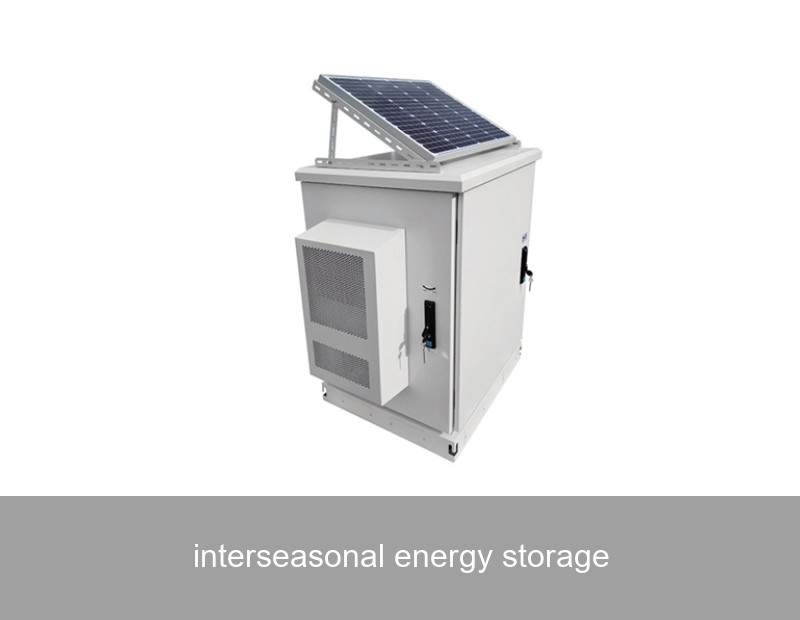
Table of Contents
Imagine a world where the abundant solar energy from a sunny July afternoon could power homes on a cold, dark January evening. This isn't science fiction; it's the promise of interseasonal energy storage. As Europe and North America aggressively pursue decarbonization, we face a fundamental mismatch: renewable generation is often seasonal, but our energy demand is constant. Solving this puzzle is critical, and long-duration storage solutions that span weeks or months are emerging as the missing piece.
The Seasonal Challenge: Summer Sun vs. Winter Demand
Let's talk about a problem you might intuitively feel. In many parts of the U.S. and Europe, winter means higher energy demand for heating and lighting, but significantly lower solar photovoltaic (PV) output. The International Energy Agency (IEA) highlights that seasonal variability is one of the most significant barriers to high-renewable grids. For instance, solar generation in Germany can be up to five times lower in December than in June. Daily battery storage (like your home Powerwall) is fantastic for shifting energy from day to night, but its economics break down when asked to store for months. We need a different class of solution—one that thinks in seasons, not just hours.

Image Source: Unsplash (Illustrative chart of seasonal mismatch)
What is Interseasonal Energy Storage?
In essence, interseasonal energy storage refers to technologies that can capture energy produced in one season (typically surplus renewable energy in spring/summer) and reliably discharge it in another season (autumn/winter). The core metrics here are extremely low cost per kilowatt-hour stored and minimal "self-discharge" over long periods. Unlike lithium-ion batteries, which are optimal for high-power, short-duration cycles, interseasonal storage prioritizes capacity and longevity over rapid response.
Think of it like the difference between a sprint and a marathon. Our current grid batteries are the sprinters—incredibly fast and powerful for short bursts. Interseasonal storage is the ultramarathon runner—designed for endurance, carrying energy vast distances in time with minimal loss.
Key Technologies in the Race for Seasonal Storage
Several technologies are vying to solve this challenge, each with unique mechanisms and ideal applications.
| Technology | How It Works | Duration Potential | Best For |
|---|---|---|---|
| Green Hydrogen (Power-to-Gas) | Uses surplus electricity to split water into hydrogen, which is stored and later used in fuel cells or turbines. | Months to seasons | Industrial processes, heavy transport, grid-scale seasonal balancing |
| Compressed Air Energy Storage (CAES) | Stores energy by compressing air in underground caverns, releasing it to generate power when needed. | Days to weeks | Large-scale, geographically specific locations with suitable geology |
| Pumped Thermal Energy Storage (PTES) | Stores electricity as heat (in hot materials like gravel) and cold, using a heat pump cycle to regenerate power. | Days to months | Grid-scale storage with a relatively small physical footprint |
| Advanced Flow Batteries (e.g., Vanadium) | Stores energy in liquid electrolytes in external tanks; duration scales easily with tank size. | Hours to days (scaling to weeks) | Commercial & industrial sites, microgrids needing medium-to-long duration storage |
A Real-World Case: Storing Summer Heat for Winter in Drake Landing, Canada
While many technologies are in pilot phases, one method has been proven at community scale for over a decade: borehole thermal energy storage (BTES). The Drake Landing Solar Community in Alberta, Canada, provides a stellar example. This system uses solar thermal collectors on garage roofs to capture summer heat. Instead of letting it dissipate, the heat is transferred into a network of 144 boreholes drilled 35 meters into the ground, creating a giant "thermal battery."
- Data Point: The system stores heat at temperatures up to 80°C.
- Performance: It provides over 90% of the community's space heating needs from solar energy, drastically reducing natural gas consumption.
- Seasonal Shift: Energy captured from May to September is discharged from October to April.
This project, documented by Natural Resources Canada, demonstrates the core principle of interseasonal storage: using a low-loss, high-capacity medium (in this case, the earth itself) to bridge the seasonal gap. It shows the technical and economic feasibility of such systems, particularly for thermal loads.
Highjoule's Role in Bridging the Energy Gap
At Highjoule, we view interseasonal energy storage not as a distant dream, but as the next critical evolution of the smart grid. While community-scale thermal storage is powerful, the electrical grid requires versatile, scalable solutions. This is where our expertise in intelligent, modular battery energy storage systems (BESS) creates a pathway.
Our GridSynergyTM Platform is designed to be technology-agnostic. While we excel at deploying advanced lithium-ion and flow battery systems for daily and weekly cycling, our intelligent energy management system (EMS) is built with the future in mind. It can integrate and optimize multiple storage assets, including future interseasonal technologies like green hydrogen hubs or large-scale flow batteries. For a commercial or industrial client today, this means installing a Highjoule BESS that manages daily energy costs and provides resilience. Tomorrow, that same system could be seamlessly orchestrated to interact with a regional seasonal hydrogen store, drawing on low-cost, summer-produced green hydrogen to power winter operations.
For microgrids and off-grid communities—increasingly common in both remote areas of the U.S. and Europe—this hybrid approach is crucial. A Highjoule microgrid solution might combine:
- Solar PV for primary generation.
- Our Horizon Series BESS for short-to-medium duration storage (hours to days).
- A future green hydrogen module for seasonal, long-duration storage, all managed under one intelligent platform.

Image Source: Unsplash (Representative image of a modern BESS installation)
We are actively partnering with innovators in the long-duration storage space because we believe the future grid will be a hybrid: a mix of high-power and high-capacity storage, intelligently layered to match all time scales of demand.
The Future Outlook and Your Next Steps
The journey to cost-effective, widespread interseasonal energy storage is accelerating, driven by policy, innovation, and sheer necessity. The U.S. Department of Energy's "Long Duration Storage Shot" initiative aims to reduce the cost of grid-scale storage lasting 10+ hours by 90% within a decade, a goal that directly enables seasonal solutions.
So, what does this mean for a business leader, municipality, or utility planner today? It means future-proofing your energy strategy. When evaluating a storage solution, consider not just today's payback from peak shaving, but also the system's ability to integrate into a broader, longer-duration ecosystem. Ask your technology providers: How will this solution evolve over the next 15 years? Can it communicate with and leverage emerging seasonal storage assets?
Ready to Start Your Energy Resilience Journey?
While the full potential of interseasonal storage unfolds, the foundation is built with smart, efficient storage today. What is the first seasonal energy imbalance your organization faces, and how could a strategic storage solution start addressing it now while laying the groundwork for tomorrow? Highjoule's team of experts is here to help you navigate this transition, designing systems that meet today's financial and operational needs while keeping your path open to the seasonal solutions of the future. The goal of a 100% renewable, 365-day-a-year grid depends on it.
 Inquiry
 Online Chat