


Energie Langzeitspeicher: The Key to Unlocking a 24/7 Renewable Future
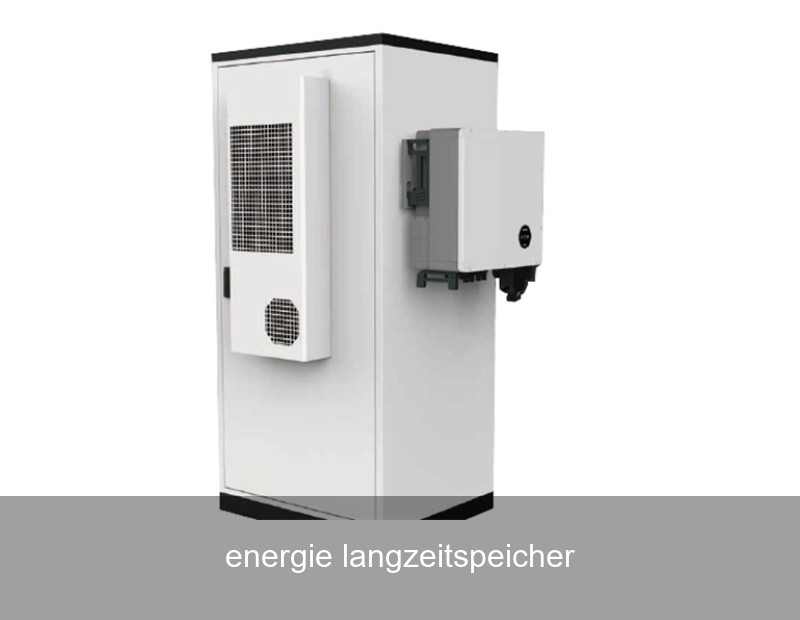
Imagine a windy night in the North Sea. Turbines are spinning at full capacity, generating vast amounts of clean electricity, but demand in homes and factories is at its lowest. Where does all that precious energy go? Conversely, picture a calm, cloudy week in January—the infamous "dunkelflaute"—when both solar and wind output plummet. How do we keep the lights on? This is the fundamental challenge of the energy transition, and the answer lies in a transformative technology: Energie Langzeitspeicher, or long-duration energy storage (LDES). Moving beyond the hours of coverage provided by home batteries, LDES systems store energy for days, weeks, or even seasons, acting as the ultimate buffer for a grid powered by renewables. For businesses, communities, and entire nations across Europe and the US aiming for energy independence and net-zero goals, mastering long-term storage isn't just an option; it's the missing piece of the puzzle.
Table of Contents
- The Growing Pain: The "Storage Gap" in Renewable Integration
- What Exactly is a Long-Duration Energy Storage (LDES)?
- Technology Showdown: The Contenders for Long-Term Storage
- From Theory to Grid: A Real-World Case Study in California
- Highjoule's Intelligent Approach to Long-Duration Storage Solutions
- The Future Outlook and Economic Imperative
The Growing Pain: The "Storage Gap" in Renewable Integration
The rapid deployment of solar and wind is a success story. In 2023, renewables generated a record 44% of Germany's net electricity. However, this success exposes a critical vulnerability. The grid was built for predictable, dispatchable power (like coal or gas), not for intermittent sources. Lithium-ion batteries, fantastic for short-duration needs (2-4 hours), cannot economically bridge multi-day or seasonal gaps. This creates a "storage gap" between supply and demand that threatens grid stability and slows the phase-out of fossil fuel backups. The question is no longer *if* we need long-term storage, but *which* technologies can deliver it reliably and at scale.
What Exactly is a Long-Duration Energy Storage (LDES)?
While definitions vary, long-duration energy storage broadly refers to any system that can discharge energy at its rated power for 10 hours or more. Think of it as the difference between a sprint and a marathon. Key characteristics include:
- Extended Discharge Duration: Ranging from 10+ hours to several days or months.
- High Cycle Life & Low Degradation: Built for thousands of deep cycles over decades.
- Scalability & Site Flexibility: Often decoupled from power and energy ratings, allowing for cost-effective scaling of storage capacity.
- Diverse Technology Pathways: Unlike the dominance of Li-ion in short-duration, LDES encompasses a wider array of chemical, mechanical, and thermal solutions.

Image: Utility-scale storage forms the backbone of grid stability. Source: Unsplash
Technology Showdown: The Contenders for Long-Term Storage
The race to dominate the LDES market is heating up, with each technology offering unique advantages. Here’s a comparative look at the leading contenders:
| Technology | Mechanism | Duration | Key Advantage | Consideration |
|---|---|---|---|---|
| Flow Batteries (e.g., Vanadium Redox) | Liquid electrolytes in tanks | 4-12+ hours | Independent scaling of power & energy; long cycle life | Higher upfront cost, lower energy density |
| Compressed Air Energy Storage (CAES) | Air compressed & stored in underground caverns | 10+ hours to days | Very large-scale, low cost per kWh at scale | Geologically dependent, lower round-trip efficiency |
| Green Hydrogen (Power-to-Gas) | Electrolysis to H2, stored and reconverted | Weeks to seasons | Ultimate seasonal storage, versatile end-use | Low overall round-trip efficiency (~35%) |
| Gravity Storage | Using mass and height difference (e.g., lifting blocks) | 4-12+ hours | Long lifetime, no resource constraints | Novel, limited commercial deployment |
As you can see, the "best" solution depends entirely on the specific application—whether it's shifting solar power to the evening or storing summer wind for a winter cold snap.
From Theory to Grid: A Real-World Case Study in California
Let's ground this in reality. California, a global renewable leader, faces a classic duck curve dilemma—too much solar midday, not enough after sunset. While lithium-ion handles the evening ramp, the state is proactively investing in true long-duration storage to ensure reliability during multi-day extreme events, like heatwaves. A landmark project is the Advanced Clean Energy Storage (ACES) project in Delta, Utah, though designed to serve the California market. This facility will use electrolysis to produce green hydrogen from renewable energy, store it in massive underground salt caverns (the first of its kind in the US), and dispatch it via hydrogen-capable turbines. Phase one aims to store up to 300 GWh of energy—equivalent to powering 150,000 households for a year. This isn't a lab experiment; it's a billion-dollar commitment to solving the long-duration problem, proving that Energie Langzeitspeicher is moving from concept to critical infrastructure.
Highjoule's Intelligent Approach to Long-Duration Storage Solutions
At Highjoule, we understand that the journey to a resilient, renewable-powered grid requires a strategic blend of storage technologies. Our expertise isn't limited to a single chemistry; it's in designing and integrating the right storage solution for the specific temporal and economic challenge. For commercial and industrial (C&I) clients facing time-of-use charges or seeking backup during prolonged outages, our IntelliBESS Pro series can be configured with advanced battery chemistries, including flow battery integrations, for 8-12 hours of dispatchable power. For microgrid and utility-scale applications, we provide master planning and system integration services that model and combine technologies—like pairing our high-power Li-ion systems for grid services with a future green hydrogen backend for seasonal Energie Langzeitspeicher.

Image: Commercial solar and storage systems reduce grid dependence. Source: Unsplash
Our GridSynergy Platform is the brain behind the hardware. This AI-driven energy management system doesn't just react; it forecasts weather, energy prices, and load patterns to optimize when to store, when to discharge, and even when to participate in grid-balancing markets. This turns a capital expenditure into a revenue-generating asset, dramatically improving the ROI of any long-duration storage investment. For a manufacturing plant in Germany or a data center in Texas, this means guaranteed clean power, reduced costs, and a tangible contribution to sustainability targets.
The Future Outlook and Economic Imperative
The momentum behind LDES is undeniable. The US Department of Energy has set a target to reduce the cost of grid-scale LDES by 90% within a decade. The European Union's Green Deal implicitly requires massive storage deployment to integrate its planned renewable fleet. The economics are becoming clear: as renewables become cheaper, the value of storing their surplus for later use skyrockets. The levelized cost of storage (LCOS) for long-duration technologies is on a steep downward trajectory, promising to make 24/7 clean energy not just a technical possibility, but the most affordable option.
So, as you look at your organization's or community's energy roadmap, the critical question isn't whether to consider long-term storage, but how to start planning for it today. What is the first step you can take to assess your vulnerability to energy gaps and begin building your resilient, renewable-powered future?
 Inquiry
 Online Chat