


The Hybrid Solar Inverter Battery: Your Complete Guide to Energy Independence
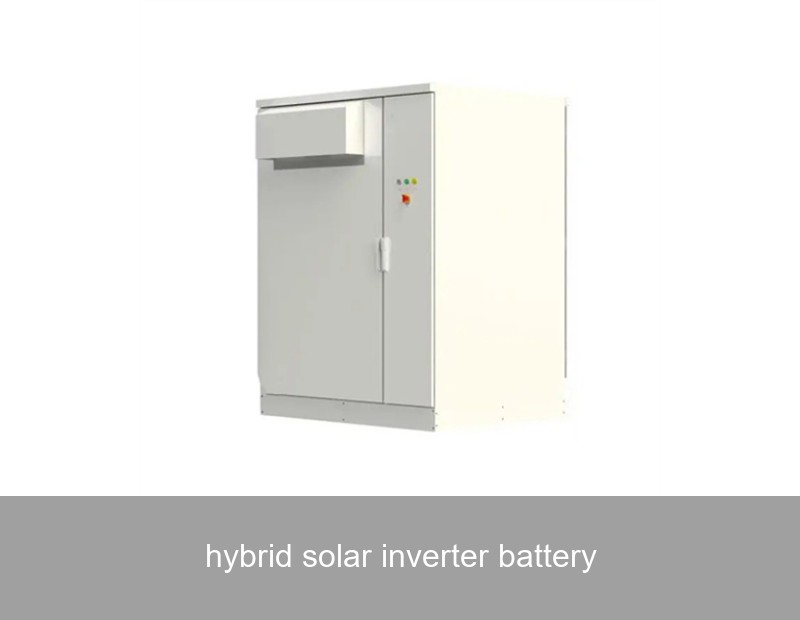
Have you ever looked at your electricity bill and wondered, "There must be a better way"? Or perhaps you've watched the sun blaze down on your roof, thinking of all that free energy going to waste. For homeowners and businesses across Europe and the U.S., this daily frustration is meeting its perfect solution: the hybrid solar inverter battery system. This isn't just an incremental upgrade; it's a fundamental shift in how we power our lives, merging solar generation, intelligent energy management, and reliable storage into one seamless unit. Let's explore how this technology works and why it's becoming the cornerstone of modern, resilient energy systems.
What Exactly is a Hybrid Solar Inverter Battery System?
In simple terms, a hybrid solar inverter battery system is the brain and heart of a modern solar power setup. Unlike traditional systems where the solar inverter and battery inverter are separate, a hybrid system combines both functions into a single, intelligent device. It manages three core energy flows: converting solar DC power to usable AC power for your home, charging a battery with any excess solar energy, and seamlessly drawing from the battery when needed—whether at night, during a grid outage, or when electricity rates are high.
Think of it as a sophisticated energy conductor. Your solar panels are the orchestra producing the power. The hybrid inverter is the conductor, deciding in real-time where that power should go: to your appliances, to storage, or back to the grid. The battery is your reserve ensemble, ready to perform when the main players (the sun or the grid) aren't available. This integration is key to maximizing self-consumption of your solar energy, often increasing it from 30-40% to over 80%, according to data from the U.S. Department of Energy.
The Core Components
- The Hybrid Inverter: The multi-talented centerpiece that converts, manages, and controls energy flow.
- The Battery Bank: Typically lithium-ion (like LiFePO4) for high efficiency, long life, and safety.
- Solar PV Array: The primary energy source.
- Energy Management System (EMS): The software "brain" that optimizes for cost, efficiency, or resilience.

Image: A modern, wall-mounted hybrid inverter and battery system, showcasing a compact and integrated design.
How It Works: The Intelligent Energy Manager in Your Home
The magic of a hybrid system lies in its dynamic decision-making. Let's walk through a typical day:
| Time of Day | Energy Scenario | Hybrid System Action |
|---|---|---|
| Morning (Sunrise) | Solar production begins but is low; household demand is high. | Draws supplemental power from the battery to offset grid use. |
| Midday (Peak Sun) | Solar production exceeds home consumption. | Powers the home first, then charges the battery to full. Any further excess can be exported to the grid. |
| Evening (Peak Demand) | Solar production stops; grid electricity rates are often highest. | Powers the home entirely from the charged battery, avoiding costly grid power. |
| Night / Grid Outage | No sun, and the grid is down. | Automatically isolates from the grid (forming a "microgrid") and continues to power critical loads from the battery. |
This automated orchestration is what delivers true energy independence and financial payback. You're not just generating energy; you're strategically controlling it.
Key Benefits: More Than Just Lower Bills
1. Unmatched Energy Resilience
For regions in the U.S. prone to wildfires or storms, and for areas in Europe seeking stability amidst geopolitical energy shifts, backup power is no longer a luxury. A hybrid system with a battery provides a silent, instant, and automatic backup when the grid fails.
2. Maximized Financial Return
With net metering policies changing (like in California's NEM 3.0), simply exporting solar to the grid is becoming less valuable. Storing your excess and using it later maximizes the value of every kilowatt-hour your panels produce. You effectively buy less electricity from the utility at retail rates.
3. Grid Support and Sustainability
By reducing peak demand on the grid, these systems contribute to community-wide grid stability. Some advanced systems can even participate in grid services programs. You're actively supporting the transition to a decarbonized grid, a priority highlighted by the International Energy Agency (IEA).
A Real-World Case Study: The Smith Family in Bavaria
Let's ground this in reality. The Smith family (name changed for privacy) runs a small guesthouse in rural Bavaria, Germany. Their challenges: volatile energy prices, occasional winter grid instability, and a desire to be more sustainable.
In early 2023, they installed a 15 kW solar array with a Highjoule H2-Integrated Hybrid System, featuring a 20 kWh LiFePO4 battery. The results after one year were compelling:
- Energy Self-Sufficiency: Increased from 35% (solar only) to 92% (solar + storage).
- Bill Savings: Annual electricity costs reduced by €2,800.
- Resilience: Experienced three grid outages totaling 14 hours. The system powered the guesthouse's critical circuits seamlessly, preventing guest disruption and potential revenue loss.
- ROI: Projected payback period of 6-7 years, with a system lifespan of 15+ years.
"It's peace of mind," the homeowner noted. "We're not just saving money; we're securing our business operation. The system runs so quietly and automatically we often forget it's there—until the neighbors' lights go out and ours stay on."

Image: Solar integration on a European building, similar to a rural guesthouse application.
Choosing the Right Hybrid Solar Inverter Battery System
Not all systems are created equal. Here are critical factors to consider:
- Power Rating & Scalability: Can the inverter handle your home's peak load? Can you add more batteries later?
- Battery Chemistry & Warranty: LiFePO4 is the industry standard for safety and cycle life. Look for a strong warranty (e.g., 10 years, 10,000 cycles).
- Software & Monitoring: A user-friendly app that provides real-time data and control is essential for maximizing benefits.
- Grid Interaction Capabilities: Does it support time-of-use optimization? Can it be configured for zero-export if required by your utility?
- Installation & Service: Choose a provider with certified installers and a robust local service network.
How Highjoule Delivers Advanced, Reliable Solutions
Since 2005, Highjoule has been at the forefront of intelligent energy storage. We understand that a hybrid system is a long-term investment in your property's infrastructure. That's why our H-Series Hybrid Systems are engineered for performance, durability, and simplicity.
Our flagship H2-Integrated System combines a high-efficiency hybrid inverter with our proprietary LiFePO4 battery modules in a single, sleek cabinet. Its key features include:
- All-in-One Design: Simplifies installation and saves space.
- Adaptive AI Energy Management: Learns your consumption patterns and weather forecasts to optimize battery usage for cost or comfort.
- Seamless Backup Transition: Switches to backup power in less than 20 milliseconds—so fast that your computers and appliances won't flicker.
- Scalable from 10 kWh to 30 kWh: Start with what you need and expand your storage as your needs grow.
For commercial and industrial applications, our Highjoule C.I. Microgrid Solutions offer scalable, containerized battery energy storage systems (BESS) that can integrate with large-scale solar, providing peak shaving, demand charge reduction, and critical backup power for facilities.

Image: Professional monitoring and management of a large-scale battery storage system.
The Future of Home and Business Energy is Hybrid
The trend is unmistakable. As electricity markets evolve and climate awareness grows, the demand for integrated, self-sufficient power solutions will only accelerate. The hybrid solar inverter battery is becoming the default choice for new solar installations in leading markets, moving from a niche product to a mainstream necessity. It represents a personal step toward energy democracy, where you are not just a consumer but a proactive manager of your energy destiny.
Ready to Take Control?
The journey to energy independence starts with a clear understanding of your unique energy profile. What does your daily and seasonal load look like? What are your primary drivers: reducing bills, achieving resilience, or increasing sustainability? We invite you to connect with a Highjoule-certified energy consultant in your region for a personalized assessment. What would you power first when the grid goes down, and how much would it be worth to you to know it never will?
 Inquiry
 Online Chat