


Is a 16 kW Solar Panel System the Right Choice for Your Home or Business?
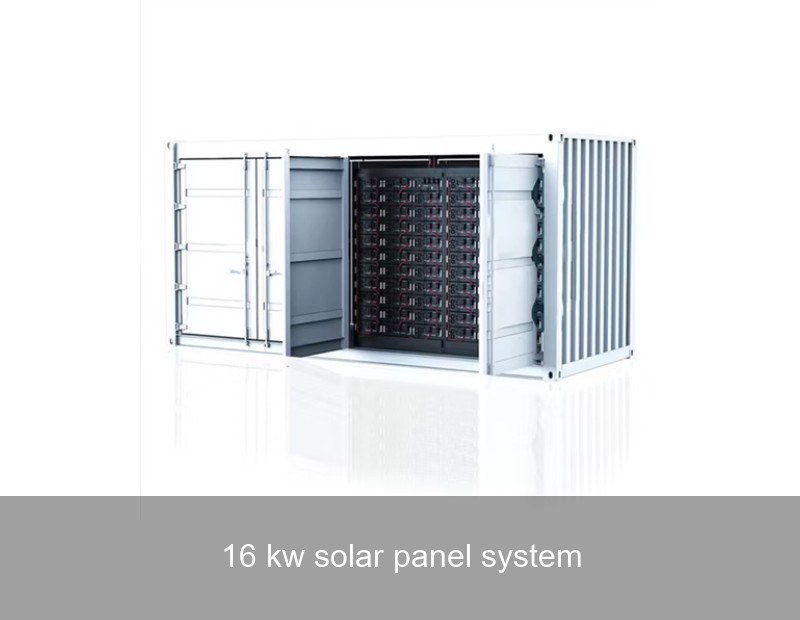
You're likely here because you've heard about the power of solar, and the number "16 kW" keeps popping up. It's a popular system size, but what does it really mean for your energy independence, your bills, and your carbon footprint? As a global leader in advanced energy storage, Highjoule has been empowering homes and businesses since 2005. We see a 16 kW solar panel system not just as an array of panels, but as the heart of a modern, intelligent energy ecosystem. Let's demystify this powerful system size and explore how pairing it with the right storage solution can unlock its full potential.
Table of Contents
- Understanding the 16 kW Solar Powerhouse
- Real-World Energy Output: What Can a 16 kW System Power?
- The Storage Imperative: Why Solar Alone Isn't Enough
- Case Study: A California Homeowner's Journey to Energy Independence
- The Highjoule Solution: Intelligent Storage for Your 16 kW System
- Making the Decision: Is a 16 kW System Right for You?
Understanding the 16 kW Solar Powerhouse
A 16 kilowatt (kW) solar panel system is a substantial clean energy generator. In practical terms, it typically consists of 40 to 45 high-efficiency solar panels, depending on the wattage of each individual panel. This system size is often considered the sweet spot for larger homes with high electricity consumption, small to medium-sized businesses, or properties with electric vehicle charging needs.
But here's a crucial point many miss: the "16 kW" rating is its peak DC power under ideal laboratory conditions. Your actual, real-world AC power output—the electricity that powers your appliances—is influenced by factors like geographic location, roof orientation, shading, and local weather patterns. This gap between theoretical potential and actual delivery is where intelligent system design and storage become critical.
Key Components of a Robust 16 kW Setup
- Solar Panels (40-45 units): The primary energy harvesters.
- Inverter(s): Converts the DC electricity from panels to usable AC electricity for your home. For a system this size, multiple string inverters or a modular microinverter setup are common.
- Mounting System & Racking: The secure foundation for your investment.
- Battery Energy Storage System (BESS): The game-changer for true energy independence (more on this below).
- Energy Management System (EMS): The brain that optimizes production, storage, and consumption.
Real-World Energy Output: What Can a 16 kW System Power?
Let's move from theory to data. The annual energy production of a 16 kW system varies dramatically by region. According to the National Renewable Energy Laboratory (NREL), a 16 kW system in sun-drenched Phoenix, Arizona, might produce around 24,000 kWh per year. That same system in Munich, Germany, might produce approximately 16,000 kWh annually due to lower solar irradiance.
To put this into perspective, the average U.S. household consumes about 10,600 kWh per year. A 16 kW system in a favorable location can often produce double that, covering 100% of the needs of an energy-intensive home and even allowing for surplus. This surplus is key—it's not wasted energy; it's potential storage for nighttime use or backup during grid outages.
| Location (City/State) | Estimated Annual Production (kWh) | Potential Coverage for Avg. Home* |
|---|---|---|
| Los Angeles, California | ~23,500 | 220% |
| Miami, Florida | ~22,000 | 205% |
| Berlin, Germany | ~14,800 | 140%** |
| Chicago, Illinois | ~18,500 | 175% |
*Based on U.S. average of 10,600 kWh/year. **Based on average German household consumption of ~2,800 kWh/year; system often sized for EV or heat pump.
Image Source: Unsplash - A residential solar installation of significant size.
The Storage Imperative: Why Solar Alone Isn't Enough
Here's the modern energy dilemma: your 16 kW solar panel system produces the most power in the middle of the day when you might not be home. In the evening, when demand peaks, the sun is setting. Without storage, you're forced to pull expensive power from the grid, undermining your savings and sustainability goals. Furthermore, during a grid outage, most standard solar systems shut down for safety—leaving you in the dark despite having a power plant on your roof.
This is where Highjoule's expertise transforms your solar investment. Integrating a battery storage system with your 16 kW array is no longer a luxury; it's the key to maximizing self-consumption, ensuring resilience, and providing grid services. Think of it as capturing the abundant sunshine of the afternoon to power your family's evening and providing a safety net whenever needed.
Case Study: A California Homeowner's Journey to Energy Independence
Let's look at a real example. The Johnson family in Sacramento, California, installed a 16.2 kW solar array in 2021. Despite significant generation, they were still sending over 60% of their production back to the grid under a net metering 2.0 policy, receiving a low credit while facing high Time-of-Use (TOU) rates in the evening.
In 2023, they partnered with Highjoule to add a Highjoule Hive 20 battery storage system (20 kWh usable capacity). The results after one year:
- Grid Independence: Self-consumption of solar power increased from 40% to over 85%.
- Bill Savings: Their monthly electric bill was reduced to a minimal service charge for 10 months of the year.
- Resilience: During three planned public safety power shutoffs (PSPS), their home remained fully powered for the entire duration (longest event: 14 hours).
- ROI: Projected payback period for the combined solar + storage system improved by 2 years due to optimized TOU arbitrage.
"The solar panels were a great first step," said Mr. Johnson, "but adding the Highjoule battery was what truly gave us control. We don't worry about blackouts or rate hikes anymore."
The Highjoule Solution: Intelligent Storage for Your 16 kW System
At Highjoule, we don't just sell batteries; we provide integrated, intelligent energy storage systems designed to work seamlessly with large-scale solar like a 16 kW setup. Our solutions are built on three pillars: Intelligence, Efficiency, and Sustainability.
For a robust 16 kW solar installation, we often recommend our Highjoule Hive Modular series. This system allows you to stack multiple battery modules to achieve the perfect capacity, typically starting at 15 kWh and scaling beyond 30 kWh for large homes or light commercial use. Paired with our proprietary Energy Bridge inverter/manager, it creates a DC-coupled system that is more efficient at storing direct solar energy than simpler AC battery add-ons.

Image Source: Unsplash - A modern home battery storage unit installation.
What Highjoule Brings to Your Solar Project:
- Advanced Lithium Iron Phosphate (LFP) Chemistry: Safer, longer-lasting batteries with a warranty extending to 10 years or 10,000 cycles.
- Smart Energy Management: Our software learns your consumption patterns and automatically optimizes when to store solar energy, power your home, or export to the grid for maximum financial return.
- Seamless Backup Power: A sub-panel or whole-home backup solution that activates instantaneously during a grid failure, keeping your essential loads or entire home running.
- Global Support: With over 18 years in the industry, our technical support and monitoring services are trusted by homeowners and businesses across Europe and North America.
Making the Decision: Is a 16 kW System Right for You?
Choosing a solar system size is a significant decision. A 16 kW system is a major investment that requires careful consideration of your current and future energy needs. Ask yourself these questions:
- What is my annual electricity consumption (kWh)? You can find this on your utility bills.
- Do I plan to add major new loads in the next 5-10 years (e.g., an EV, a heat pump, a pool)?
- What are my local net metering or feed-in tariff policies? Are they changing?
- How important is energy security and backup power to my household or business?
- Do I have adequate, unshaded roof space (typically 700-1000 sq. ft.) for an array of this size?
We always recommend a professional site assessment. But as a rule of thumb, if your annual consumption is above 12,000 kWh and you have the space, a 16 kW system paired with a Highjoule storage solution can be a transformative step towards true energy autonomy.
Ready to explore what a 16 kW solar panel system, powered by intelligent storage from Highjoule, can do for you? What's the first question about your energy future you'd like to answer?
 Inquiry
 Online Chat