


Navigating the Future: How Schneider Energy Storage and Smart Systems Are Powering Resilience
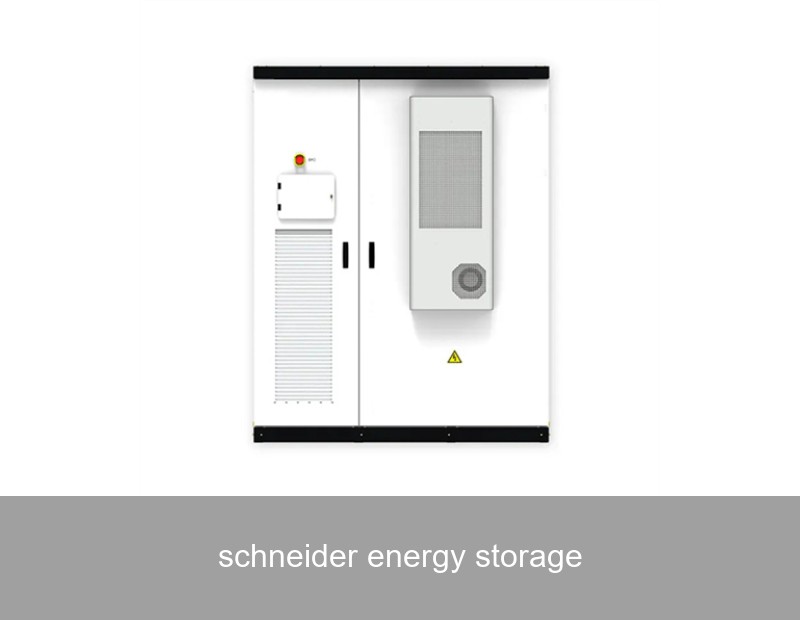
Imagine a world where your business doesn't flinch during a grid outage, where your factory seamlessly switches to clean, self-generated power, and your energy bills are predictable, even in volatile markets. This isn't a distant future; it's the reality being built today with advanced Schneider energy storage solutions integrated into intelligent microgrids. For facility managers, energy directors, and sustainability leaders, the question is no longer *if* to invest in energy resilience, but *how* to do it effectively. The synergy between sophisticated battery storage and smart energy management is unlocking unprecedented control, efficiency, and sustainability. Let's explore how this technological convergence is reshaping energy landscapes across Europe and the United States.
Table of Contents
- The Resilience Imperative: More Than Just Backup Power
- The Data Behind the Shift: Economics Meets Sustainability
- A Blueprint in Action: A European Manufacturing Case Study
- The Highjoule Advantage: Intelligent Storage for a Demanding Market
- Key Components of a Modern Energy Storage System
- Future Horizons: What's Next for Smart Energy?

Modern industrial energy systems combine generation, storage, and smart control. (Image credit: Unsplash)
The Resilience Imperative: More Than Just Backup Power
Gone are the days when energy storage simply meant a bank of batteries in a basement for emergency lighting. Today's challenges—from climate-induced grid instability and rising electricity costs to stringent carbon reduction targets—demand a proactive strategy. Schneider energy storage systems, particularly when part of a broader EcoStruxure Microgrid solution, represent a shift from passive backup to active energy asset management. These systems don't just store energy; they intelligently decide when to charge (from the grid or on-site renewables), when to discharge, and how to optimize for cost, carbon, or reliability. This transforms a capital expense into a dynamic, revenue-protecting asset.
The Data Behind the Shift: Economics Meets Sustainability
The business case for advanced storage is compelling. According to the U.S. Department of Energy's Solar Futures Study, storage is pivotal for decarbonizing the grid and can enable over 40% renewable penetration by 2035. Financially, commercial and industrial (C&I) entities face two major pain points: demand charges and time-of-use rates. Demand charges, often comprising 30-50% of a commercial bill, are based on the highest 15-minute power draw in a billing cycle. A strategically deployed battery can "peak shave," discharging during these high-demand periods and slashing those charges. Furthermore, markets in the UK, Germany, and parts of the U.S. offer lucrative frequency response services where batteries can get paid for helping to stabilize the grid—a direct revenue stream.
A Blueprint in Action: A European Manufacturing Case Study
Consider a real-world application at a mid-sized automotive parts manufacturer in Bavaria, Germany. Facing volatile energy prices and a corporate mandate to reduce carbon footprint by 25% in five years, they partnered with system integrators utilizing a Schneider energy storage core alongside a Highjoule BESS (Battery Energy Storage System).
- Challenge: High peak demand charges, intermittent solar PV production, and need for backup power for critical assembly lines.
- Solution: A 500 kW / 1 MWh lithium-ion battery system integrated with existing rooftop solar and managed by a Schneider Electric microgrid controller.
- Results (18-month post-installation):
Metric Improvement Peak Demand Charges Reduced by 28% Solar Self-Consumption Increased from 35% to over 80% Grid Energy Cost Overall reduction of 18% CO2 Emissions Reduced by 120 tonnes annually Backup Runtime for Critical Load 4 hours of full operation
This case exemplifies the multi-faceted ROI: direct cost savings, enhanced sustainability, and operational resilience. The system automatically shifts between economic and backup modes, ensuring the plant is always optimizing for its top priority.
The Highjoule Advantage: Intelligent Storage for a Demanding Market
As a global leader founded in 2005, Highjoule understands that the heart of a smart energy system is a reliable, high-performance, and safe battery. Our role in this evolving ecosystem is to provide the robust energy storage hardware that platforms like Schneider's can intelligently orchestrate. For the C&I and microgrid sectors, Highjoule's containerized and modular BESS solutions offer several critical advantages:
- Unmatched Safety: Utilizing LFP (Lithium Iron Phosphate) chemistry with integrated, multi-layer protection systems and advanced thermal runaway prevention.
- Seamless Integration: Designed with open communication protocols (like Modbus TCP, SunSpec), our systems are built to be the perfect partner for Schneider Electric and other leading energy management platforms, ensuring smooth data exchange and control.
- Scalability & Flexibility: From a 100 kWh unit for a commercial building to multi-megawatt hour systems for industrial campuses, our modular design allows for easy capacity expansion as needs evolve.
- Global Support: With projects across Europe and North America, Highjoule provides localized service, monitoring, and warranty support, ensuring your investment is protected for the long term.
In essence, while the brain of a smart microgrid might be a Schneider controller, the muscle and stamina come from Highjoule's engineered battery systems.

High-performance, containerized BESS units like those from Highjoule form the core of modern energy resilience projects. (Image credit: Unsplash)
Key Components of a Modern Energy Storage System
Understanding the parts helps demystify the whole. A fully integrated Schneider energy storage and microgrid solution typically involves:
1. The Battery Energy Storage System (BESS)
This is Highjoule's domain. It includes the battery racks (LFP cells), a Battery Management System (BMS) for cell-level monitoring and safety, power conversion systems (PCS/inverters) to convert DC to AC, and climate control.
2. The Energy Management System (EMS) / Microgrid Controller
This is the intelligence. Platforms like Schneider Electric's EcoStruxure Microgrid Advisor use weather forecasts, electricity price signals, and load predictions to optimize BESS operation. It makes the economic and resilience decisions in real-time.
3. On-Site Generation
Typically solar PV or wind. The BESS stores excess generation for use later, maximizing self-consumption.
4. The Critical Load Panel
This separates the essential loads (e.g., servers, refrigeration, critical production) that will be backed up from non-essential ones.
This layered architecture, as recommended by standards from the NFPA 855, ensures safety, functionality, and scalability.
Future Horizons: What's Next for Smart Energy?
The journey is accelerating. We're moving towards AI-driven predictive optimization, where systems like those built on Schneider energy storage foundations will not only react to current conditions but forecast and adapt to future ones. The rise of vehicle-to-grid (V2G) technology and virtual power plants (VPPs) will see thousands of distributed assets—including C&I batteries—aggregated to act as a single, grid-stabilizing force. For a business, this means your energy storage system could transition from a cost-saving tool to a direct revenue-generating asset participating in wholesale energy markets.
Furthermore, the push for circularity is reaching storage. Companies like Highjoule are investing in second-life applications for batteries and designing for recyclability from the outset, ensuring the sustainability story is complete from cradle to grave.

The control room of the future: AI and data visualization for smart energy management. (Image credit: Unsplash)
Given the clear trajectory toward decentralized, intelligent, and resilient power, what specific energy challenge—be it demand charge spikes, renewable integration, or pure backup needs—is keeping you up at night, and how might a tailored storage strategy address it?
 Inquiry
 Online Chat