


Unlocking Energy Independence: The Essential Guide to the Hybrid Inverter for Solar and Wind
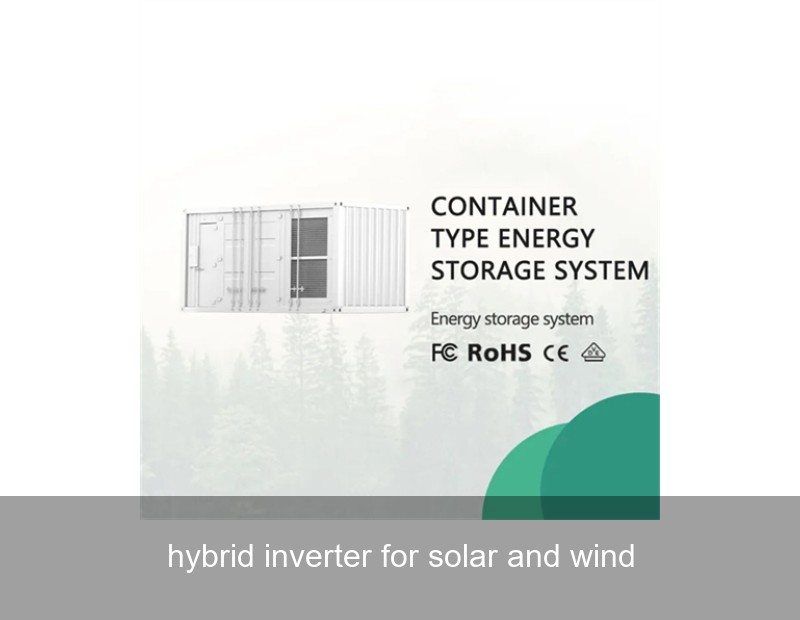
Imagine a world where your home or business isn't just powered by renewable energy, but is masterfully orchestrated by it. As electricity prices remain volatile and the call for sustainability grows louder, a single technological hero is emerging at the heart of modern energy systems: the hybrid inverter for solar and wind. This isn't just another piece of hardware; it's the intelligent brain that harmonizes solar panels, wind turbines, and battery storage into a resilient and efficient power ecosystem. For homeowners and businesses across Europe and the US, understanding this device is the first step toward true energy autonomy and cost control.
Table of Contents
What Exactly is a Hybrid Inverter for Solar and Wind?
Let's break it down. A traditional solar inverter has one job: convert the direct current (DC) from your solar panels into usable alternating current (AC) for your home. A hybrid inverter for solar and wind is vastly more capable. It's a multi-input, smart energy manager designed to integrate and optimize power from at least two renewable sources—typically solar PV and small-scale wind turbines—while also managing battery storage and grid interaction.
Think of it as the conductor of your personal energy orchestra. It decides in real-time:
- Whether to send solar power directly to your appliances.
- When to charge your batteries with excess wind energy.
- How to seamlessly switch to battery backup during a grid outage.
- The most economical moment to sell surplus power back to the utility.

This level of integration is crucial because solar and wind are often complementary; the sun doesn't always shine, but the wind might blow at night or during cloudy days. A hybrid inverter ensures you capture and use every possible kilowatt-hour.
Why the Hybrid Inverter is a Game-Changer Now
The momentum behind hybrid systems isn't accidental. It's driven by a powerful convergence of factors.
Phenomenon: Homeowners and businesses are seeking resilience against increasing grid instability and extreme weather events, while simultaneously aiming to reduce their carbon footprint and energy bills. Relying on a single renewable source often leads to gaps in supply.
Data: According to the International Energy Agency (IEA), global renewable capacity is set to expand by 2,400 GW between 2022-2027. A significant portion of this is distributed, small-scale generation where hybrid systems excel. Furthermore, data from the U.S. Department of Energy shows that combining solar with other resources can increase a household's energy independence from ~40% to over 80%.
Insight: The modern energy consumer doesn't want just generation; they want intelligent management. A hybrid inverter transforms a collection of green energy assets into a reliable, self-optimizing virtual power plant at your premises.
Key Benefits of an Integrated Solar and Wind System
| Benefit | Explanation | Impact |
|---|---|---|
| Maximized Self-Consumption | Uses energy when it's produced, stores the rest, minimizing grid draw. | Slash electricity bills by up to 70-90%. |
| Uninterrupted Power Supply | Provides seamless backup power during grid failures. | Critical for home offices, medical devices, and business continuity. |
| Enhanced System Lifespan | Smart charging algorithms protect battery health. | Longer return on investment for your entire energy system. |
| Grid Support & Revenue | Some advanced systems can provide grid services (where permitted). | Potential for future revenue streams. |
A Real-World Case Study: The German Dairy Farm
Let's move from theory to practice. Consider a mid-sized dairy farm in Bavaria, Germany. Their challenge was twofold: high, around-the-clock energy needs for cooling and equipment, and a desire to achieve carbon neutrality.
The Solution: They installed a hybrid system comprising:
- 50 kW of rooftop solar.
- A 20 kW vertical-axis wind turbine (suited for the variable wind speeds on their land).
- A 40 kWh lithium-ion battery storage unit.
- All controlled by a robust hybrid inverter for solar and wind.
The Data & Results: Within the first year of operation:
- Grid Independence: Achieved 92% self-sufficiency in electricity.
- Cost Savings: Reduced annual energy costs by €18,500.
- Reliability: Eliminated production downtime from short grid outages, which previously spoiled stored milk.
- Carbon Reduction: Offset 62 tonnes of CO2 annually.
This case exemplifies how the right technology turns complementary resources—sunny days and breezy nights—into a consistent, economical power supply.

Choosing the Right Hybrid Inverter System: What to Look For
Not all hybrid inverters are created equal. For a system that lasts decades, key specifications matter.
Critical Technical Specifications
- Dual MPPT Chargers: Ensure optimal harvesting from both solar and wind inputs independently.
- Grid-Tie with Islanding Capability: Must synchronize with the grid but also create a stable "island" during outages.
- Scalable Battery Compatibility: Works with leading battery chemistries and allows for easy capacity expansion.
- Smart Energy Management Software: User-friendly monitoring and control via an app is non-negotiable for modern users.
This is where partnering with an experienced provider makes all the difference. A DIY approach can lead to suboptimal performance, safety risks, and warranty issues.
Highjoule's Smart Solution: The Synergy Series Hybrid Power Manager
At Highjoule, with nearly two decades of experience in advanced energy storage, we've engineered our Synergy Series Hybrid Power Manager to address these exact challenges. It's more than an inverter; it's a complete AC/DC coupled energy management platform designed for the European and North American markets.
Our Synergy Series is the cornerstone of a truly intelligent system. It seamlessly integrates solar arrays and wind turbines, manages Highjoule's own high-density lithium ferro phosphate (LFP) battery racks, and provides generator start functionality for ultimate backup. Its proprietary algorithm, which we call Adaptive Load Forecasting, learns your energy consumption patterns and weather data to pre-emptively optimize storage and usage, pushing your self-consumption to the maximum.
For commercial and industrial applications, our Microgrid Controller option can be added, allowing multiple Synergy units to communicate and form a resilient, independent microgrid—a perfect solution for remote facilities, campuses, or communities seeking energy sovereignty.

We provide more than just hardware. Highjoule's service includes comprehensive site assessment, system design, permitting support, and remote monitoring—ensuring your hybrid inverter for solar and wind system delivers on its promise for years to come.
Is Your Property Ready for a Hybrid Energy System?
The journey to energy independence starts with a question. Do you have a suitable site for solar (a south-facing roof or land) and exposure to consistent wind (Class 2 or higher)? More importantly, are you ready to move from being a passive consumer to an active manager of your energy future? The technology is proven, the economics are compelling, and the environmental imperative is clear. What specific energy challenge—be it reliability, cost, or sustainability—is motivating you to explore a hybrid solution today?
 Inquiry
 Online Chat