


Energy Transition Software: The Digital Brain Powering a Cleaner Grid
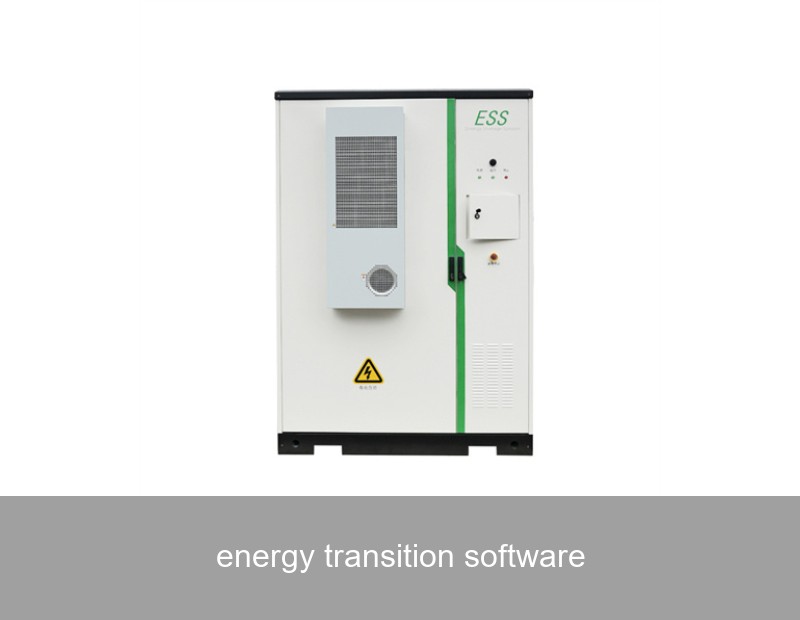
You've heard about the hardware of the energy transition: the soaring wind turbines, the vast solar farms, and the sleek battery cabinets. But there's a silent, digital force orchestrating this entire shift. The true linchpin of a reliable, decarbonized future is energy transition software. This isn't just a monitoring tool; it's the intelligent layer that transforms disparate energy assets into a responsive, efficient, and profitable ecosystem. For businesses, communities, and grid operators navigating this complex shift, this software is becoming the indispensable command center.
Table of Contents
- The Phenomenon: From Passive Hardware to Active Intelligence
- The Data: Quantifying the Software Advantage
- The Case Study: A European Industrial Park's Journey
- The Insight: Key Features of Leading Energy Transition Platforms
- Highjoule's Approach: Integrated Intelligence from Day One
- A Question for Your Energy Future
The Phenomenon: From Passive Hardware to Active Intelligence
Traditionally, energy systems were linear: generation from a central plant, transmission over long distances, and passive consumption. Today, the model is decentralized. A factory roof has solar panels, a parking lot has EV chargers, and a hospital basement houses a battery system. This creates a challenge: how do you make all these assets work together harmoniously, rather than as a chaotic jumble of components? This is the core problem that energy transition software solves.
Think of it this way. You can buy the best musical instruments in the world, but without a conductor and a score, you won't get a symphony. Energy transition software is the conductor and the score for your energy assets. It ensures solar generation, battery storage, and building loads operate in perfect sync, responding in real-time to price signals, grid demands, and weather forecasts.

Image source: Unsplash. A modern energy management system requires sophisticated software for visualization and control.
The Data: Quantifying the Software Advantage
The impact of intelligent software isn't theoretical; it's measurable on the balance sheet and the carbon report. Let's look at the numbers. According to a report by the U.S. Department of Energy's National Renewable Energy Laboratory (NREL), advanced software controls can increase the value delivered by battery energy storage systems by up to 40% by optimizing for multiple value streams simultaneously (NREL, 2023).
Consider these key performance indicators transformed by software:
| Challenge | Without Advanced Software | With Advanced Energy Transition Software |
|---|---|---|
| Energy Costs | Passive consumption, exposed to peak tariffs. | Active management reducing costs by 20-40% through arbitrage and peak shaving. |
| Solar Self-Consumption | Limited to immediate use, excess often exported at low rates. | Increased to 70%+ by forecasting generation and pre-charging batteries or shifting loads. |
| Grid Services Revenue | Typically inaccessible for smaller, standalone assets. | Enables aggregation to participate in frequency regulation, demand response programs. |
| System Reliability | Reactive troubleshooting after a fault occurs. | Predictive analytics flagging potential issues weeks in advance, ensuring uptime. |
These figures highlight a critical insight: the hardware stores the energy, but the software unlocks its value.
The Case Study: A European Industrial Park's Journey
Let's ground this in reality with a project in Northern Germany. A mid-sized industrial park, housing several manufacturing SMEs, faced volatile energy prices and pressure to meet corporate sustainability goals. They installed a 2 MW solar carport and a 1.5 MWh battery storage system. Initially, these systems operated on basic, independent settings.
The Phenomenon: They weren't maximizing their investment. Solar overproduction at noon was sold cheaply, while they bought expensive power from the grid during the evening production peak. The battery cycled randomly without a strategic purpose.
The Software Solution: The park integrated a sophisticated energy transition software platform. This platform ingested real-time data from all meters, production forecasts from a dedicated weather API, and dynamic electricity price signals from the EPEX Spot market.
The Data-Driven Outcome: Within the first year:
- Energy Cost Reduction: Overall electricity procurement costs decreased by 28%.
- Solar Self-Consumption: Rose from 35% to 82%.
- Additional Revenue: The aggregated battery system provided primary control reserve (PCR) to the German grid, generating over €45,000 in annual revenue.
- Carbon Footprint: Scope 2 emissions from electricity dropped by over 60%.
The software made the complex simple, automating decisions that would be impossible for a human to calculate in real-time. It turned a capital expense into a dynamic, revenue-generating asset.
The Insight: Key Features of Leading Energy Transition Platforms
Not all software platforms are created equal. Based on industry-leading practices and projects like the one above, here are the non-negotiable features to look for:
1. True Interoperability & Open Protocols
The platform must be hardware-agnostic. It should communicate seamlessly with inverters, batteries, meters, and building management systems from multiple manufacturers using open standards like Modbus, SunSpec, or IEEE 2030.5. Vendor lock-in is a major risk in a rapidly evolving market.
2. AI-Powered Forecasting & Optimization
At the heart of the system must be a robust optimization engine. It uses machine learning to forecast local energy generation (solar, wind) and consumption patterns. It then calculates the most economical and sustainable dispatch strategy for your storage and generation assets every 5-15 minutes.

Image source: Unsplash. AI-driven forecasting is key for optimizing energy flows.
3. Grid Services & Market Integration
The software should be your gateway to energy markets. It must have the capability to aggregate distributed energy resources (DERs) and bid them into wholesale markets, frequency regulation programs (like FFR in the UK or Reg D in the US), or virtual power plants (VPPs). This is where significant new revenue streams are found.
4. User-Centric Visualization & Control
Complex algorithms need simple interfaces. Dashboards should provide clear insights into savings, carbon avoidance, revenue, and system health. Crucially, it should allow facility managers to set their own priorities—maximize savings, maximize green consumption, or maximize revenue—and let the software execute.
Highjoule's Approach: Integrated Intelligence from Day One
At Highjoule, we've understood since our founding in 2005 that intelligence is not an add-on; it's the core of a modern energy storage system. Our HARMONI™ Energy Management Platform is the embodiment of this philosophy, designed specifically as energy transition software for commercial, industrial, and microgrid applications.
HARMONI™ isn't a separate product you integrate later. It's the native brain of every Highjoule storage system we deploy. Here’s how it delivers on the key insights:
- Seamless Hardware-Software Fusion: Because we design both, our BESS and HARMONI™ communicate with unparalleled depth and reliability, while still maintaining open architecture for third-party assets.
- Multi-Objective Optimization: Our proprietary algorithm constantly evaluates weather data, tariff structures, and market prices. It doesn't just shift energy; it strategically positions your entire energy portfolio for financial and operational advantage.
- Global Market Connectivity: Whether your site is in Texas participating in ERCOT's ancillary services, in Germany providing grid support, or in the UK optimizing for dynamic time-of-use tariffs, HARMONI™ is configured for local market opportunities.
- Actionable Transparency: We provide our clients with a clear, dashboard view of not just "what" is happening, but "why" the system made certain decisions, building trust and enabling informed strategic overrides.
Our services extend beyond the software license. We offer ongoing performance monitoring, market participation management, and regular software updates that ensure your system evolves with the grid and market rules, protecting your investment for the long term.
A Question for Your Energy Future
As you look at your organization's energy infrastructure—whether it's a single facility or a distributed portfolio—ask yourself this: Are your energy assets simply operating, or are they intelligently collaborating to drive down costs, increase resilience, and create new value? The gap between these two states is precisely where energy transition software operates. What is the first step you could take to bring this level of intelligence to your own energy strategy?
 Inquiry
 Online Chat