


Green Energy Installations: Powering a Sustainable Future, One Smart System at a Time
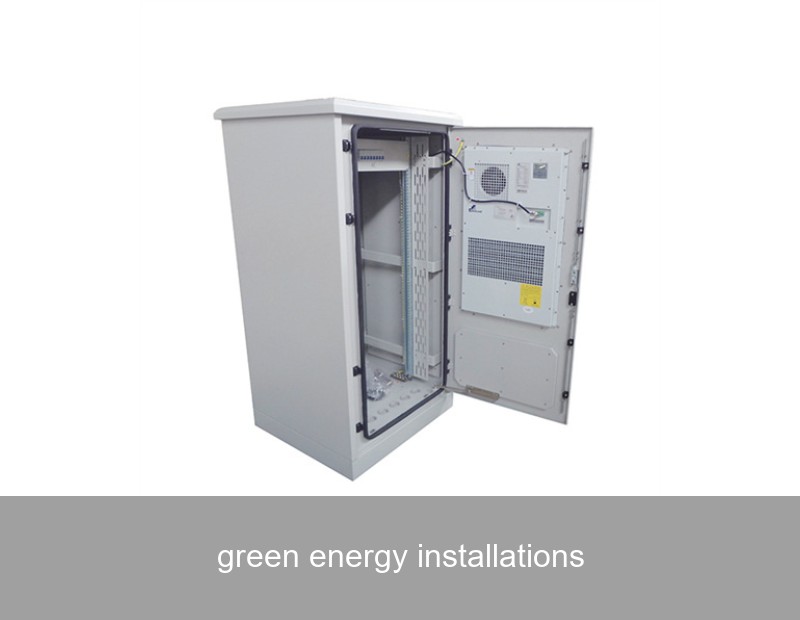
Imagine a world where your business isn't just powered by the sun or wind, but by an intelligent system that knows exactly when to store that energy and when to use it. This isn't a distant dream; it's the reality of modern green energy installations. While solar panels and wind turbines are the visible heroes, the true game-changer lies in the sophisticated technology that manages and optimizes every kilowatt-hour. For over 18 years, Highjoule has been at the heart of this evolution, moving beyond simple generation to deliver complete, intelligent power solutions. This article explores how advanced energy storage is transforming green energy installations from intermittent sources into reliable, grid-independent powerhouses.
Table of Contents
- The Intermittency Challenge: When the Sun Doesn't Shine
- The Data: Why Storage is No Longer Optional
- The Smart Solution: Beyond the Battery Box
- Case Study: A German Manufacturing Plant's Journey to Energy Independence
- Highjoule's Role in Your Green Energy Installation
The Intermittency Challenge: When the Sun Doesn't Shine
Let's face it: renewable energy has a timing problem. Solar production peaks at noon, but your factory or home energy demand often peaks in the early morning and evening. This mismatch creates a fundamental challenge for green energy installations. Without a way to capture surplus energy, it's wasted. During cloudy days or calm periods, you're forced to fall back on the traditional grid, often paying premium rates. This reliance undermines both your economic savings and your environmental goals. It's like having a water well that only flows for a few hours a day—you need a reservoir to ensure a consistent supply.
The Data: Why Storage is No Longer Optional
The numbers paint a clear picture. According to the International Renewable Energy Agency (IRENA), to meet global climate targets, the world needs to expand battery energy storage capacity by over 17 times by 2030. In the U.S., the Solar Energy Industries Association (SEIA) reports that nearly 20% of new residential solar installations in 2023 were paired with storage, a figure that has doubled in just three years. In Europe, driven by high energy prices and security concerns, the market for behind-the-meter storage is exploding. This isn't just a trend; it's a fundamental shift in how we architect energy systems. The modern green energy installation is inherently a hybrid system: generation plus intelligent storage.

Image Source: Unsplash - A modern industrial solar and storage installation.
The Smart Solution: Beyond the Battery Box
So, what separates a basic battery backup from a true smart energy system? Think of it as the difference between a spare tire and an advanced traction control system. A simple battery stores and discharges. A smart Battery Energy Storage System (BESS), like those engineered by Highjoule, does much more:
- Intelligent Energy Arbitrage: It automatically buys and stores grid energy when rates are low (often at night) and uses it when rates are high, slashing your utility bills.
- Solar Self-Consumption Optimization: It maximizes the use of your own solar generation, often increasing self-consumption rates from 30-40% to over 80%.
- Grid Services & Resilience: Advanced systems can provide frequency regulation to support the grid and, most critically, keep your operations running during a power outage through seamless islanding.
- Predictive Management: Using weather forecasting and usage algorithms, the system pre-charges or conserves energy based on predicted solar yield and demand.
The Core Components of a Smart BESS
| Component | Function | Highjoule's Approach |
|---|---|---|
| Battery Modules | The core energy storage medium (typically Lithium Iron Phosphate - LFP). | Uses automotive-grade, UL-certified LFP cells for superior safety, longevity (10,000+ cycles), and stable performance. |
| Battery Management System (BMS) | The "brain" of the battery pack, ensuring cell balance, temperature control, and safety. | Features a multi-layer, AI-enhanced BMS that monitors every cell in real-time to prevent thermal runaway and extend lifespan. |
| Power Conversion System (PCS) | Converts DC battery power to AC for your building and vice versa. | Integrates a high-efficiency, bi-directional inverter with >98.5% efficiency, minimizing conversion losses. |
| Energy Management System (EMS) | The top-level software that controls the entire system based on economics, weather, and user preferences. | Highjoule's proprietary NeuroGrid AI platform learns your patterns and autonomously optimizes for cost and carbon savings. |
Case Study: A German Manufacturing Plant's Journey to Energy Independence
Let's look at a real-world example. A mid-sized automotive parts manufacturer near Stuttgart, Germany, was facing crippling energy costs and pressure to meet corporate sustainability targets. Their existing 500 kW rooftop solar array was covering only about 25% of their daytime load due to intermittent cloud cover and no storage.
The Solution: In 2022, they partnered with Highjoule to design and deploy a turnkey storage solution integrated with their existing solar. The installation included:
- A Highjoule H-Stack C&I containerized BESS with 1 MWh capacity.
- Full integration with their solar inverters and building management system.
- Setup for participation in Germany's primary control reserve (PCR) market via an aggregator.
The Results (18 Months Post-Installation):
- Grid Energy Cost Reduction: 68% decrease through peak shaving and time-of-use optimization.
- Solar Self-Consumption: Increased from 25% to 92%.
- Additional Revenue: Earns approximately €25,000 annually by providing grid stability services.
- Carbon Footprint: Reduced scope 2 emissions by an estimated 740 tonnes of CO2 per year.
- Payback Period: Achieved in under 5 years, factoring in incentives and revenue.
This case exemplifies how a modern green energy installation becomes a strategic asset, not just a cost center.

Image Source: Unsplash - Interior of a commercial battery energy storage system.
Highjoule's Role in Your Green Energy Installation
At Highjoule, we don't just sell hardware; we provide certainty. Since 2005, we've specialized in making advanced energy storage simple, reliable, and highly profitable for our clients. Our expertise spans the entire project lifecycle:
Our Product Ecosystem
- For Homes & Small Businesses (H-Series Residential): Scalable, wall-mounted systems from 5 kWh to 30 kWh, designed for seamless integration with leading solar inverters and smart home ecosystems.
- For Commercial & Industrial (H-Stack C&I): Modular, containerized solutions from 100 kWh to multi-MWh scale. They feature built-in climate control, fire suppression, and our NeuroGrid AI for maximum ROI.
- For Microgrids & Utilities (H-Stack Utility): Utility-grade systems engineered for grid-scale storage, renewable firming, and black-start capabilities, forming the backbone of community resilience.
Our End-to-End Services
We support you from concept to long-term operation:
- Feasibility & Design: Our engineers model your load profiles, solar generation, and local utility rates to design the optimal system size and configuration.
- Financing & Incentive Navigation: We help you understand and secure available incentives, like the U.S. Investment Tax Credit (ITC) or European Union grants.
- Professional Installation & Grid Interconnection: Certified partners ensure safe, code-compliant installation and manage the often-complex utility interconnection process.
- Ongoing Monitoring & Support: Remote monitoring via the Highjoule NeuroGrid platform gives you real-time insights and predictive maintenance alerts.
The Future of Energy: What Will Your Grid Look Like?
The energy landscape is shifting from a centralized, one-way flow to a decentralized, interactive network. Your green energy installation with smart storage is a key node in this new grid. It empowers you to become a "prosumer"—both a producer and a consumer—with control over your energy costs, carbon footprint, and resilience. As electric vehicle fleets grow and National Renewable Energy Laboratory (NREL) research points to even more distributed resources, the ability to manage these assets intelligently will be the ultimate competitive advantage.
Is your organization ready to transform its energy expenditure from a variable cost into a predictable, strategic asset? What's the first step you need to take to understand the storage potential within your own green energy installation?
 Inquiry
 Online Chat