


Métodos de Almacenamiento de Energía: La Clave para un Futuro Eléctrico Resiliente
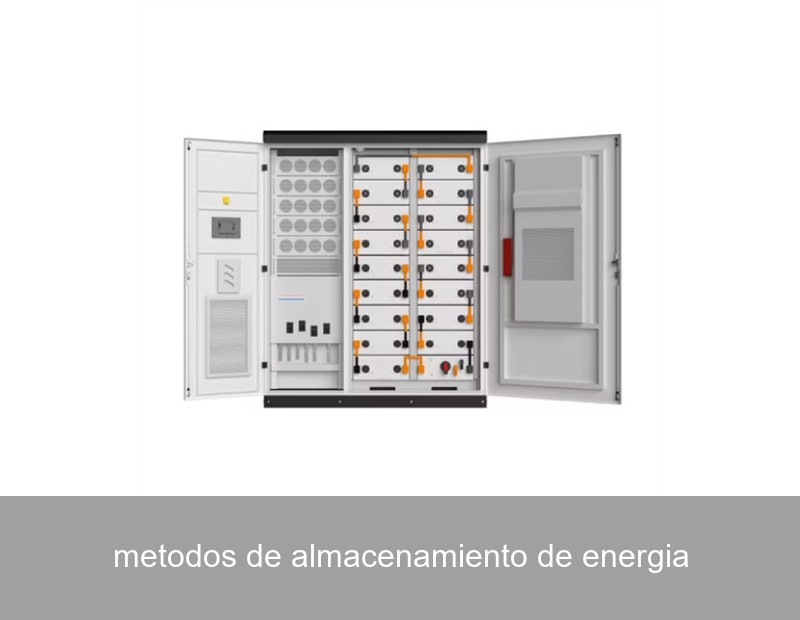
As the world accelerates its transition to renewable energy, a critical question emerges: what happens when the sun doesn't shine or the wind doesn't blow? This is where métodos de almacenamiento de energía (energy storage methods) become the unsung heroes of the modern grid. They are not just an accessory but the fundamental enabler for a reliable, sustainable, and independent energy system. For nearly two decades, Highjoule has been at the forefront of this revolution, engineering intelligent storage solutions that turn this challenge into a tangible opportunity for businesses, industries, and communities.
Table of Contents
- The Modern Energy Dilemma: Intermittency & Cost
- Core Métodos de Almacenamiento de Energía Explained
- Why Battery Energy Storage Systems (BESS) Are Taking Center Stage
- From Theory to Grid: A Real-World Case Study in Spain
- Choosing the Right Storage Method for Your Needs
- The Horizon: What's Next for Energy Storage?
The Modern Energy Dilemma: Intermittency & Cost
Let's face it, renewable energy has a scheduling problem. Solar panels peak at noon, while energy demand often peaks in the evening. This mismatch creates a dual issue: curtailment (wasting excess renewable energy) and reliance on fossil-fuel peaker plants during gaps. According to the International Energy Agency (IEA), the world needs to add nearly 10,000 GW of renewable capacity by 2050 to meet net-zero goals, making storage not optional but essential. The right método de almacenamiento acts as a buffer, smoothing out these fluctuations, enhancing grid stability, and ultimately lowering energy costs by using stored cheap power during expensive peak times.
Core Métodos de Almacenamiento de Energía Explained
Energy storage isn't a one-size-fits-all technology. It's a diverse toolkit, each with its own strengths and ideal applications. Understanding these options is the first step toward a smarter energy strategy.
1. Electrochemical Storage (Batteries)
This is the most dynamic and rapidly advancing category. It includes Lithium-ion (Li-ion), known for high energy density and efficiency; Flow Batteries, excellent for long-duration storage; and emerging solid-state batteries.

Modern BESS installations, like those from Highjoule, are modular and scalable. (Image credit: Unsplash)
At Highjoule, we specialize in advanced Lithium-ion based Battery Energy Storage Systems (BESS) that are packed with smart energy management software. Our Highjoule H-Series for commercial and industrial applications is designed for maximum cycle life and safety, providing not just backup power, but active energy cost management through peak shaving and load shifting.
2. Mechanical Storage
- Pumped Hydro Storage: The incumbent giant, using gravity and water. It provides massive capacity but is limited by geography.
- Compressed Air Energy Storage (CAES): Stores energy by compressing air in underground caverns.
- Flywheel Energy Storage: Stores kinetic energy in a rotating mass, excellent for high-power, short-duration grid stability services.
3. Thermal Energy Storage
This method captures heat or cold for later use. A common example is using molten salts in concentrated solar power (CSP) plants, allowing them to generate electricity hours after sunset. It's a powerful método de almacenamiento for industrial process heat or district heating/cooling systems.
4. Chemical Storage (Hydrogen)
Green hydrogen, produced via electrolysis using renewable electricity, is gaining traction for seasonal storage and hard-to-decarbonize sectors like heavy transport and steelmaking. While conversion losses are higher, its potential for long-term, large-scale storage is unmatched.
| Method | Typical Discharge Duration | Key Advantage | Common Use Case |
|---|---|---|---|
| Lithium-ion BESS | Minutes to 4-8 hours | High efficiency, fast response | Frequency regulation, commercial peak shaving |
| Pumped Hydro | 6-20+ hours | Very large scale, low cost | Bulk energy time-shift |
| Flow Battery | 4-10+ hours | Long cycle life, deep discharge | Renewables integration, microgrids |
| Thermal (Molten Salt) | 6-15+ hours | Integrates with heat generation | CSP plants, industrial heat |
| Green Hydrogen | Days to months | Seasonal storage, versatility | Industry decarbonization, long-term storage |
Why Battery Energy Storage Systems (BESS) Are Taking Center Stage
For most commercial and grid-scale applications today, the spotlight is firmly on BESS. Why? It's about flexibility, scalability, and intelligence. Unlike large, site-specific projects like pumped hydro, a BESS can be deployed almost anywhere, from a factory warehouse to a substation. Its response time is measured in milliseconds, making it perfect for stabilizing grids flooded with variable renewables.
Highjoule's approach goes beyond the hardware. Our integrated Energy Management System (EMS) is the brain of the operation. It continuously analyzes energy prices, consumption patterns, and weather forecasts to autonomously decide when to store, when to discharge, and when to participate in grid service markets. This turns a capital expenditure into a revenue-generating or cost-saving asset. For residential users, our HomePower solution offers similar intelligence, allowing homeowners to maximize self-consumption of rooftop solar and gain energy independence.
From Theory to Grid: A Real-World Case Study in Spain
Let's move from concepts to concrete impact. Southern Europe, with its abundant solar resources, faces classic intermittency challenges. In 2023, Highjoule deployed a 12 MWh BESS for a mid-sized industrial park in Andalusia, Spain. The facility had significant rooftop solar but was still exposed to high evening energy costs and grid congestion.
The Challenge: Reduce energy costs, increase solar self-consumption from 35% to over 70%, and provide grid support.
The Highjoule Solution: A turnkey system featuring our H-Series BESS and advanced EMS, configured for solar smoothing, peak shaving, and participation in the Spanish grid's frequency regulation service.
The Data-Driven Results (after 12 months):
- Energy Cost Reduction: 31% decrease in overall electricity bills through arbitrage and peak shaving.
- Solar Self-Consumption: Increased to 78%, drastically reducing curtailment.
- Additional Revenue: The system generated approximately €85,000 in ancillary service revenue for the park's owners.
- ROI: Projected payback period achieved in under 5 years.
This case, documented in part with data from the Spanish Grid Operator (Red Eléctrica), illustrates how the right método de almacenamiento de energía, paired with smart software, delivers multidimensional value.
Choosing the Right Storage Method for Your Needs
So, how do you navigate this landscape? The choice depends on your primary objective:
For Commercial & Industrial Facilities:
Lithium-ion BESS is typically the optimal choice. Focus on solutions with robust energy management software, like Highjoule's platform, that can handle complex tariff structures and generate revenue streams. Key questions: What is your peak demand charge? What is your solar production profile?
For Utilities & Large-Scale Grid Support:
A mix might be needed. BESS for fast-frequency response, while exploring long-duration technologies like flow batteries or green hydrogen for seasonal shifts. The National Renewable Energy Laboratory (NREL) provides excellent tools for modeling these scenarios.
For Residential Energy Independence:
Integrated AC-coupled home battery systems are the standard. Look for seamless integration with existing solar, user-friendly apps, and reliable warranty terms. Highjoule's HomePower unit is designed for safety, longevity, and simple homeowner management.
The Horizon: What's Next for Energy Storage?
The innovation pipeline is bursting. We're seeing advances in solid-state batteries promising even higher safety and density, and AI-driven optimization platforms that can manage entire portfolios of distributed storage assets as a "virtual power plant." At Highjoule, our R&D is focused on increasing system longevity, improving recyclability, and developing even more sophisticated grid-interactive algorithms.
The journey toward a 100% renewable grid is a marathon, not a sprint. Each método de almacenamiento de energía is a crucial tool in that race. The question is no longer *if* storage is needed, but *which combination* will deliver the most resilient, economical, and sustainable power for your specific challenge.
What energy challenge—be it unpredictable costs, grid reliability concerns, or sustainability targets—is your organization looking to solve with intelligent energy storage today?
 Inquiry
 Online Chat