


Why a Container for Battery Storage is Revolutionizing Modern Energy Systems
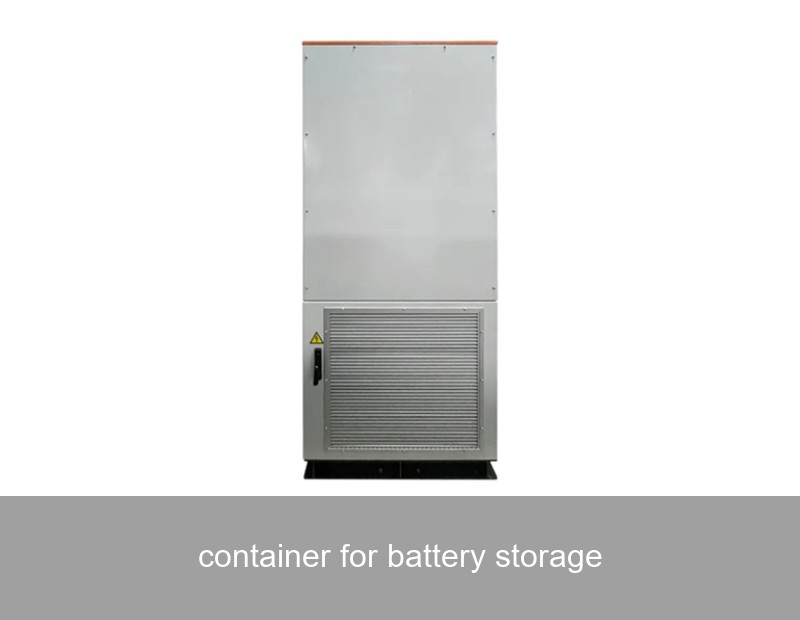
Have you ever driven past an industrial site or a remote solar farm and seen what looks like a large shipping container sitting quietly to the side? That unassuming box is far more than a storage unit; it's likely a powerhouse—a sophisticated container for battery storage. These modular, self-contained energy systems are rapidly becoming the backbone of resilient and sustainable power grids across Europe and the United States. They solve a critical challenge in the renewable energy transition: how to store excess solar and wind energy efficiently and deploy it precisely when and where it's needed. As a product technology expert at Highjoule, I've seen firsthand how this innovative approach is moving energy storage from an afterthought to a central, strategic asset. Let's unpack the phenomenon.
Table of Contents
- The Phenomenon: From Simple Box to Grid Hero
- The Data: Quantifying the Containerized Storage Boom
- The Case Study: A Port's Journey to Energy Independence
- The Insights: Key Considerations When Choosing a System
- The Highjoule Solution: Engineered for Performance and Safety What Will Your Energy Resilience Look Like?
The Phenomenon: From Simple Box to Grid Hero
The rapid rise of the containerized battery energy storage system (BESS) is a direct response to a global energy shift. We're generating more clean electricity than ever, but the sun doesn't always shine, and the wind doesn't always blow. This intermittency creates a mismatch between supply and demand. Enter the containerized BESS. By housing a complete battery system—including lithium-ion battery racks, thermal management, fire suppression, power conversion (PCS), and control software—within a standardized, weatherproof steel enclosure, engineers have created a "plug-and-play" power plant.
Think of it this way: instead of constructing a bespoke, building-based storage facility, which can take years of planning and permitting, a container for battery storage can be manufactured in a controlled factory environment, shipped anywhere in the world, and be operational in a fraction of the time. This modularity is a game-changer for project scalability and speed.
The Data: Quantifying the Containerized Storage Boom
The numbers tell a compelling story. According to the International Energy Agency (IEA), global energy storage capacity is set to multiply exponentially this decade, with grid-scale systems leading the charge. A significant portion of this new capacity is deployed in containerized formats. In the U.S., the Federal Energy Regulatory Commission (FERC) reports a massive pipeline of planned storage projects, many utilizing container designs for their rapid deployment benefits.

In Europe, driven by ambitious REPowerEU plans and soaring energy prices, the market for commercial and industrial (C&I) storage is exploding. Analysis from research firms like BloombergNEF indicates that the levelized cost of storage (LCOS) for lithium-ion batteries has fallen dramatically, making containerized solutions not just a technical choice, but an increasingly economic one for businesses seeking to control energy costs.
Key Advantages at a Glance
| Advantage | Impact |
|---|---|
| Modular Scalability | Start with one container, add more as your energy needs grow. It's like building with LEGO blocks for power. |
| Rapid Deployment | Site preparation and installation are significantly faster than fixed structures, cutting project timelines by months. |
| Inherent Safety & Compliance | The container acts as a first layer of protection, with integrated safety systems tested as a complete unit. |
| Mobility & Flexibility | Units can be relocated if site needs change, protecting your investment long-term. |
The Case Study: A Port's Journey to Energy Independence
Let's move from theory to a real-world application. Consider a major freight port in Northern Europe. Ports are energy-intensive, operating massive cranes, cold storage, and logistics hubs 24/7. This port faced three challenges: volatile and high grid energy prices, a desire to reduce its carbon footprint, and the need for ultra-reliable power to avoid costly operational disruptions.
Their solution was a 4 MWh containerized battery storage system, integrated with their existing on-site solar panels. Here's what it achieved:
- Peak Shaving: The system automatically discharges during periods of high grid demand (and high prices), cutting the port's peak power draw and saving over €120,000 annually in demand charges alone.
- Solar Self-Consumption Optimization: It stores excess solar energy generated during the day for use at night, increasing the port's direct use of renewable energy from 35% to over 60%.
- Backup Power: While not designed for multi-day outages, the system provides critical bridging power during short grid disturbances, preventing shutdowns of sensitive loading equipment.

This project, completed in just under five months from contract to commissioning, showcases the tangible ROI and operational resilience a well-designed container for battery storage can deliver. It's a blueprint for industries worldwide.
The Insights: Key Considerations When Choosing a System
Not all containers are created equal. As you evaluate a containerized BESS, looking beyond the basic specs is crucial. Here is a logical framework for your decision:
- Core Technology & Integration: The battery chemistry (e.g., LFP lithium iron phosphate is renowned for safety and longevity), the quality of the battery management system (BMS), and the efficiency of the integrated power conversion system are the heart of the unit. They dictate performance, cycle life, and ultimately, your return on investment.
- Thermal Management & Safety: This is non-negotiable. How does the container manage heat? A liquid-cooled system often provides superior temperature uniformity and safety compared to basic air-cooling, especially in demanding climates. The fire suppression system must be specifically designed for lithium-ion battery hazards.
- Intelligence & Grid Services: The real value is unlocked by software. Can the system's energy management system (EMS) perform multiple revenue-generating or cost-saving functions simultaneously—like arbitrage, frequency regulation, and peak shaving—based on real-time grid and weather data?
- Total Cost of Ownership (TCO): Look beyond the upfront price. Consider degradation rates, expected lifespan, warranty terms, and maintenance requirements. A slightly higher initial investment in a superior system can mean significantly lower costs per cycle over 10+ years.
The Highjoule Solution: Engineered for Performance and Safety
At Highjoule, we've been at the forefront of this evolution since 2005. Our Highjoule CubeStack series embodies our deep expertise in creating intelligent, containerized storage solutions that meet the rigorous demands of the European and American markets.
We don't just assemble components into a box; we engineer an ecosystem. The CubeStack features:
- LFP Battery Chemistry: We've standardized on Lithium Iron Phosphate for its exceptional thermal stability, long cycle life (typically over 6,000 cycles), and non-toxic materials, aligning with the strictest safety and sustainability standards.
- Advanced Liquid Cooling & Safety: Our proprietary liquid thermal management system ensures every battery cell operates within an optimal, narrow temperature range. This maximizes lifespan, performance, and safety. Coupled with a multi-stage, aerosol-based fire suppression and gas venting system, the CubeStack is designed for ultimate peace of mind.
- Highjoule Neuron™ EMS Platform: This is the brain of the system. Our AI-driven Energy Management Platform doesn't just store and release energy. It continuously analyzes electricity prices, consumption patterns, weather forecasts, and even grid stability signals to autonomously optimize your system's operation for maximum financial return and grid support.
- Seamless Integration: Whether you're pairing it with a new solar array, a wind turbine, a diesel generator for a microgrid, or simply connecting to the grid for arbitrage, our systems are designed for seamless integration. We provide full turnkey solutions—from initial consultancy and system design to installation, grid connection support, and ongoing remote monitoring.

For a large utility-scale solar farm in Spain, our CubeStack systems are providing critical frequency regulation services to the national grid. For a manufacturing plant in Texas, they are delivering reliable peak shaving, saving hundreds of thousands in demand charges. The application is tailored, but the core engineering excellence remains.
What Will Your Energy Resilience Look Like?
The transition to a decentralized, renewable-powered grid isn't coming; it's here. The container for battery storage has proven to be the workhorse enabling this transition, offering a blend of flexibility, safety, and intelligence that traditional infrastructure cannot match. It empowers businesses to take control, to turn energy from a volatile cost center into a predictable, even profitable, asset.
So, as you look at your own energy challenges—be it soaring bills, sustainability goals, or the need for unwavering power reliability—ask yourself this: Is your current energy strategy reactive or proactive? What could you achieve with a modular, intelligent power asset sitting on your site, working silently around the clock to secure your energy future?
 Inquiry
 Online Chat