


Containerized Battery Storage: The Plug-and-Play Power Hub for a Modern Grid
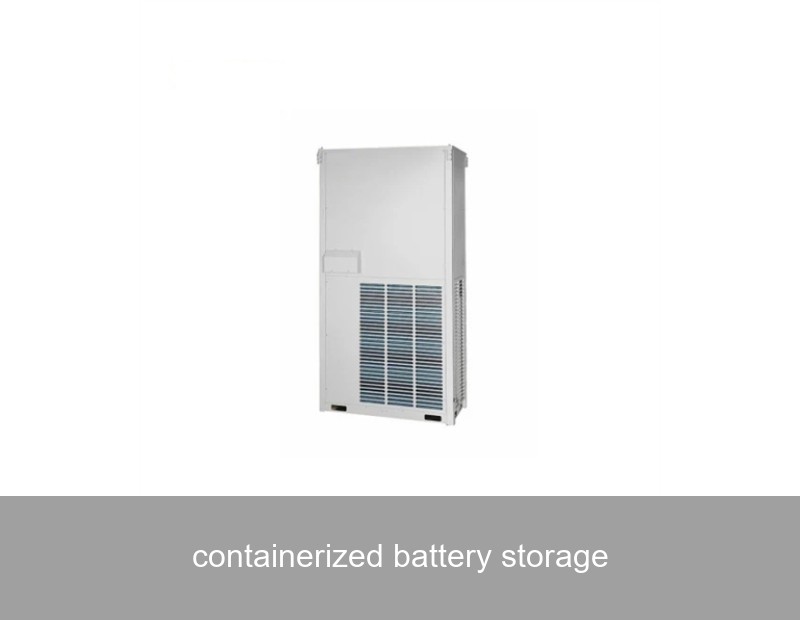
Imagine a power plant that arrives on the back of a truck, is operational within days, and can silently store renewable energy or bolster the grid at a moment's notice. This isn't futuristic speculation—it's the reality of containerized battery storage. As Europe and the U.S. aggressively pursue decarbonization, the grid faces a dual challenge: integrating intermittent solar and wind while ensuring rock-solid reliability. Enter the containerized battery energy storage system (BESS), a standardized, scalable solution that is rapidly becoming the cornerstone of resilient and sustainable energy infrastructure. At Highjoule, with nearly two decades of expertise, we've refined this technology into intelligent, turnkey power assets that empower businesses, communities, and grid operators to take control of their energy future.
Table of Contents
What Exactly is Containerized Battery Storage?
At its core, a containerized BESS is a complete, pre-assembled battery storage system housed within a standard shipping container. Think of it as a massive, ultra-sophisticated power bank. But it's far more than just batteries in a box. Each unit is a fully integrated power plant containing:
- Battery Racks: Using advanced lithium-ion (like LFP) chemistry for safety and longevity.
- Power Conversion System (PCS): The brain that converts DC battery power to AC grid power and vice versa.
- Thermal Management: A dedicated climate control system to keep batteries at their optimal temperature.
- Fire Suppression & Safety Systems: Multi-layer protection designed to meet stringent international standards.
- Energy Management System (EMS): The software intelligence that controls charging, discharging, and grid interaction.
This "plug-and-play" design slashes installation time from months to weeks, dramatically reducing soft costs and complexity. Whether deployed singly for a commercial site or in a multi-container farm for utility-scale storage, the modularity is a game-changer.

Image: A modular containerized BESS installation. Source: Unsplash (Representative image)
The Why Now: Data Driving the Demand
The surge in containerized battery storage isn't a trend; it's a logical response to hard data. Let's look at the phenomenon shaping our grids:
Phenomenon: Renewable energy generation is booming, but it's not always sunny or windy when we need power most. This creates volatility—times of excess energy and times of deficit.
Data: In the U.S., the Energy Information Administration (EIA) forecasts battery storage capacity to nearly double in 2024 alone. In Europe, the European Association for Storage of Energy (EASE) estimates that to meet its 2030 targets, the EU needs approximately 200 GW of energy storage, a massive leap from current levels. The economics are now unequivocal: the levelized cost of storage (LCOS) has fallen sharply, while the value of grid services has risen.
The Logic Ladder: From Problem to Solution
- Problem (Volatility): Solar/wind output is intermittent, threatening grid stability.
- Need (Flexibility): The grid requires fast-responding resources to balance supply and demand.
- Solution (Storage): Batteries can absorb excess energy and discharge it on command.
- Optimization (Containerization): Pre-fabricated containers offer the fastest, most cost-effective, and scalable way to deploy this storage at any required capacity.
Case Study: Grid Stability and Renewable Integration in Germany
Let's ground this in a real-world example. Germany's "Energiewende" (energy transition) has led to a high penetration of renewables, sometimes causing regional grid congestion and frequency fluctuations. A German regional network operator needed a fast, reliable solution to provide primary control reserve (PCR) and stabilize grid frequency.
The Project: A 12 MW / 24 MWh containerized battery storage system was deployed at a substation in Schleswig-Holstein, a wind-rich region. The system consists of six Highjoule HPC-40 containerized units.
| Metric | Value | Impact |
|---|---|---|
| Response Time | < 1 second | Meets stringent grid code for frequency control |
| Availability | > 99% | Ensures continuous service and revenue stream |
| Commissioning Time | 11 weeks from contract | Exponentially faster than traditional construction |
| CO2 Displaced | ~5,200 tons/year | By offsetting fossil-fuel peaker plants |
The Insight: This project demonstrates that containerized battery storage isn't just about energy shifting; it's a critical grid-forming asset. Its sub-second response provides stability that conventional power plants simply cannot, enabling higher renewable adoption without compromising reliability. For the operator, it's also a profitable asset, generating revenue through grid service markets.
The Highjoule Advantage: Intelligence Inside the Container
Since 2005, Highjoule has moved beyond simply housing batteries. Our containerized solutions, like the HPC Series, are engineered for superior performance and lifetime value.
- Adaptive EMS: Our proprietary brain doesn't just follow pre-set commands. It uses machine learning to optimize dispatch based on real-time market prices, weather forecasts, and asset health, maximizing your ROI.
- Cell-to-Grid™ Safety: Our multi-layered approach starts with stable LFP chemistry and includes advanced gas and thermal detection, passive fire protection, and active suppression, all compliant with the latest NFPA 855 and EU standards. Seamless Integration: Whether connecting to a solar farm, a factory, or the high-voltage grid, our systems come grid-ready with all necessary interconnection studies and support.
We provide a full-service partnership, from initial feasibility and financing support to long-term performance monitoring and maintenance, ensuring your storage asset delivers for its entire 15+ year lifespan.

Image: Advanced monitoring and control are key to storage performance. Source: Unsplash (Representative image)
Key Applications and Benefits
The versatility of containerized battery storage unlocks value across the energy spectrum:
For Commercial & Industrial (C&I) Sites:
- Peak Shaving: Reduce costly demand charges by discharging the battery during periods of high energy use.
- Backup Power: Provide critical uptime for operations, seamlessly bridging gaps during outages.
- Renewable Self-Consumption: Store excess solar power generated during the day for use at night.
For Utilities and Grid Operators:
- Frequency Regulation: The fastest tool to keep grid frequency at 50 Hz (EU) or 60 Hz (US).
- Grid Deferral: Postpone or avoid expensive upgrades to transformers and transmission lines by providing local capacity.
- Renewable Firming: "Smooth out" the power output from a solar or wind farm, making it more predictable and valuable.
Looking Ahead: The Evolving Role of Storage
As virtual power plants (VPPs) become mainstream, individual containerized battery storage units will increasingly act as coordinated fleets, providing aggregate power to the grid. The integration of artificial intelligence will further refine trading and optimization strategies. The question is no longer if battery storage is needed, but how to select a partner that can deliver both robust hardware and the intelligent software to navigate evolving energy markets.
Is your organization evaluating how a scalable, future-proof containerized battery storage solution could address your specific energy resilience, cost, or sustainability goals? What is the biggest hurdle you perceive in implementing such a system—regulatory, economic, or technical?
 Inquiry
 Online Chat