


Unlocking Resilience and Savings: Your Guide to a Modern Lithium Battery Solution
Let's face it, the energy landscape isn't what it used to be. Whether you're a homeowner in California facing PSPS shutoffs, a factory manager in Germany grappling with volatile energy prices, or a municipality planning a sustainable future, one question is becoming universal: how do we take control of our power? The answer, increasingly, is found in a sophisticated lithium battery solution. But this isn't just about buying a battery pack; it's about integrating an intelligent energy system designed for your specific needs. As a leader in this field since 2005, Highjoule has seen the evolution from simple backup to strategic energy assets. Today's lithium battery solution is a cornerstone for energy independence, cost management, and sustainability.
The Energy Shift: Why Lithium Solutions are Crucial Now
The push towards advanced energy storage isn't just a trend; it's a necessary response to global phenomena. We're witnessing a perfect storm of factors: the rapid integration of intermittent renewables like solar and wind, increasing grid instability due to climate change and aging infrastructure, and the economic pressure of rising electricity costs. According to the International Energy Agency (IEA), global electricity demand is set to grow at a faster rate over the next three years, with prices remaining above historical averages in many countries.
This is where a well-designed lithium battery solution transitions from a "nice-to-have" to a "must-consider." It acts as a buffer and a smart energy manager. For businesses, it can mean the difference between halting production during a grid outage or operating normally. For homeowners, it can translate to using cheap solar power at night and being protected during blackouts. The core technology enabling this is lithium-ion, primarily for its high energy density, long cycle life, and decreasing cost curve. But the real magic lies in the system built around those cells.

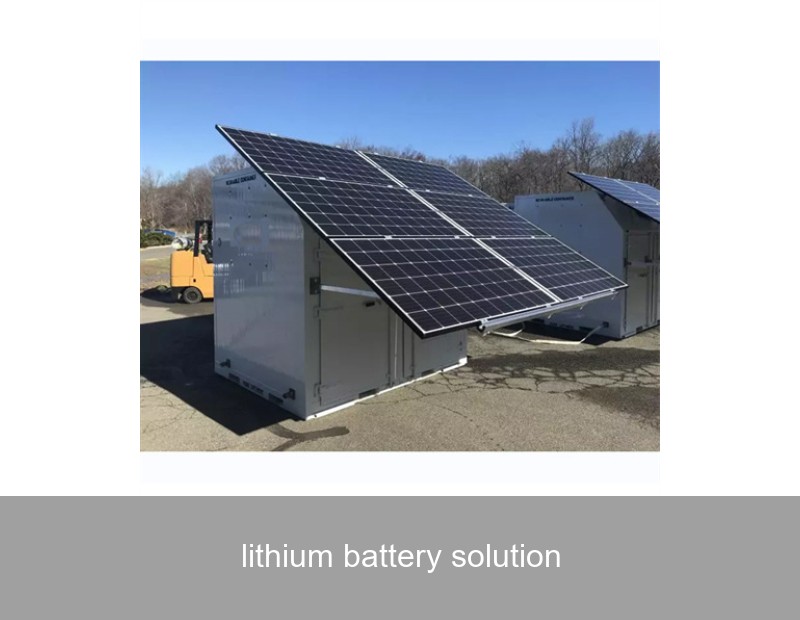
Image Source: Unsplash - A modern, containerized battery energy storage system.
Beyond the Cell: Key Components of a Robust Lithium Battery Solution
When we at Highjoule design a lithium battery solution, we're engineering a complete ecosystem. Think of it not as a commodity battery, but as a sophisticated, responsive energy partner. Here are the non-negotiable pillars:
- The Battery Management System (BMS): The brain of the operation. A top-tier BMS doesn't just monitor voltage and temperature; it precisely manages the state of charge and health of each cell cluster, ensuring safety, maximizing lifespan, and predicting maintenance needs. Highjoule's proprietary BMS is built on nearly two decades of field data, making it exceptionally adept at handling real-world conditions.
- Power Conversion System (PCS): This is the translator. It efficiently converts the battery's direct current (DC) into the alternating current (AC) your home or business uses, and vice-versa. The efficiency of this component directly impacts your system's round-trip efficiency and, therefore, your financial return.
- Thermal Management: Lithium batteries perform best within a specific temperature range. An integrated, low-energy thermal management system—whether liquid or advanced air-cooling—is critical for safety, performance in extreme climates, and long-term durability.
- Energy Management Software (EMS): This is the strategy layer. This intelligent software platform allows you to set goals: maximize self-consumption of solar, reduce peak demand charges, or provide grid services. Highjoule's HarmoniOS platform, for instance, can automatically switch between these modes based on weather forecasts, tariff schedules, and your energy usage patterns.
It's the seamless integration of these components that defines a premium lithium battery solution. A weak link in any of these areas compromises the entire system's value proposition.
How Highjoule Integrates These Components
At Highjoule, our philosophy is "intelligence by design." Our lithium battery solutions, like the H-Series for Commercial & Industrial applications and the integrated HomePower+ system for residences, are built as unified platforms. The BMS, PCS, and EMS are co-engineered to communicate flawlessly, eliminating compatibility issues and providing a single pane of glass for monitoring and control. This holistic approach reduces complexity for the customer and unlocks advanced functionalities like virtual power plant (VPP) readiness and sophisticated grid-interactive capabilities.
From Theory to Practice: A Real-World Case Study
Let's move beyond theory and look at a tangible example. Consider a mid-sized dairy processing plant in the Netherlands, a country with ambitious renewable targets but also a congested grid. This facility had high, consistent energy needs for refrigeration and processing, significant solar PV on its rooftops, and was subject to steep demand charges and time-of-use tariffs.
The Challenge: They were exporting excess solar power at low feed-in tariffs in the afternoon but drawing expensive power from the grid in the morning and evening peaks. Grid outages, though infrequent, risked spoiling valuable product.
The Highjoule Lithium Battery Solution: A 500 kWh / 250 kW containerized H-Series system was deployed. The system was configured with three primary objectives in the EMS:
- Peak Shaving: Automatically discharge the battery to cap power drawn from the grid during expensive peak periods.
- Solar Self-Consumption Optimization: Store excess midday solar generation for use in the evening, reducing grid imports.
- Backup Power: Provide seamless backup for critical refrigeration loads for up to 4 hours during a grid failure.
The Data-Driven Results (After 12 Months):
| Metric | Result | Impact |
|---|---|---|
| Demand Charge Reduction | 22% | Direct, recurring monthly savings on the utility bill. |
| Grid Import Reduction | 35% | Lower energy costs and reduced carbon footprint. |
| Solar Self-Consumption | Increased from 55% to 89% | Maximized return on existing solar asset. |
| ROI Timeline | Projected under 5 years | Strong financial justification for the capital investment. |
This case, mirrored in various forms across our projects in the US and Europe, illustrates that a modern lithium battery solution is a multi-faceted tool. It's not a single-purpose appliance but a dynamic asset that addresses economic, operational, and environmental goals simultaneously.

Image Source: Unsplash - Technician monitoring a commercial battery storage system.
Choosing the Right Partner for Your Lithium Battery Solution
Given the complexity and long-term nature of these systems, the provider you choose is as important as the technology itself. You need a partner with deep expertise, not just a supplier. Key considerations include:
- Proven Track Record & Safety: Look for a provider with a long history and thousands of systems in the field across different climates and applications. Ask about their safety protocols and certifications (like UL 9540 in the US). Highjoule's 19-year history is built on a foundation of safety-first engineering.
- Full-System Integration: Prefer a provider that delivers a fully integrated, AC-coupled solution. This reduces on-site integration risks and ensures single-point accountability.
- Software Intelligence: The software is what future-proofs your investment. Ensure the EMS is user-friendly, feature-rich, and receives regular updates.
- Service & Warranty: A 10-year performance warranty is standard, but understand the terms. Does the provider have a local service network for support? Highjoule's global service teams provide proactive monitoring and rapid response.
The Future Horizon of Energy Storage
The technology isn't standing still. We're actively working on next-generation chemistries like Lithium Iron Phosphate (LFP) for even greater safety and longevity, and integrating artificial intelligence to make our energy management systems predictive rather than just reactive. Furthermore, aggregated lithium battery solutions are forming the backbone of virtual power plants (VPPs), where thousands of distributed systems can act as a single, grid-stabilizing resource. This opens up new revenue streams for system owners.
The journey to energy resilience is unique for every home, business, and community. But it almost invariably starts with a critical question: What specific energy challenges—be it cost, reliability, or sustainability—are you ready to solve with a smart, modern lithium battery solution?
 Inquiry
 Online Chat