


Finding the Best Loadshedding Solutions for Uninterrupted Power and Peace of Mind
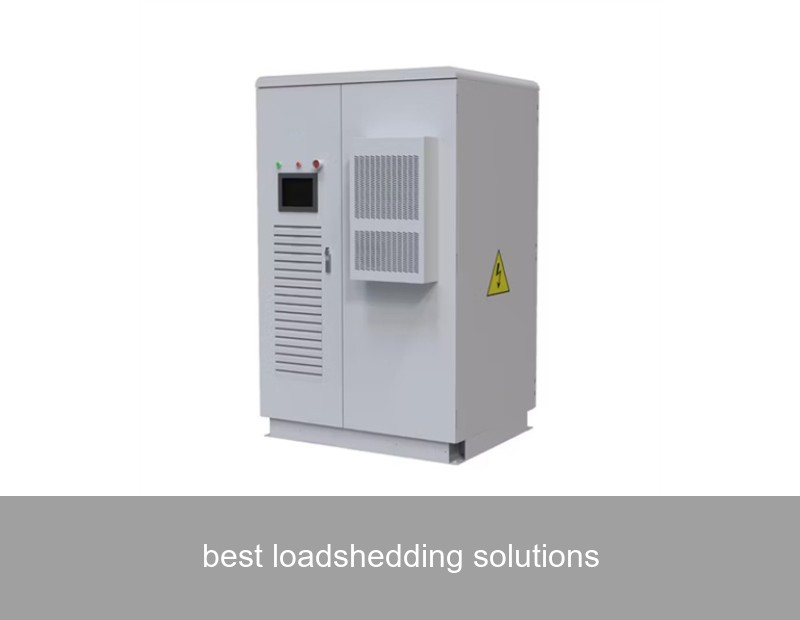
If you've ever been in the middle of an important work call, a family movie night, or simply preserving food in your freezer when the lights abruptly cut out, you know the frustration of loadshedding. It's more than an inconvenience; it's a disruption to modern life, a risk to business continuity, and a growing concern for grid stability. For homeowners and businesses across Europe and the U.S., the search for reliable, efficient, and sustainable best loadshedding solutions has moved from a luxury to a critical necessity. This article will guide you through the landscape of modern power backup, moving beyond noisy generators to explore how intelligent battery storage systems are redefining energy resilience. We'll look at real-world data, examine a compelling case study, and introduce you to how companies like Highjoule are providing smart, integrated answers to this pervasive challenge.
Table of Contents
- The Rising Tide of Grid Instability: More Than Just Blackouts
- Beyond Generators: The Modern Benchmark for the Best Loadshedding Solutions
- Key Components of an Advanced Loadshedding Solution
- Case Study: A European Manufacturing Plant's Journey to Energy Independence
- The Highjoule Approach: Intelligent Energy Management for Any Scale
- Making the Decision: What to Consider for Your Property
The Rising Tide of Grid Instability: More Than Just Blackouts
The term "loadshedding" often brings to mind planned power cuts in emerging economies. However, the phenomenon has evolved. In Europe and the United States, grid stress is increasingly caused by a complex mix of factors: aging infrastructure, extreme weather events (from winter storms to heatwaves), the rapid integration of intermittent renewable sources, and soaring peak demand. The U.S. Energy Information Administration (EIA) notes that the average U.S. electricity customer experienced just over eight hours of power interruptions in 2020, with major events being a significant driver. This isn't just about comfort; for businesses, even short outages can mean lost revenue, data corruption, and operational downtime costing thousands per hour.

Image Source: Unsplash - A modern home equipped with solar and battery storage for energy resilience.
Beyond Generators: The Modern Benchmark for the Best Loadshedding Solutions
Diesel and propane generators have been the traditional go-to. But let's be honest: they're noisy, emit fumes, require fossil fuel storage and refilling, and often have a delayed startup time. The best loadshedding solutions today are silent, instant, and clean. They leverage advanced battery energy storage systems (BESS), paired with smart software, to form a seamless backup power source. When the grid fails, these systems detect the outage in milliseconds and automatically switch to battery power, often so quickly that your computers don't even restart.
Consider this comparison:
| Feature | Traditional Generator | Advanced Battery Storage System |
|---|---|---|
| Startup Time | Several seconds to minutes | Instantaneous (less than 20 milliseconds) |
| Noise & Emissions | High noise, produces CO2 and fumes | Silent, zero on-site emissions |
| Maintenance | Regular servicing (oil, filters, fuel) | Minimal, remote monitoring |
| Fuel Source | Diesel/Propane (volatile cost) | Stored electricity (can be solar-charged) |
| Grid Services | Backup only | Backup + peak shaving + solar optimization |
Key Components of an Advanced Loadshedding Solution
A top-tier system isn't just a battery in a box. It's an integrated ecosystem designed for safety, longevity, and intelligence.
- High-Density Battery Modules: Using lithium iron phosphate (LFP) chemistry, known for its safety, long cycle life, and thermal stability. Capacity is scalable to match your critical load requirements, from keeping lights on for a few hours to running an entire facility for a full day.
- Smart Hybrid Inverter: The brain of the operation. This device manages power flow between the grid, solar panels (if present), the battery, and your home's circuits. It performs the critical "islanding" function, safely disconnecting from the grid during an outage to create a personal microgrid.
- Energy Management System (EMS) Software: This is where the magic happens. Advanced EMS, like the one powering Highjoule's systems, learns your energy usage patterns. It can automatically dispatch stored energy during expensive peak tariff periods (saving you money), prioritize solar self-consumption, and provide detailed insights via a user-friendly app.
- Professional Integration & Monitoring: The best loadshedding solutions include professional design, installation, and ongoing remote monitoring. This ensures the system is correctly sized, safely integrated with your electrical panel, and performing optimally 24/7.
Case Study: A European Manufacturing Plant's Journey to Energy Independence
Let's look at a real-world application. A mid-sized automotive parts manufacturer in Germany faced two major challenges: frequent brief voltage dips from the grid causing sensitive machinery to fault, and extremely high demand charges from their utility. Their goal was to ensure production continuity and reduce operational costs.
The Solution: They partnered with Highjoule to design and install a containerized, turnkey battery storage solution with a capacity of 500 kWh and a 250 kW power output. The system was integrated with their existing rooftop solar array.
The Results (Data from 12 months of operation):
- 100% Uptime: 37 recorded grid disturbances were seamlessly bridged by the battery, preventing an estimated €180,000 in production losses and product spoilage.
- Peak Shaving Savings: By discharging the battery during daily demand peaks, the plant reduced its peak power draw from the grid by 22%, resulting in annual demand charge savings of over €45,000.
- Increased Solar Self-Consumption: The system stored excess solar energy produced at midday for use in the evening, increasing their direct consumption of self-generated renewable energy from 35% to over 70%.
This case illustrates how a modern loadshedding solution transcends mere backup, becoming a strategic asset for financial and operational resilience. The International Renewable Energy Agency (IRENA) highlights the multifaceted value of battery storage in industrial applications, just as we see here.

Image Source: Unsplash - Industrial-scale battery storage systems provide critical backup and grid services.
The Highjoule Approach: Intelligent Energy Management for Any Scale
With nearly two decades of experience since 2005, Highjoule has refined its philosophy: the best loadshedding solution is one you don't have to think about. It works automatically, efficiently, and reliably. Our product suites are designed to cater to specific needs:
- For Homes & Residential Communities: The Highjoule EverHome Series offers sleek, wall-mounted storage systems that pair perfectly with new or existing solar installations. Our intuitive app lets homeowners choose between "Maximize Savings," "Full Backup," or "Eco" modes, putting control at their fingertips.
- For Commercial & Industrial Sites: The Highjoule PowerCube is a modular, containerized BESS that can be scaled from 100 kWh to multiple MWh. It's engineered for the rigorous demands of factories, data centers, and office parks, featuring advanced climate control and safety systems. Our industrial EMS software provides detailed analytics for energy cost optimization and carbon footprint tracking.
- For Microgrids & Utilities: Highjoule provides large-scale, grid-connected storage systems that help stabilize the wider network, integrate renewable energy farms, and defer costly infrastructure upgrades.
Across all solutions, our focus is on system intelligence, safety through LFP chemistry, and providing a seamless user experience backed by global service and support.
Making the Decision: What to Consider for Your Property
So, how do you start evaluating your needs? Ask yourself these key questions:
- What are my critical loads? List the circuits or equipment that must stay on during an outage (e.g., refrigeration, lighting, internet, medical devices, specific machinery).
- What is my outage profile? Are outages typically short (minutes) or long (hours/days)? How frequent are they?
- Do I have or want solar PV? Pairing storage with solar maximizes the value of both, creating a true personal power plant.
- What are my financial drivers? Is pure backup peace of mind the goal, or are you also seeking to reduce energy bills through arbitrage and peak shaving?
Consulting with a certified expert from a provider like Highjoule can help you translate these answers into a technically sound and economically viable system design. The U.S. Department of Energy also provides excellent foundational resources for homeowners considering storage.
Ready to Redefine Your Relationship with the Grid?
The conversation around power backup is shifting from reactive fear of darkness to proactive control over energy costs and carbon footprint. With the right technology partner, you can transform the challenge of loadshedding into an opportunity for greater independence and efficiency. What would uninterrupted power allow you to achieve or protect in your home or business today?
 Inquiry
 Online Chat