


How Much a Shade Greener: Unpacking the Real Impact of Your Energy Choices
We all want to do our part. The phrase "going green" is everywhere, from our grocery aisles to our energy bills. But when it comes to powering our homes and businesses, the decision often feels complex. You might be wondering: if I install solar panels or a battery, how much a shade greener is my footprint, really? Is it a marginal step or a transformative leap? The answer lies not just in the technology itself, but in how intelligently it's deployed. True sustainability is measured in kilowatt-hours saved, grid strain reduced, and fossil fuel displacement verified.
Table of Contents
- The "Shadow" on Green Intentions: Intermittency
- Measuring the Shade: Data Beyond the Solar Panel
- Case Study Illumination: A German Bakery's Recipe for Resilience
- Beyond the Battery: The Intelligence Layer
- Highjoule Solutions: Engineering Smarter Shade
- What Does Your Energy Profile Look Like?
The "Shadow" on Green Intentions: Intermittency
Let's face it, the sun doesn't always shine, and the wind doesn't always blow. This intermittency of renewable sources is the classic "shadow" problem. A solar-powered home might export clean energy at noon but draw coal-fired power at night. Without a way to capture and time-shift that energy, the overall greener shade can be lighter than expected. The grid, especially in many parts of Europe and the US, still relies on natural gas "peaker" plants to ramp up quickly when demand outstrips renewable supply. So, the real question evolves: how can we deepen that shade of green to cover more hours of the day?
Measuring the Shade: Data Beyond the Solar Panel
The metric that matters is self-consumption – the percentage of your renewable energy you use directly. Without storage, typical household self-consumption of solar power can be as low as 30-50%. The rest is sent to the grid, often at a low feed-in tariff. Add a battery, and this figure can jump to 70% or more instantly. But let's push further. Consider these data points:
- Carbon Displacement: According to the U.S. Department of Energy, the average residential solar system can reduce carbon emissions by 3-4 tons annually. Pair it with a full-featured storage system, and this reduction can increase by an additional 50-80% by avoiding peak grid power.
- Grid Decarbonization: Your battery's intelligence is key. By charging when grid carbon intensity is low (e.g., windy nights) and discharging during high-intensity peak periods, you amplify your carbon savings beyond your own roof.

Image Source: Unsplash - A modern home integrating solar generation.
Case Study Illumination: A German Bakery's Recipe for Resilience
Let's make this tangible. Consider a family-run bakery in Bavaria, Germany. Their challenge: high, unpredictable energy costs for refrigeration and ovens, and a commitment to sustainable operations. They installed a 100 kW solar canopy. Alone, it covered 40% of their daily needs. The surplus at midday was sold for modest returns, while they bought expensive power for morning baking peaks.
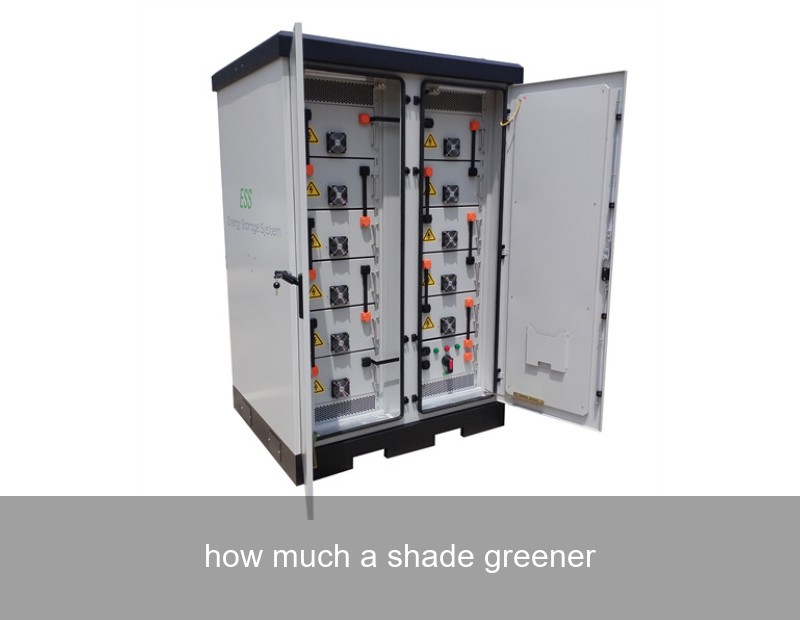
Their turning point was integrating a 250 kWh Highjoule C&I Battery Storage System with our AI-driven energy management platform. The results, measured over one year, show how much a shade greener they became:
| Metric | Before Storage | After Highjoule System | Change |
|---|---|---|---|
| Self-Consumption of Solar | 41% | 92% | +124% |
| Grid Energy Purchased (Peak Hours) | 65% of total use | 15% of total use | -77% |
| Calculated Annual CO2e Reduction | 28 tons | 62 tons | +121% |
| Energy Cost Savings | Moderate | €18,500 per year | -- |
The system doesn't just store; it learns. It predicts baking schedules and weather patterns, pre-charging the battery with cheap, low-carbon overnight wind power from the grid to complement the day's solar. The bakery's green shade didn't just deepen; it became a round-the-clock cloak of sustainability and savings.
Beyond the Battery: The Intelligence Layer
A battery is a steel box with chemistry inside. Its environmental and economic value is unlocked by the software that controls it. This is where the greener shade gets its depth. Key functions include:
- Predictive Energy Scheduling: Using weather forecasts and usage history to optimize charge/discharge cycles.
- Peak Shaving: Automatically discharging to avoid short, high-cost demand charges—a major burden for businesses.
- Grid Services Readiness: In some markets, systems can provide stability services to the grid, earning revenue and supporting broader renewable integration. The National Renewable Energy Lab (NREL) highlights this as a critical future pathway.
Highjoule Solutions: Engineering Smarter Shade
At Highjoule, we've spent nearly two decades moving beyond hardware to deliver intelligent, sustainable power solutions. We understand that quantifying "how much greener" requires a system designed for maximum impact. Our product suites are built with this holistic view:
- For Homes & Residential Communities: The Highjoule Home+ system integrates seamlessly with solar inverters. Its adaptive learning algorithm maximizes self-consumption, protects against outages, and can be configured to prioritize carbon reduction, helping homeowners achieve a deeper, more meaningful green impact with every kWh.
- For Commercial & Industrial Sites: Our Highjoule C&I Series is the workhorse behind stories like the Bavarian bakery. Scalable from 100 kWh to multi-MWh, these modular systems are paired with our GridSynch Platform for predictive management, turning energy storage into a strategic asset for cost control and sustainability reporting.
- For Microgrids & Utilities: We design resilient systems that enable communities and campuses to operate independently, integrating diverse renewable sources and storage for a stable, 24/7 green power supply.

Image Source: Unsplash - Technician inspecting a commercial battery storage system.
What Does Your Energy Profile Look Like?
The journey to a deeper shade of green is personal. It depends on your location, energy rates, consumption patterns, and local grid carbon intensity. A homeowner in sunny California with time-of-use rates will have a different optimal strategy than a manufacturing facility in Germany. The first step is always understanding your unique energy profile.
So, we leave you with this question: Have you looked at your energy bill and your on-site generation not just as costs and savings, but as a map to your precise shade of green? The technology to analyze that map and act on it exists today. The next step is to chart your course.
 Inquiry
 Online Chat