


Your Guide to Finding the Perfect Website for Solar Panels and Energy Storage
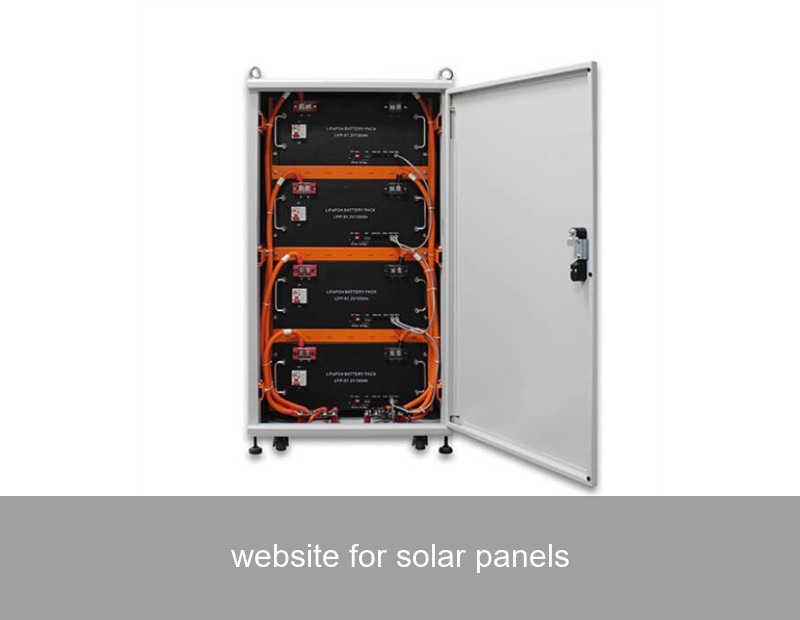
So, you've decided to explore solar power. Your first instinct is likely to search for a website for solar panels. But as you click through pages of glossy images and technical specs, a crucial question emerges: is this just about panels, or is it about building a complete, resilient energy system for your home or business? The modern energy landscape demands more than just generation; it requires intelligent management and storage. This is where your journey from a simple solar inquiry to a comprehensive energy solution begins.
Table of Contents
- Beyond Panels: What a Modern Solar Website Should Offer
- The Data-Driven Case for Energy Storage
- A Real-World Case: The German Bakery Embracing Energy Independence
- Choosing Your Digital Platform: Key Features to Look For
- The Highjoule Approach: Intelligent Systems, Not Just Products
- What Should Be Your Next Click?
Beyond Panels: What a Modern Solar Website Should Offer
Gone are the days when a solar provider's website was merely a digital catalog of photovoltaic modules. Today, an authoritative website for solar panels acts as an educational hub and a solution-finder. It should guide you through the entire energy ecosystem. You'll want to look for resources that cover:
- Energy Storage Integration: How do solar panels work with batteries?
- System Intelligence: Explanations of energy management systems that optimize self-consumption.
- Financial Planning: Clear calculators for ROI, payback periods, and details on incentives like the U.S. Investment Tax Credit (ITC) or European subsidies.
- Real Performance Data: Case studies showing actual production and savings, not just theoretical maximums.
This holistic view is critical because installing solar without considering storage is like having a world-class water collection system with no tank—you lose the precious resource when you need it most.
The Data-Driven Case for Energy Storage
Let's talk numbers. The phenomenon is clear: solar panel adoption is soaring. In the U.S., the Solar Energy Industries Association (SEIA) reports that the residential sector installed a record ~6.8 GWdc in 2023. In Europe, driven by the energy crisis and climate goals, solar installations continue to break records.
However, this massive growth creates a new challenge: the "duck curve." This term, coined by the California Independent System Operator (CAISO), describes the steep drop in net electricity demand in the middle of the day when solar output is high, followed by a rapid evening ramp-up as the sun sets and demand peaks. The result? Grid instability and the potential for your excess solar energy to be undervalued.
This is where the data points to a definitive solution: pairing solar with battery storage. A battery system allows you to:
| Challenge | Storage Solution | Direct Benefit |
|---|---|---|
| Excess midday solar production | Store energy instead of exporting at low rates | Maximize financial return on your solar investment |
| Evening energy demand peak | Use stored solar energy, avoiding high grid prices | Reduce electricity bills and increase self-sufficiency |
| Grid outages | Provide seamless backup power | Ensure resilience and peace of mind |
The logic is a clear staircase: Phenomenon (solar growth creates grid dynamics) → Data (duck curve, low export tariffs) → Solution (integrated storage). Your search for a website for solar panels must lead you to providers who understand and address this complete chain.
A Real-World Case: The German Bakery Embracing Energy Independence
Let's make this concrete. Consider a mid-sized artisan bakery in Bavaria, Germany. Their pain points were predictable but costly: high energy consumption from ovens and refrigeration, volatile electricity prices, and a commitment to sustainable operations.
Their solution, installed in 2022, included:
- A 50 kW rooftop solar array.
- A 40 kWh integrated battery storage system.
- An advanced energy management system (EMS) to orchestrate it all.
The results after one year, verified by monitoring software:
- Self-Consumption Rate: Increased from 35% (solar only) to over 80% (solar + storage).
- Grid Energy Cost Reduction: 68% decrease in peak-hour grid electricity purchases.
- Backup Resilience: Critical cold storage and lighting maintained during two short grid interruptions.

Image Source: Unsplash (Representative image of commercial solar installation)
This case isn't just about technology; it's about business continuity and brand alignment. The bakery now markets its "sun-powered bread," creating a powerful story for its community. This is the level of transformative insight you should seek from a provider's platform.
Choosing Your Digital Platform: Key Features to Look For
When evaluating a website for solar panels and storage, use this checklist to separate product catalogs from true solution partners:
- Transparent Tools: Look for interactive design studios or savings calculators that include storage variables.
- Technical Depth: Access to detailed specifications, system schematics, and compatibility information for all components (inverter, battery, EMS).
- Proof of Performance: A robust portfolio of case studies with real data, like the bakery example above.
- Support & Services: Clear information on installation partners, warranties, monitoring apps, and after-sales support.
The Highjoule Approach: Intelligent Systems, Not Just Products
At Highjoule, our digital presence and our products are built on a single principle: delivering intelligent, integrated energy systems. Founded in 2005, we've evolved from a component supplier to a global provider of complete storage solutions. When you engage with our resources, you'll discover systems designed for synergy.
For instance, our HES (Highjoule Energy Stack) for commercial and industrial applications isn't just a battery cabinet. It's a pre-engineered power plant that combines:
- High-Density Lithium-Ion Batteries: For long lifespan and safety.
- Hybrid Inverter Systems: Seamlessly managing solar, battery, and grid input.
- AI-Powered Energy Manager: The brain of the operation. It learns your consumption patterns, weather forecasts, and utility rate schedules to autonomously optimize every kilowatt-hour for maximum savings and resilience.

Image Source: Unsplash (Representative image of a home battery system)
For residential customers, our HomePower series offers the same intelligence in a sleek, scalable format. We ensure that the journey you start on our website for solar panels and storage leads to a solution where every component communicates perfectly, managed by software that turns raw energy into strategic advantage.
Our services extend beyond the sale. We provide comprehensive support, from initial system design and simulation using tools like NREL's PVWatts Calculator for accurate production estimates, to remote monitoring and performance analytics for the life of your system.
What Should Be Your Next Click?
Your search for a website for solar panels has brought you to a deeper understanding. The goal is no longer just offsetting your grid consumption, but achieving true energy intelligence. So, as you continue your research, ask yourself this pivotal question: Is the solution I'm considering designed as a collection of parts, or as a unified, intelligent system that will adapt and optimize for the next 20 years?
We invite you to explore what an integrated approach looks like. What specific energy challenge—be it unpredictable bills, sustainability goals, or the need for reliability—would you want a system like Highjoule's to solve first for your home or business?
 Inquiry
 Online Chat