


Valve Regulated Rechargeable Battery: The Safe and Efficient Heart of Modern Energy Storage
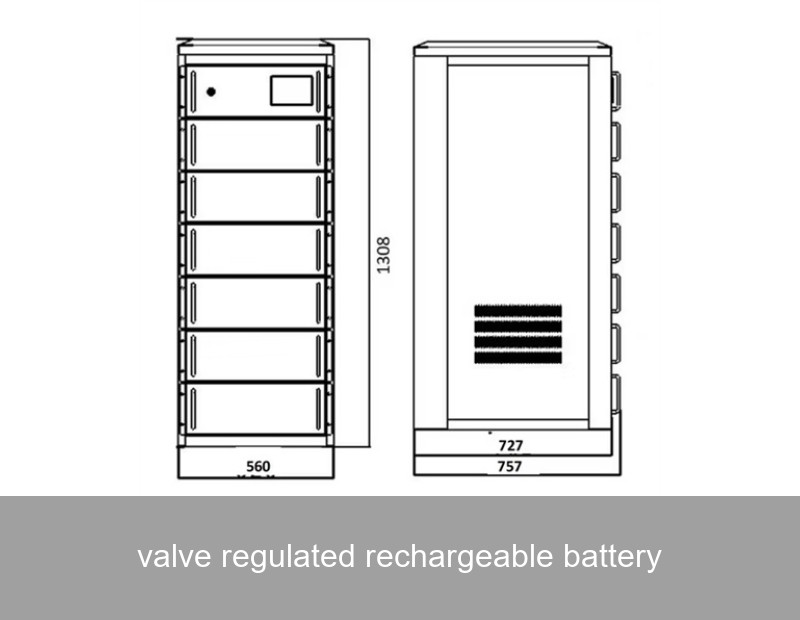
You've probably heard about the push for renewable energy and battery storage. But have you ever wondered what's inside those sleek battery cabinets powering homes, businesses, and even the grid? Often, the answer is a workhorse technology known as the valve regulated rechargeable battery (VRRB), or more commonly, the valve-regulated lead-acid (VRLA) battery. For over two decades, this technology has been a cornerstone of backup power and is now experiencing a renaissance in renewable energy integration. Let's demystify this critical component and explore why it remains a trusted choice for safe, reliable, and maintenance-conscious energy storage, especially in systems designed by experts like us at Highjoule.
Table of Contents
What is a Valve Regulated Rechargeable Battery?
In simple terms, a valve regulated rechargeable battery is a sealed, maintenance-free lead-acid battery. Unlike their flooded counterparts, VRRBs don't require regular watering. The "valve regulated" part is the key: a small, pressure-sensitive valve that allows excess gas to escape if internal pressure gets too high, then reseals to prevent air from entering. This design recombines up to 99% of the oxygen and hydrogen produced during charging back into water, making it exceptionally safe and stable. There are two main types you'll encounter: Absorbent Glass Mat (AGM) and Gel batteries, both offering unique advantages for different applications.
AGM vs. Gel: A Quick Comparison
| Feature | AGM (Absorbent Glass Mat) | Gel |
|---|---|---|
| Electrolyte | Liquid absorbed in a fiberglass mat | Silica gel mixture |
| Performance in Heat | Good | Excellent (more resistant to thermal runaway) |
| Deep Discharge Recovery | Very Good | Good |
| Typical Best Use | High-power bursts, frequent cycling (e.g., solar storage, UPS) | Longer, slower discharges, extreme temperatures |
The Science Made Simple: How a VRRB Works
Think of it like a sophisticated, self-regulating ecosystem. During normal charging, the chemical reactions produce oxygen at the positive plate and hydrogen at the negative plate. In a flooded battery, these gases vent and are lost, requiring you to add water. In a VRRB, the oxygen travels through tiny pores in the separator to the negative plate, where it reacts with lead to form lead oxide, which then reacts with sulfuric acid to form water. This ingenious "oxygen recombination cycle" is the magic behind its maintenance-free operation. The safety valve is purely a backup—a reliable guardian that only activates under severe overcharge or fault conditions.

Image Source: Wikipedia, Creative Commons
Key Benefits for Home and Business Energy Storage
Why has this technology endured and thrived, especially alongside newer options like lithium-ion? The answer lies in a compelling blend of safety, cost, and reliability that perfectly suits many stationary storage needs.
- Safety First: VRRBs are inherently non-flammable under normal operating conditions. The sealed design and recombinant chemistry minimize gas emission, making them a top choice for indoor installations, data centers, and residential garages where safety is non-negotiable.
- Lower Upfront Cost: The manufacturing process for lead-acid is mature, offering a significantly lower capital cost per kWh than lithium-ion. This makes VRRB-based systems a compelling entry point for budget-conscious commercial or residential energy storage projects.
- Zero Maintenance: The "install and forget" aspect is a major operational advantage. There's no need for regular electrolyte checks, which reduces long-term operational costs and complexity.
- Robust & Forgiving: VRRBs are tolerant of a wider range of operating conditions and have a well-understood performance profile. Advanced battery management systems (BMS), like those used in Highjoule's IntelliStore series, further optimize their life and performance.
A Real-World Case: Stabilizing a German Microgrid
Let’s move from theory to practice. Consider a mid-sized dairy farm in Bavaria, Germany. The farm installed a 500kW solar array to power operations and sell surplus to the grid. However, grid connection limits and intermittent solar generation caused instability and lost revenue.
The Challenge: The farm needed a buffer to store midday solar peaks and release power during evening milking and processing. The requirements were clear: high cycling capability, safety for installation near agricultural buildings, and a cost-effective solution to ensure ROI.
The VRRB Solution: A 400kWh energy storage system was deployed using high-performance AGM-type valve regulated rechargeable batteries. These were chosen for their proven track record in daily cycling, excellent safety profile, and lower sensitivity to the fluctuating charge rates typical of solar input.
The Data-Driven Result: Within the first year of operation:
- Grid Independence: The farm's grid electricity purchases decreased by 68%.
- Revenue Increase: By storing and selling energy at peak rates, the system generated an additional €15,000 in annual revenue.
- Reliability: The microgrid's stability improved, protecting sensitive cooling equipment from grid fluctuations. The battery system required zero maintenance interventions, operating autonomously.
This case, reflective of many projects across Europe, demonstrates that VRRB technology is far from obsolete. It's a pragmatic, high-value engineering solution for specific, demanding applications. For more on microgrid stability studies, see this report from the National Renewable Energy Laboratory (NREL).
The Highjoule Approach: Intelligent VRRB Integration
At Highjoule, we believe in applying the right technology for the specific challenge. Since 2005, we've engineered solutions for every context, and our StableNet Commercial & Industrial (C&I) series often leverages advanced VRRB units for clients where its advantages are paramount.
We don't just sell batteries; we deliver integrated power resilience. Our systems pair premium, deep-cycle VRRB banks with our proprietary Energy Management Platform (EMP). This platform intelligently governs charging and discharging based on weather forecasts, utility rate schedules, and on-site consumption patterns. This smart orchestration is crucial—it prevents the chronic undercharging or overcharging that can shorten any battery's life, ensuring our VRRB systems routinely meet or exceed their 8–10 year design life, even with daily cycling.

Image Source: Unsplash
For example, our EMP can be programmed to ensure the VRRB bank is always at an optimal state of charge before a predicted grid outage, or to leverage time-of-use arbitrage automatically. This transforms a simple storage unit into a dynamic financial and operational asset. Furthermore, our commitment to sustainability includes a clear end-of-life recycling program for our lead-acid based systems, ensuring a truly circular economy with a recycling rate of over 99% for lead batteries in the US and Europe.
The Future Outlook for VRRB Technology
The landscape is evolving. Lithium-ion dominates headlines for its energy density and cycle life in EVs. However, in stationary storage, the race isn't just about one metric. Innovation in VRRB technology continues, with improvements in carbon-enhanced plates (to increase cycle life and charge acceptance) and refined grid alloys. These advancements ensure VRRBs will hold a vital, and likely growing, niche in the diverse energy storage ecosystem—particularly for applications prioritizing upfront cost, safety, and operational simplicity.
The key is intelligent integration. The future of energy storage isn't a single battery chemistry "winning," but rather smart systems, like those Highjoule provides, that seamlessly integrate and manage the best technology for the task—whether that's VRRB, lithium-ion, or emerging flow batteries—to deliver reliable, clean, and affordable power.
An Open Question for Your Consideration
When evaluating energy storage for your home or business, how do you weigh the critical factors of initial investment, total lifecycle safety, and expected daily operational routine? Understanding your unique balance of these priorities is the first step to choosing the technology that will serve you reliably for years to come.
 Inquiry
 Online Chat