


Utility Scale Solar Inverters: The Intelligent Heart of Modern Solar Farms
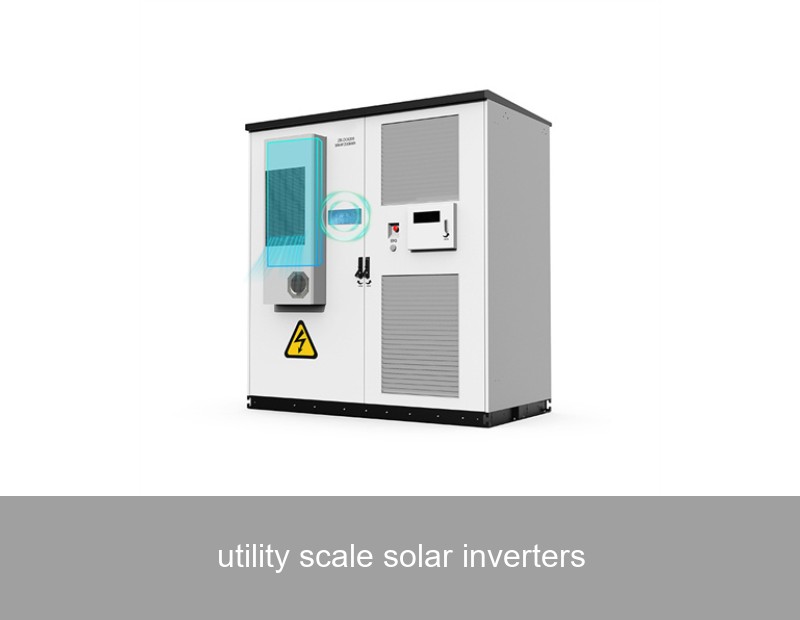
Imagine a vast field of solar panels, silently harvesting gigawatts of clean energy from the sun. But how does that raw DC power become the reliable AC electricity that powers our cities and industries? The answer lies in a critical, often unsung hero: the utility scale solar inverter. As the intelligent core of any large solar project, these sophisticated systems do much more than simple conversion; they ensure grid stability, maximize energy harvest, and determine the overall financial viability of the installation. For developers and operators in Europe and the US, choosing the right inverter technology is one of the most consequential decisions for a project's lifetime success.
Table of Contents
- What Are Utility-Scale Solar Inverters?
- The Grid Stability Challenge: More Than Just Conversion
- By the Numbers: The Impact of Inverter Performance
- Case Study: A Spanish Solar Farm's Grid Integration Success
- Highjoule's Approach: Advanced Inverter Solutions for a Demanding Market
- The Future of Inverter Technology: AI and Grid-Forming Capabilities
What Are Utility-Scale Solar Inverters?
At their core, utility-scale solar inverters are high-power electronic devices that convert the direct current (DC) electricity generated by thousands of solar panels into the alternating current (AC) used by the electrical grid. However, calling them mere "converters" is like calling a modern smartphone a "telephone." Today's inverters are grid management platforms. They are responsible for voltage regulation, frequency control, power quality management, and advanced grid support functions mandated by network operators like National Grid in the UK or CAISO in California.
These systems come in central and string inverter architectures. Central inverters, often housed in their own containers, handle massive power blocks (e.g., 3-5 MW each). String inverters manage the output of individual series of panels, offering greater design flexibility and mitigating shading losses. The choice depends on site topography, regulatory environment, and O&M strategy.
The Grid Stability Challenge: More Than Just Conversion
Here's the critical shift in thinking: Solar is no longer a niche supplement; it's becoming a primary energy source. In 2023, solar accounted for over 75% of new global power capacity additions in the EU. This phenomenal growth presents a paradox. The grid was built for predictable, spinning generators (like turbines in coal or gas plants). Solar, by nature, is variable and inverter-based. So, how do we maintain a stable, 60Hz (or 50Hz) grid without that inherent mechanical inertia?
The solution lies in advanced inverter functions. Modern utility-scale inverters must now provide "synthetic inertia" or "grid-forming" capabilities. They can detect grid disturbances and react within milliseconds to inject or absorb power, effectively acting as a shock absorber for the entire network. This isn't optional; grid codes in Germany, Italy, and across North America are rapidly evolving to require these capabilities.
By the Numbers: The Impact of Inverter Performance
Let's quantify why inverter choice matters so much. For a typical 100 MW solar farm in the US Southwest:
| Performance Factor | Low-Efficiency Inverter (98%) | High-Efficiency Inverter (99%) | Impact Over 25 Years |
|---|---|---|---|
| Annual Energy Loss | ~2% | ~1% | |
| Equivalent Lost Generation | ~4,000 MWh | ~2,000 MWh | |
| Financial Impact (at $30/MWh) | $120,000/year | $60,000/year | $1.5 Million Difference |
Beyond pure conversion losses, advanced features like dynamic reactive power support can prevent costly grid upgrade deferrals, saving developers millions in interconnection costs. Furthermore, reliable inverters with predictive maintenance features can reduce O&M expenses by up to 30%, directly boosting the project's net present value.

Image: Central inverters are the powerhouses of large-scale solar farms. Source: Unsplash
Case Study: A Spanish Solar Farm's Grid Integration Success
A real-world example from Andalusia, Spain, illustrates the transformative role of smart inverters. A 150 MW solar farm, connected to a region with a high concentration of renewable energy, faced strict grid code requirements for voltage ride-through and frequency response. The project utilized string inverters with advanced grid-forming capabilities.
During a notable grid voltage dip event in the summer of 2022, recorded by the Spanish grid operator Red Eléctrica de España (REE), the solar farm's inverters did not disconnect—as older models would have. Instead, they provided continuous active power and injected reactive current to support the grid voltage, helping to prevent a cascading failure. This behavior, mandated by the latest Spanish grid code, was only possible due to the inverter's sophisticated software and hardware. The farm not only avoided costly shutdowns and penalties but was also recognized as a stabilizing asset by the operator, enhancing its reputation for future projects.
Highjoule's Approach: Advanced Inverter Solutions for a Demanding Market
At Highjoule, with nearly two decades of experience since 2005, we understand that a utility-scale inverter is the command center of your energy asset. Our H-Power Central Inverter Series and H-Flex String Inverter Solutions are engineered for the dual challenge of maximizing lifetime yield and ensuring unwavering grid compliance.
Our products are not just hardware; they are integrated with the Highjoule Energy Management Platform (HEMP). This AI-driven software allows fleet-wide monitoring and control, enabling features like:
- Predictive Grid Code Adherence: The system simulates upcoming grid requirements and pre-configures inverter settings to ensure continuous compliance.
- Active Power Curtailment Optimization: Intelligently distributes required curtailment across strings to minimize long-term component stress and energy loss.
- Cybersecurity by Design: Built to meet the latest IEC 62443 standards, a critical concern for utilities and government agencies in the US and EU.
For a recent 80 MW microgrid-integrated solar project in Texas, Highjoule's inverters were selected specifically for their proven black-start capability and seamless transition between grid-tied and islanded modes—a key requirement for ensuring local resilience during extreme weather events.
The Future of Inverter Technology: AI and Grid-Forming Capabilities
The evolution of the utility scale solar inverter is accelerating. The next frontier is the widespread deployment of true grid-forming inverters (GFMIs). These inverters can start up a grid from a blackout without external reference and operate stably even in networks with 100% inverter-based resources. Research from the National Renewable Energy Laboratory (NREL) highlights GFMIs as essential for a decarbonized grid.
Furthermore, artificial intelligence is moving from the cloud to the inverter cabinet. On-edge AI will enable real-time anomaly detection, predictive failure analysis of connected components, and even self-optimization of power output based on hyper-local weather forecasts and electricity price signals.

Image: Advanced monitoring and control are key to inverter performance. Source: Unsplash
As you plan your next utility-scale solar project, whether navigating the complex grid codes of the European Union or the interconnection queues of the United States, the question is no longer just about inverter efficiency. The deeper question is: How will your inverter choice future-proof your investment against the evolving demands of the grid and unlock new revenue streams through advanced grid services? The heart of your solar farm needs to be not just strong, but also intelligent and adaptable.
 Inquiry
 Online Chat