


Unlocking Grid Stability: The Power of the DRM Port in Your Energy Storage Cabinet
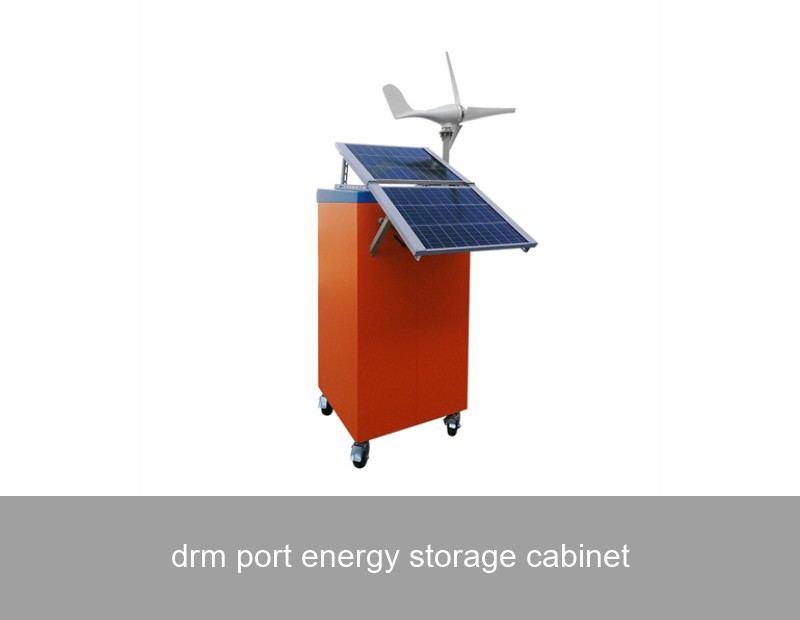
Have you ever wondered how modern energy storage systems seamlessly integrate with the grid, responding to its needs in milliseconds? Behind the scenes of every advanced battery energy storage system (BESS) lies a critical, often unsung hero: the DRM port energy storage cabinet. This isn't just another cable connection; it's the vital communication gateway that transforms a static battery bank into a dynamic grid asset. For businesses and communities in Europe and the US navigating volatile energy prices and ambitious sustainability goals, understanding this component is key to unlocking true energy independence and value.
Table of Contents
- What is a DRM Port? Demystifying the Grid's Language
- The Phenomenon: From Passive Storage to Active Grid Participant
- Data Drives Decisions: The Quantifiable Impact of DRM
- Case Study: Frequency Regulation in the UK with Highjoule's HPC Series
- The Highjoule Approach: Intelligent Cabinets Built for DRM Excellence
- Future Insights: DRM and the Decentralized Energy Revolution
- What's Your Grid's Most Pressing Need?

A modern energy storage cabinet's intelligence, often facilitated by DRM ports, turns hardware into a grid solution.
What is a DRM Port? Demystifying the Grid's Language
DRM stands for Demand Response Management. In essence, a DRM port is a standardized physical and protocol interface on an energy storage cabinet that allows it to receive signals from a grid operator, utility company, or an aggregator. Think of it as the "ear" and "mouth" of your storage system. Through this port, the cabinet receives real-time commands—like "start discharging now to support the grid" or "store energy, prices are low"—and sends back data on its status, capacity, and performance.
This two-way communication is governed by open protocols like IEEE 2030.5 (SEP 2) or OpenADR, which are becoming the lingua franca for smart grid devices. Without a properly configured and certified DRM port, your energy storage cabinet is an island, unable to participate in valuable grid services programs that generate significant revenue or cost savings.
Key Functions of the DRM Gateway
- Frequency Regulation: Responding to minute-by-minute imbalances in grid frequency, a critical service in markets like the US (PJM) and Europe. Peak Shaving: Automatically discharging during periods of high demand to reduce costly demand charges on commercial electricity bills.
- Renewable Integration: Soaking up excess solar or wind generation and releasing it when production drops, smoothing out the "duck curve."
- Energy Arbitrage: Buying and storing electricity when cheap (off-peak) and using or selling it when prices are high.
The Phenomenon: From Passive Storage to Active Grid Participant
The energy landscape is shifting from a one-way, centralized model to a bidirectional, decentralized one. We're seeing a phenomenon where every commercial building, factory, or solar farm can become a proactive player in grid stability. The catalyst for this shift? Intelligent energy storage systems with robust DRM capabilities.
A decade ago, storage was often just a backup power source. Today, thanks to the DRM port and the intelligence behind it, an energy storage cabinet can automatically decide the most economically and technically optimal action every few seconds, balancing self-consumption with grid services. This turns a capital expense into a revenue-generating asset.
Data Drives Decisions: The Quantifiable Impact of DRM
Let's talk numbers. The value of DRM-enabled storage is not theoretical; it's measured in hard currency and grid efficiency.
| Market | Service | Potential Revenue/Cost Avoidance | Key Driver |
|---|---|---|---|
| USA (CAISO, PJM) | Frequency Regulation | $50 - $150 per kW/year | Fast response required by DRM signals |
| Commercial (Global) | Demand Charge Reduction | 15-30% reduction on monthly demand charges | DRM-triggered peak shaving |
| Europe (UK, Germany) | Balancing Mechanism & Flexibility | Varies, can add €10,000+ annually for a 500kW system | Participation in grid tenders via aggregators |
According to a report by the National Renewable Energy Laboratory (NREL), advanced grid services could represent up to 70% of the total economic value of storage in some markets. This value is inaccessible without reliable DRM connectivity.
Case Study: Frequency Regulation in the UK with Highjoule's HPC Series
Let's examine a real-world application. A large distribution network operator (DNO) in the United Kingdom faced growing challenges with local grid congestion and frequency volatility, exacerbated by intermittent renewable generation. Their goal was to procure fast, reliable frequency response services without building new fossil-fuel peaker plants.
The Solution: They deployed a 2 MW / 4 MWh containerized storage system featuring Highjoule's HPC Series Industrial Energy Storage Cabinets. The core of the system's grid interactivity was its integrated, UK-certified DRM port, configured to the relevant grid codes. This allowed the cabinets to be aggregated into a virtual power plant (VPP) platform.
- The Highjoule system, via its DRM port, receives automatic frequency regulation reserve (FRR) signals from the grid operator.
- In the first year of operation, the system achieved a 99.8% availability rate for signal response.
- It provided over 450 MWh of grid-balancing energy, helping to integrate an additional 5 MW of local wind power onto the network.
- For the asset owner, this translated into a steady revenue stream from grid services, projecting a return on investment in under 5 years, while simultaneously providing the DNO with a cost-effective, green alternative.
This case highlights how the DRM port energy storage cabinet is not just a component but the enabler of a business model.

Engineers monitoring advanced storage cabinets. The DRM connectivity ensures such assets perform critical grid tasks.
The Highjoule Approach: Intelligent Cabinets Built for DRM Excellence
At Highjoule, with nearly two decades of experience since 2005, we engineer DRM capability into the DNA of our storage solutions. We understand that a port is only as good as the system behind it. Our HPC Series for Commercial & Industrial and EcoHome Series for Residential are designed with multi-protocol DRM interfaces as standard.
What sets a Highjoule energy storage cabinet apart?
- Grid-Agnostic Protocol Support: Our cabinets come pre-configured for major regional standards (IEEE 2030.5, OpenADR, IEC 61850), ensuring seamless integration with utilities in the US and Europe.
- Cybersecurity by Design: The DRM port is a critical entry point. We implement hardware and software security layers, compliant with NIST frameworks, to protect your asset and the grid from vulnerabilities.
- High-Speed Controller: The sub-second response time needed for frequency services is managed by our proprietary, industrial-grade controller, which processes DRM signals and executes commands with pinpoint accuracy.
- Partner-Aggregator Ready: We work closely with leading VPP and energy aggregators worldwide, ensuring our systems are "plug-and-play" for the most lucrative grid service markets.
Our services extend beyond hardware, including DRM integration support, utility interconnection assistance, and ongoing performance monitoring to ensure your storage investment delivers maximum financial and operational returns.
Future Insights: DRM and the Decentralized Energy Revolution
As we move towards a net-zero future, the role of the DRM port will only expand. We foresee its evolution from a tool for grid services to becoming the backbone of transactive energy. Imagine your storage cabinet, via its DRM port, autonomously selling power to your neighbor during an outage or bidding into a real-time local energy market. The U.S. Department of Energy's Grid Modernization Initiative is actively paving the way for such scenarios.
The energy storage cabinet is becoming a node in a vast, intelligent network. The quality, reliability, and intelligence of its DRM interface will directly determine its profitability and impact in this new energy ecosystem.

The future grid: a network of interconnected assets communicating via standards like those enabled by DRM ports.
What's Your Grid's Most Pressing Need?
Is it skyrocketing demand charges eating into your operational budget? The need to future-proof your facility against grid instability? Or perhaps you have a solar array whose potential is limited by grid export limits. The first step towards a solution is understanding the enabling technology. Your journey to energy resilience and revenue likely starts with a simple question: Is my current or planned energy storage system equipped with a robust, future-ready DRM port?
We invite you to explore how Highjoule's intelligent storage cabinets can be the key to not just storing energy, but actively managing it for economic and grid benefit. What specific energy challenge would you like to turn into an opportunity today?
 Inquiry
 Online Chat