


The Essential Guide to a Transfer Switch for Solar System Safety and Seamless Power
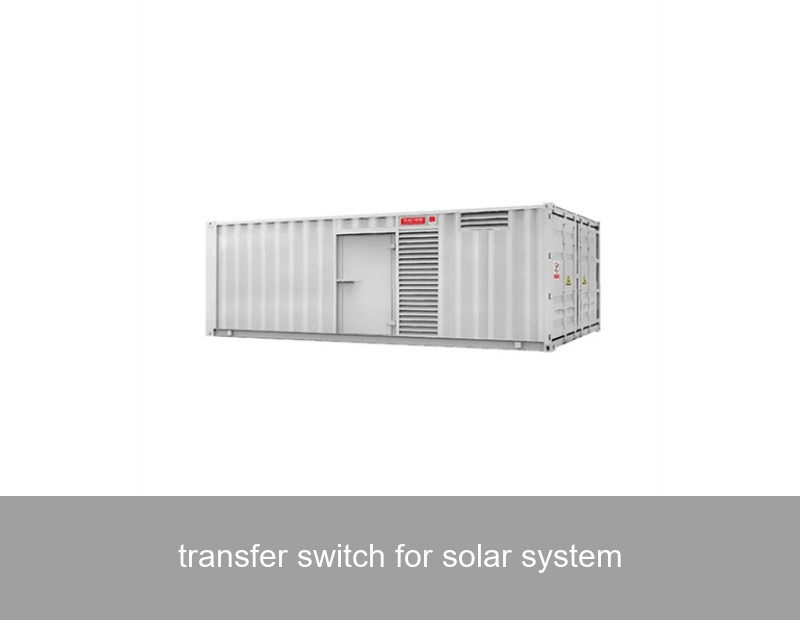
So, you've made the smart decision to invest in solar panels. You're generating clean energy, reducing your carbon footprint, and watching your electricity bills shrink. But what happens when the sun goes down, or more critically, when the main grid goes down? If your system instantly shuts off during a blackout, you're likely missing a critical component: the transfer switch for solar system integration. This unsung hero is the brain and brawn behind safe, reliable, and intelligent power management, especially when paired with a battery storage system. Let's demystify this crucial device and explore how it unlocks the full potential of your solar investment.
What is a Transfer Switch for a Solar System?
In simple terms, a transfer switch is a dedicated electrical device that safely manages the connection between different power sources. For a solar-powered home or business, these sources are typically: 1) the public utility grid, and 2) your on-site solar-plus-storage system. Think of it as the ultimate traffic director for electricity. Under normal conditions, it allows power to flow seamlessly from the grid and/or your solar system to power your loads. Its primary, critical function, however, is during a grid outage.
Without a transfer switch, grid-tied solar systems are required to automatically shut off (a feature called "anti-islanding") to protect utility workers repairing downed lines. A transfer switch physically and instantly isolates your home or critical circuits from the grid, creating a safe "island." It then transfers the load to your backup power source—be it a battery system or a generator—allowing your solar energy to keep the lights on. This isn't just a convenience; it's a fundamental upgrade to your property's resilience.

Image source: Unsplash - Representative image of electrical infrastructure.
Why You Can't Ignore It: Safety, Reliability, and Control
The need for a transfer switch goes far beyond mere backup power. It addresses three core pillars:
- Safety (The Non-Negotiable): Preventing "backfeed" – sending your solar-generated electricity onto de-energized grid lines – is a life-saving priority. A certified transfer switch is the only safe, code-compliant way to achieve this isolation. The National Electrical Code (NEC) has strict requirements (like Article 702 and 705) governing this equipment.
- Reliability: An automatic transfer switch (ATS) can detect a grid failure in milliseconds and switch to backup power, often before your devices even notice a blip. This is crucial for powering medical equipment, sump pumps, freezers, and home offices.
- Intelligent Control & Efficiency: Modern transfer switches integrated with smart energy management systems can prioritize which circuits to power, manage loads to extend battery life, and even facilitate time-of-use optimization, drawing from batteries during peak rate hours.
Types of Transfer Switches: Manual vs. Automatic
Choosing the right type depends on your needs, budget, and desired level of convenience.
| Feature | Manual Transfer Switch (MTS) | Automatic Transfer Switch (ATS) |
|---|---|---|
| Operation | Requires physical intervention to switch power sources. | Detects outage and switches automatically, without human action. |
| Speed | Delay (minutes to hours depending on location/awareness). | Near-instantaneous (milliseconds to seconds). |
| Convenience | Lower; must be present and able to operate it safely. | High; provides peace of mind and works for remote properties. |
| Cost | Generally lower equipment cost. | Higher equipment and installation complexity. |
| Best For | Budget-conscious projects, seldom outages, or for backing up only a few pre-selected circuits. | Uninterrupted power for whole-home or critical loads, frequent outage areas, and integration with smart home/energy systems. |
Key Considerations for Choosing the Right Switch
When specifying a transfer switch for solar system backup, discuss these points with your installer:
- Power Rating (Amps): Must match or exceed your main service panel (e.g., 200A) or the sub-panel it will control.
- Number of Circuits/Critical Loads: Do you need whole-home backup or just a few essential circuits (fridge, furnace, lights, outlets)?
- Integration with Inverter/ESS: The switch must be fully compatible with your solar inverter and battery system's communication protocols. This is where choosing a unified solution shines.
- Grid & Local Code Compliance: Always ensure equipment is listed (e.g., UL 1008) and installed by a certified professional to pass inspection and ensure safety.
Real-World Case Study: A California Winery's Resilience Story
Let's look at a concrete example from Napa Valley, USA. A mid-sized winery with a 250 kW rooftop solar array faced significant risks from Public Safety Power Shutoffs (PSPS) and seasonal grid instability. A grid outage would halt critical refrigeration, fermentation control, and security systems, threatening millions of dollars in inventory.
Their solution involved a turnkey system from Highjoule, featuring a 500 kWh Highjoule H2Cube industrial battery storage system, integrated with a centralized 400-amp automatic transfer switch and advanced energy management software. The ATS was programmed with a multi-stage logic: upon grid failure, it would island the facility within 2 seconds, powering all critical processes from the battery. During normal operation, the system uses solar to charge the batteries and perform peak shaving, reducing demand charges by over 30%.
The Result? During a 36-hour PSPS event in 2023, the winery operated at 100% capacity on solar and battery power. They saved an estimated $15,000 in spoiled product and lost production time, while the overall system delivers an annual financial return of 22% through demand charge reduction and grid resilience incentives. This case highlights how the transfer switch is the critical enabling hardware that makes such sophisticated, value-driven energy management possible.

Image source: Unsplash - Representative image of a commercial battery energy storage system.
Integrating with a Modern Energy Storage System (ESS)
Today, the transfer switch is rarely a standalone device. It's a core component of an intelligent Energy Storage System (ESS). Companies like Highjoule design their systems with this seamless integration in mind. For instance, the Highjoule HomePower solution for residential use features a built-in, grid-forming automatic transfer switch within its hybrid inverter. This all-in-one design simplifies installation, enhances reliability, and allows for granular control via a user-friendly app.
For commercial and industrial applications, Highjoule's PowerRouter platform coordinates multiple large-scale battery containers and generators, using advanced switchgear to manage complex microgrids. This system can seamlessly shed non-essential loads, sequence generator start-up, and even participate in grid services markets—all governed by the robust, reliable switching technology at its heart. The goal is to move beyond simple backup to creating adaptive, resilient microgrids.
Highjoule's Approach: Safety and Intelligence by Design
With nearly two decades of experience, Highjoule engineers its products to meet the highest global safety standards. Their transfer mechanisms are not just switches; they are intelligent nodes in a connected energy ecosystem. This ensures that whether you're a homeowner in Texas facing storm outages or a factory manager in Germany navigating energy price volatility, the transition between grid and self-generated power is safe, efficient, and economically optimized.
Making the Right Choice for Your Home or Business
The journey to energy independence isn't complete with just solar panels. The transfer switch for solar system resilience is the critical link that ensures your investment pays off 24/7, 365 days a year, in all conditions. It transforms a fair-weather energy saver into a robust, all-weather power asset.
As you consider your next steps, ask yourself and your energy provider: Does the proposed system include a code-compliant transfer solution? Is it automatic, and does it integrate intelligently with the battery and inverter? How will critical loads be defined and managed during an outage?
What would uninterrupted power protect for you—your family's comfort, your business's data, or your community's essential services?
 Inquiry
 Online Chat