


Why Your 12V Solar Panel System Needs a Smart Regulator (And How to Choose One)
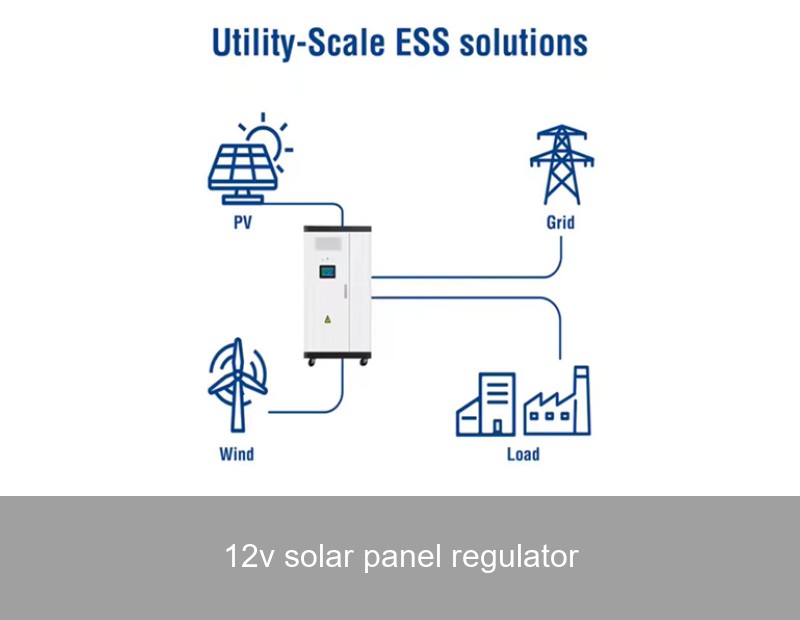
So, you've decided to harness the sun's power with a 12V solar panel setup. Fantastic choice! Whether it's for a campervan, a boat, an off-grid cabin, or a critical backup system, 12V systems are the backbone of mobile and small-scale renewable energy. But here's a crucial piece of the puzzle many newcomers overlook: the humble 12v solar panel regulator, also known as a charge controller. Think of it not just as a simple component, but as the essential "brain" of your solar power system. Its job goes far beyond just preventing battery overcharge; a high-quality regulator maximizes energy harvest, extends battery life dramatically, and ensures your entire system operates safely and efficiently. In this guide, we'll dive deep into why this device is non-negotiable and how modern solutions, like those developed by global leaders Highjoule, are revolutionizing 12V power management.
Table of Contents
- The Critical Role of a 12V Solar Regulator
- PWM vs. MPPT: Understanding the Technology
- Key Factors in Selecting the Right Regulator
- Real-World Impact: A Case Study from California
- The Smart Future: Beyond Basic Regulation
- Highjoule's Integrated Solutions for Reliable Power
The Critical Role of a 12V Solar Regulator: More Than Just a Guard
Let's start with the fundamental "why." A 12V solar panel regulator sits between your solar panels and your battery bank. Its primary mandate is to regulate the voltage and current flowing from the panels to the batteries. Without it, on a bright sunny day, your panels could send a continuous, unregulated high voltage to your batteries, causing severe overcharging. This leads to excessive gassing, overheating, electrolyte loss, and a drastically shortened battery lifespan—often resulting in premature and costly failure. According to the U.S. Department of Energy, proper charge control is a fundamental best practice for any photovoltaic system, directly impacting safety and return on investment.
But modern regulators do much more. They manage the three key stages of battery charging: bulk, absorption, and float. A smart regulator tailors this process to your specific battery chemistry—be it flooded lead-acid, AGM, Gel, or Lithium (LiFePO4). This precise management is what transforms a basic power setup into a resilient, long-lasting energy asset.

Image source: Unsplash. A modern charge controller is the command center for any 12V solar setup.
PWM vs. MPPT: Understanding the Core Technology
When choosing a 12v solar panel regulator, you'll encounter two main technologies: PWM (Pulse Width Modulation) and MPPT (Maximum Power Point Tracking). The choice between them significantly affects your system's performance.
| Feature | PWM Regulator | MPPT Regulator |
|---|---|---|
| Working Principle | Essentially acts as a switch, connecting and disconnecting the panel from the battery to maintain voltage. | Continuously tracks the panel's maximum power point (Vmp) and converts excess voltage into additional current. |
| Efficiency | ~70-80% (effectively matches panel voltage to battery voltage, losing the difference). | 94-99% (harvests up to 30% more energy, especially in cool, cloudy, or sub-optimal conditions). |
| Best For | Smaller systems where panel voltage (Vmp) is close to battery voltage (e.g., 18V panel for 12V battery). Cost-effective solution. | Larger systems, colder climates, or when panel voltage is significantly higher than battery voltage (e.g., 36V+ panel for a 12V battery). |
| Cost | Lower initial cost. | Higher initial cost, but typically higher ROI through energy gains. |
For most users seeking to maximize their energy harvest from limited roof space (like on an RV or boat), an MPPT regulator is the superior investment. It ensures you get every possible watt-hour from your solar panels, which can be the difference between having enough power and running out.
Key Factors in Selecting the Right Regulator
Choosing the perfect 12v solar panel regulator involves more than just PWM vs. MPPT. Consider these factors:
- System Voltage: Ensure it matches your battery bank (12V, 24V, etc.). Many modern units are auto-ranging.
- Current Rating: The regulator's amp rating must exceed the short-circuit current (Isc) of your solar array. Add a 25% safety margin.
- Battery Chemistry Compatibility: Must support your battery type with customizable charging profiles.
- Environmental Rating: For mobile or marine use, look for robust, waterproof (IP67+) enclosures.
- Monitoring & Connectivity: Bluetooth or Wi-Fi connectivity for smartphone monitoring is a game-changer for system management.
Real-World Impact: A Case Study from California
Let's look at tangible data. A 2023 installation for a off-grid horticultural research station in Northern California faced a common challenge: their existing PWM-controlled 12V system struggled to fully recharge a 400Ah lithium battery bank during short winter days, forcing reliance on a noisy gasoline generator.
The Upgrade: The system was retrofitted with a high-efficiency Highjoule HMPPT-40 MPPT charge controller, while keeping the existing 600W of solar panels.
- Energy Harvest Increase: Data loggers showed a 28% average increase in daily energy harvest compared to the old PWM controller, with peaks up to 35% on cold, clear mornings.
- Generator Run-Time Reduction: The need for supplemental generator charging dropped by over 90% from November to February.
- Payback Period: The increased energy yield and saved fuel costs led to a calculated payback period of just under 14 months for the regulator upgrade alone.
This case underscores that the right 12v solar panel regulator isn't an expense; it's a performance upgrade that pays for itself.
The Smart Future: Beyond Basic Regulation
The frontier of charge control is intelligent, integrated energy management. The latest regulators, such as those in Highjoule's product ecosystem, are no longer isolated devices. They are communication nodes within a broader smart system. They can:
- Sync with inverter-chargers and battery management systems (BMS) for seamless, chemistry-optimized charging.
- Prioritize loads, automatically shedding non-critical ones when battery levels are low.
- Provide detailed, cloud-based analytics on system performance, offering insights for further optimization.

Image source: Unsplash. Modern systems offer remote monitoring and detailed analytics for complete peace of mind.
Highjoule's Integrated Solutions for Reliable Power
At Highjoule, with nearly two decades of expertise since 2005, we understand that a reliable power system is more than the sum of its parts. While we are renowned for our large-scale commercial and microgrid storage solutions, our engineering philosophy trickles down to every product category, including the essential components for robust 12V systems.
Our approach focuses on integration, intelligence, and durability. For instance, our HMPPT Series charge controllers are designed not just as standalone regulators, but as fully compatible units within a potential future Highjoule ecosystem. They feature advanced algorithms for maximum energy harvest, extensive communication protocols (RS485, CAN), and are built to withstand the harsh environmental conditions often faced in off-grid and mobile applications across Europe and North America.
For homeowners, businesses, or communities looking for a complete, worry-free solution, Highjoule provides integrated battery energy storage systems (BESS) that incorporate this smart regulation technology at their core. Our systems are designed to be scalable, sustainable, and managed via intuitive software, ensuring every watt of solar energy you produce is stored and used with maximum efficiency.
Ready to move from just having a solar setup to owning a truly intelligent and high-performing energy system? What's the biggest challenge you've faced in managing your 12V solar power?
 Inquiry
 Online Chat