


Top 10 Renewable Energy Companies and the Unsung Hero Powering Their Growth
When we think about the world's top 10 renewable energy companies, names like NextEra Energy, Ørsted, or Iberdrola often come to mind. These giants are rightfully celebrated for their massive wind farms, sprawling solar parks, and their pivotal role in decarbonizing our global grid. But there's a critical, behind-the-scenes enabler that is increasingly determining the success and scalability of these leaders: advanced energy storage. The simple truth is, the sun doesn't always shine, and the wind doesn't always blow. So, how do we ensure clean power is available 24/7? The answer lies not just in generation, but in intelligent storage, a domain where companies like Highjoule are making a profound impact.
What Makes a Top Renewable Energy Company?
The ranking of the top 10 renewable energy companies is typically based on metrics like installed capacity, energy output, and market capitalization. However, the modern energy paradigm is shifting. Today, leadership is also measured by reliability, grid stability, and the ability to provide dispatchable clean energy. This is where the traditional model hits a snag. A 2023 report by the International Energy Agency (IEA) highlighted that the variability of renewables remains a key challenge for grid operators worldwide, necessitating a massive scale-up of flexible resources, primarily battery storage (IEA, Grid-Scale Storage).
Let's look at the data. In the United States, the Solar Energy Industries Association (SEIA) notes that while solar generation has skyrocketed, a staggering amount of potential solar energy can be curtailed (wasted) when the grid is saturated. In California, a leader in solar adoption, curtailment has become a multi-gigawatt-hour issue on sunny days. This isn't just an inefficiency; it's a direct economic and environmental loss. The solution isn't simply building more panels—it's about capturing that excess and using it intelligently.
The Pivotal Role of Advanced Energy Storage
Think of energy storage as the "time machine" for electricity. It allows us to capture renewable energy when it's abundant and cheap, store it, and then release it when demand is high and supply is low. This capability transforms intermittent resources into firm, predictable power sources. For any top renewable energy company looking to expand its portfolio or for a commercial business wanting to maximize its on-site solar investment, storage is no longer an optional add-on; it's the core of a resilient and cost-effective strategy.
The benefits are multi-faceted:
- Grid Services: Large-scale Battery Energy Storage Systems (BESS) provide critical services like frequency regulation and voltage support, acting as a shock absorber for the grid.
- Energy Arbitrage: Store low-cost energy (e.g., midday solar) and discharge it during expensive peak periods, dramatically reducing electricity bills.
- Backup Power: For businesses and communities, storage provides seamless backup during outages, ensuring continuity.
- Maximizing Self-Consumption: For homes and businesses with solar, storage allows you to use more of your own clean energy, reducing reliance on the grid.

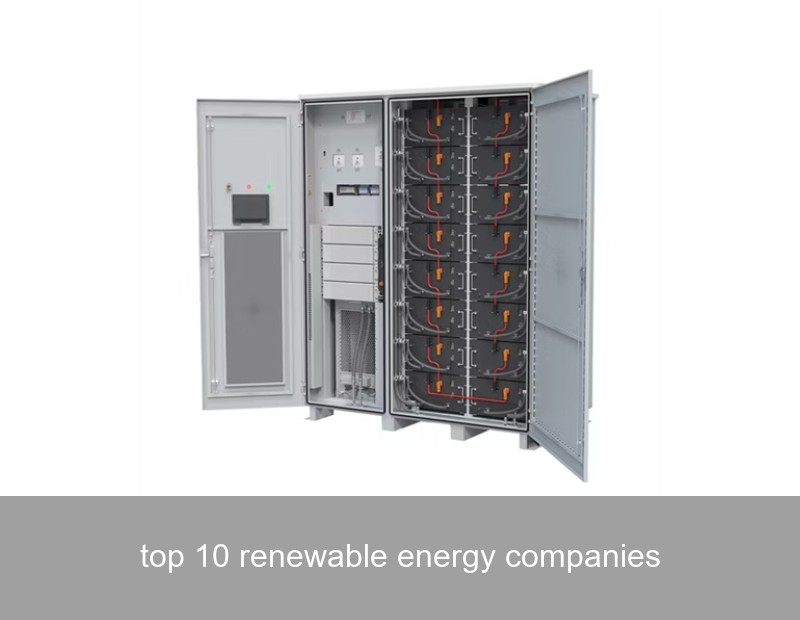
Image: A large-scale battery storage system co-located with solar generation. (Source: Unsplash)
Case Study: Storage Empowers a German Industrial Plant
Let's move from theory to a real-world example in Europe. A medium-sized manufacturing plant in Bavaria, Germany, had invested heavily in a rooftop solar PV system. Their goal was to lower energy costs and meet sustainability targets. However, they faced a common problem: their solar production peaked at midday, while their highest energy consumption and the highest grid tariffs occurred in the early morning and late afternoon. They were exporting excess solar power at low feed-in tariffs and buying expensive power from the grid when they needed it most.
The solution was integrating a tailored Highjoule H-Series Commercial BESS. Here are the results after one year of operation:
| Metric | Before Highjoule BESS | After Highjoule BESS |
|---|---|---|
| On-site Solar Self-Consumption | 35% | 82% |
| Peak Grid Power Draw | 950 kW | 550 kW |
| Annual Electricity Cost Savings | Baseline | €68,000 |
| Grid Independence During Brief Outages | None | Full critical load coverage |
This case, mirrored across hundreds of installations, illustrates that the true potential of renewables is unlocked not in isolation, but when paired with smart storage. It's a partnership that defines the next generation of energy leaders.
Highjoule: The Intelligent Storage Partner for a Sustainable Future
Founded in 2005, Highjoule has grown into a global leader by focusing on one mission: making renewable energy reliable and economically superior. While we may not appear on a simplistic list of the top 10 renewable energy companies by generation capacity, our technology is the force multiplier that allows those companies—and individual businesses and homeowners—to achieve their clean energy goals.
Our product ecosystem is designed for seamless integration:
- H-Series Commercial & Industrial (C&I) BESS: Scalable, containerized or modular systems featuring our proprietary battery management software for optimal lifecycle and safety. These systems are the workhorses for factories, data centers, and large-scale solar farms.
- E-Series Residential Storage: Sleek, user-friendly home battery systems that integrate effortlessly with existing solar installations. Managed via an intuitive app, homeowners can take control of their energy, increase self-sufficiency, and gain peace of mind with backup power.
- Microgrid Controllers & Software: The true brain behind the operation. Our GridSynq software platform doesn't just store and release energy; it forecasts energy production and consumption, participates in grid service markets (where available), and autonomously optimizes for cost or carbon footprint based on user preferences.
For a top renewable energy company developing a new solar or wind project, integrating Highjoule's storage from the design phase ensures a more bankable, stable, and valuable asset. The U.S. Department of Energy's National Renewable Energy Laboratory (NREL) has published extensive research showing that hybrid renewable-plus-storage projects are increasingly outcompeting standalone projects in terms of value and dispatchability (NREL, Energy Storage Analysis).

Image: A residential energy storage system installed in a home garage, complementing rooftop solar. (Source: Unsplash)
The Future is Integrated and Intelligent
The landscape of the top 10 renewable energy companies will inevitably evolve. The winners will be those who master the entire value chain: generation, storage, and intelligent management. This isn't just about utilities; it's about energy democratization. Every business with a warehouse roof, every community with open land, and every homeowner can become a proactive participant in the clean energy transition, provided they have the right tools.
Highjoule's systems are built on this philosophy. We provide the hardware and the AI-driven intelligence to navigate complex electricity markets, weather patterns, and consumption behaviors. This turns a passive renewable asset into an active, grid-supportive, and revenue-generating one.
The conversation is shifting from "Who generates the most?" to "Who delivers clean, reliable, and affordable power most effectively?" In that redefined race, advanced energy storage is the critical differentiator.
Is your organization or community evaluating a renewable energy project? What specific challenge—be it cost predictability, backup power needs, or grid connection constraints—is shaping your search for a solution?
 Inquiry
 Online Chat