


Tableplast IP65: How Much Does This Crucial Enclosure Rating Really Cost?
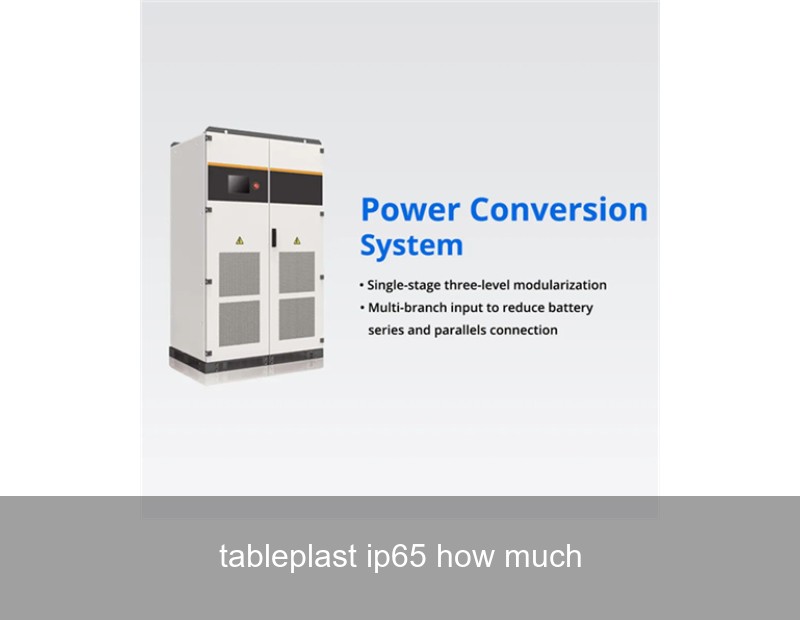
If you're planning a solar or battery storage installation, you've likely encountered the term "IP65." Especially when researching robust enclosures like those made from tableplast, the immediate question becomes: "Tableplast IP65 how much?" While a simple price tag is tempting, the true cost encompasses far more than just the enclosure's purchase price. It's an investment in protection, longevity, and the overall reliability of your entire energy system. A compromised enclosure can lead to catastrophic failures, turning your sustainable power solution into a costly liability. Let's break down the real value behind the IP65 rating for tableplast enclosures and what you should consider for your project.
Table of Contents
What Exactly is IP65? Decoding the Rating
Before we talk cost, let's clarify what you're paying for. The IP (Ingress Protection) code, defined by the international standard IEC 60529, is a two-digit rating. The first digit (6) indicates complete protection against dust—no ingress whatsoever. The second digit (5) means protection against water jets from a nozzle (6.3mm) from any direction. In simple terms, an IP65-rated tableplast enclosure is dust-tight and can withstand low-pressure water jets, making it suitable for outdoor applications where it might face rain, hose-down cleaning, or wind-driven spray.

Image Source: Wikimedia Commons, illustrating the IP Code system.
Why IP65 is Non-Negotiable for Modern Energy Storage
Phenomenon: A homeowner installs a sleek battery system in their garage. A nearby industrial facility places power electronics in a dusty yard. In both cases, without proper protection, moisture and particulate ingress can silently degrade connections, cause short circuits, and lead to thermal runaway or system shutdown.
Data: According to a DNV GL report, environmental factors like humidity and temperature cycling are among the leading contributors to power electronics failures in renewable systems. The cost of a single service call to replace a damaged inverter or battery management module can easily exceed the price difference between a standard box and a properly rated IP65 enclosure.
This is where the material matters. Tableplast (a common term for glass-reinforced polyester or similar composite materials) offers superior mechanical strength, corrosion resistance, and UV stability compared to standard plastics or lower-grade metals. When combined with an IP65 seal, it creates a formidable barrier.
Key Threats Mitigated by IP65 Tableplast Enclosures:
- Dust & Sand: Prevents buildup on circuit boards, preventing overheating and arc faults.
- Wind-Driven Rain & Snow: Critical for side-of-house or rooftop installations in storm-prone areas like Europe's North Sea coast or the US Gulf Coast.
- Accidental Hose Downs: Protects equipment if the area is cleaned or in case of a nearby fire emergency response.
- Condensation & Corrosion: A sealed environment slows the corrosive effects of salty or humid air on electrical components.
Breaking Down the "How Much": Key Cost Factors
So, tableplast IP65 how much? Prices vary widely based on several factors beyond just the material and rating:
| Factor | Impact on Cost | Consideration for Your Project |
|---|---|---|
| Size & Dimensions | High | Larger enclosures for commercial battery systems cost significantly more than small residential ones. Custom cutouts add cost. |
| Material Grade & Thickness | Medium-High | Higher-grade resins and thicker walls for extreme environments increase price but enhance durability. |
| Sealing Technology & Hardware | Medium | Quality gaskets, latches, and stainless-steel hinges ensure the IP65 rating holds over 10-15 years. |
| Certifications & Compliance | Medium | Enclosures certified to UL, IEC, or specific regional standards (crucial for US & EU markets) involve testing overheads. |
| Integration & Thermal Management | High | Passive vents (while maintaining IP65 with internal baffles) or integrated cooling channels add complexity and cost. |
As a ballpark, for a medium-sized enclosure housing a residential battery system's power electronics, you could be looking at a range from a few hundred to over a thousand dollars/euros. However, the smarter approach is to consider the total system cost.
Real-World Impact: A Case Study from Coastal Maine, USA
Let's move from theory to reality. A community microgrid project on the coast of Maine, USA, faced a harsh environment: salty air, heavy snow loads, and temperature swings from -20°C to 35°C (-4°F to 95°F).
Initial Challenge: The first design used lower-cost, vented enclosures for the system's critical combiner boxes and controllers. Within 18 months, technicians found significant corrosion on terminals and dust ingress causing sensor faults. Downtime for repairs was costly, and reliability was jeopardized.
Solution & Data: The project retrofitted the equipment into purpose-built, IP65-rated tableplast enclosures with corrosion-resistant hardware. The result? Over the subsequent 3-year period, the recorded data showed:
- A 99.8% uptime for the protected components (up from 94.5%).
- Zero maintenance incidents related to environmental damage.
- The incremental cost of the upgraded enclosures was recouped in under 2 years through avoided service visits and lost production.
This mirrors the philosophy at Highjoule. We don't view enclosures as an add-on but as an integral part of the system's design. Our HPS Series commercial battery storage solutions, for example, feature integrated IP65/NEMA 4X rated cabinets as standard. The tableplast composite panels and precision sealing are engineered to protect the high-value lithium-ion batteries and inverters inside, ensuring the system delivers on its 10,000-cycle lifespan promise even in challenging environments.
Highjoule's Integrated Approach: Protection Built-In
For end-users and installers, constantly asking "tableplast IP65 how much" for separate components can be a distraction. The modern solution is to choose an energy storage system where this protection is engineered from the ground up.
Highjoule designs its residential (EverHome Series) and industrial (GridMax Series) energy storage systems with a holistic view of durability. Our battery racks, power conversion systems, and control units are housed in custom-engineered enclosures that meet or exceed IP65 standards. We select materials like corrosion-resistant alloys and advanced composites for their specific application—whether it's for a homeowner's garage in Florida or a grid-support installation in a windy German industrial park.
This integrated design eliminates guesswork. You're not just buying a battery and a separate box; you're investing in a cohesive, tested, and warranted solution. The "cost" of the IP65 protection is seamlessly factored into a system designed for total cost of ownership, minimizing surprises over its decades-long service life.

Image Source: Unsplash, depicting a modern residential battery installation.
Making the Right Investment Decision
When evaluating your next energy project, shift the question from "tableplast IP65 how much" to "what is the cost of NOT having proper protection?" Consider the value of the equipment inside the box, the cost of potential downtime, and the safety risks of environmental failure.
For DIY enthusiasts or integrators sourcing components, diligently vet enclosure suppliers for independent certification reports. For most homeowners and businesses seeking reliable power resilience, partnering with a provider like Highjoule that prioritizes built-in, certified protection is the most straightforward path to peace of mind.
What specific environmental challenge is the single biggest threat to energy reliability at your site—is it coastal salt spray, desert dust, or freezing rain? Identifying that will guide you to the precise level of protection you need.
 Inquiry
 Online Chat