


The Essential Guide to the Charger of Lithium Battery: Powering a Sustainable Future
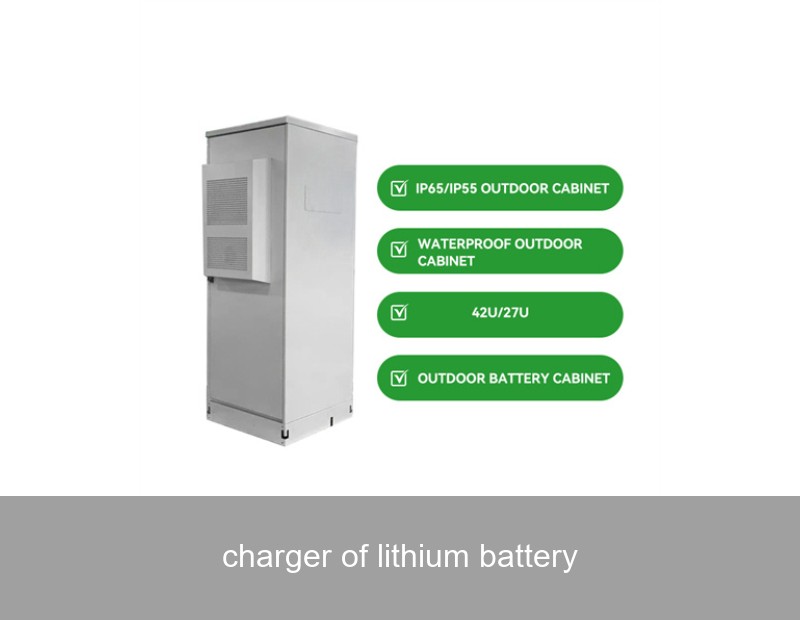
Have you ever wondered why your smartphone battery lasts for years, while some electric vehicle batteries seem to thrive for hundreds of thousands of miles? The secret often lies not just in the battery itself, but in its unsung hero: the charger of lithium battery. This critical component is the brain and guardian of your energy storage system, dictating its efficiency, lifespan, and safety. As the world shifts decisively towards renewable energy and electrification, understanding the intelligence behind lithium battery charging is key for any homeowner, business, or community looking to harness sustainable power. Let's delve into the technology that makes modern energy storage not just possible, but smart and durable.
Table of Contents
- The Phenomenon: More Than Just Plugging In
- The Data: Why Charging Intelligence Matters
- A Case Study: Optimizing a Commercial Solar Fleet in Germany
- Expert Insight: The Multi-Stage Charging Algorithm
- Highjoule's Role: Advanced Charging for Complex Systems
- Future Trends: Smarter Grids and AI Chargers
The Phenomenon: More Than Just Plugging In
Unlike simply filling a gas tank, charging a lithium-ion battery is a sophisticated dance of chemistry and physics. A basic charger might get the job done, but an intelligent charger of lithium battery manages a delicate balance: speed versus longevity, capacity versus safety. The phenomenon we see in poorly managed systems is premature aging—batteries that lose their ability to hold a charge much faster than expected. This isn't just an inconvenience; for large-scale commercial or residential solar-plus-storage systems, it represents a significant financial loss and undermines the sustainability goals of the installation.
The Data: Why Charging Intelligence Matters
The numbers speak volumes. Research from the University of Michigan highlights that optimal charging practices can extend lithium battery cycle life by as much as 300-500% compared to harsh, unmanaged charging. Let's break down the key stressors a smart charger mitigates:
- Overcharging: Pushing cells beyond 100% state-of-charge creates heat and accelerates cathode degradation.
- High Current (C-rate): While fast charging is convenient, consistently high current rates cause mechanical stress on the battery's internal structure.
- Temperature: Charging at low temperatures (below 0°C/32°F) can cause lithium plating, a primary failure mode. A smart charger will reduce current or halt charging until the battery warms up.
Consider this: a standard, non-adaptive charger could reduce a battery's useful life from a projected 10 years to just 4-5 years in a daily-cycled solar storage application. The financial and environmental cost of that early replacement is substantial. You can explore more on battery degradation from the U.S. Department of Energy's battery testing resources.

Image Source: Unsplash - A sophisticated Battery Management System (BMS) works in tandem with the charger to monitor cell health.
A Case Study: Optimizing a Commercial Solar Fleet in Germany
Let's look at a real-world example from Bavaria. A mid-sized manufacturing plant with a 500 kW rooftop solar array installed a 750 kWh lithium-ion battery system in 2020 to maximize self-consumption and provide backup power. Initially, they used a standard, off-the-shelf charger of lithium battery system. Within 18 months, data logging showed an uneven 8.2% capacity fade across different battery racks, threatening their ROI and grid service contracts.
The Solution & Outcome: In 2022, they upgraded to an integrated, smart charging system as part of a broader energy management platform. This new system featured:
- Adaptive charging curves based on daily solar forecast and factory load patterns.
- Active cell balancing during both charge and discharge cycles.
- Temperature-compensated voltage limits for each battery string.
After one year of operation with the new intelligent charger, the annual capacity fade rate was reduced to just 1.5%, aligning with the battery manufacturer's optimal specifications. This extended the projected system payback period by 4 years and ensured the plant could reliably meet its peak-shaving commitments. This case underscores that the charger is not a commodity but a core component of asset performance.
Expert Insight: The Multi-Stage Charging Algorithm
So, what's inside a high-performance charger of lithium battery? It's all about the algorithm. The most common effective method is the CC-CV (Constant Current, Constant Voltage) protocol, but modern systems add layers of intelligence:
| Stage | Function | Benefit |
|---|---|---|
| Bulk Charge (CC) | Delivers maximum safe current until voltage nears peak. | Rapidly recovers 70-80% capacity. |
| Absorption (CV) | Holds peak voltage, tapering current as the battery fills. | Safely tops off the battery without stress. |
| Float/ Maintenance | Provides a lower voltage trickle charge to offset self-discharge. | Keeps battery at 100% readiness for backup applications. |
| Equalization (Active Balancing) | Smart BMS redistributes energy between cells during idle periods. | Corrects cell imbalance, maximizing total pack capacity and life. |
For grid-tied systems, the best chargers incorporate grid signals and weather data. For instance, if a cloudy week is forecast, the charger might shift to a more conservative, life-extension mode, knowing full solar recharge isn't imminent. This level of foresight is what separates advanced systems from basic ones. The National Renewable Energy Lab (NREL) discusses these grid-integration challenges in detail.
Highjoule's Role: Advanced Charging for Complex Systems
At Highjoule, we've built our reputation since 2005 on mastering this intricate dance. We understand that a charger of lithium battery for a residential home differs vastly from one managing a multi-MW industrial microgrid. Our power conversion systems (PCS) and integrated energy management software are the embodiment of intelligent charging.
Our HPC Series bi-directional inverters/chargers, for example, are not just hardware. They are the execution point for a cloud-based AI that optimizes charging strategy in real-time. For a California school district using our systems, this means charging batteries from solar when rates are low, discharging during peak price hours, and always maintaining a reserve for emergency backup—all while adhering to strict battery health protocols. The charger automatically adjusts its parameters based on the specific lithium chemistry (NMC, LFP, etc.), ensuring each battery type performs to its unique longevity curve.
We provide end-to-end solutions where the charger is a seamlessly integrated component within a larger, intelligent ecosystem designed for commercial, industrial, and microgrid applications, ensuring sustainability is built into every charge cycle.

Image Source: Unsplash - Centralized control is key for managing large-scale battery charging protocols.
Future Trends: Smarter Grids and AI Chargers
The future of the charger of lithium battery is predictive and autonomous. We are moving towards systems that use machine learning to analyze historical performance data, weather patterns, and user behavior to create a unique, evolving charging profile for each individual battery system. Imagine a charger that can predict a cell's failure weeks in advance by detecting subtle changes in its charge acceptance rate, scheduling maintenance before an outage occurs.
Furthermore, as vehicle-to-grid (V2G) technology matures, the charger in your electric vehicle will become a critical grid asset, requiring unprecedented levels of communication and control to both protect the car's battery and provide grid services. The International Energy Agency's EV Outlook highlights the massive potential of this bidirectional energy flow.
Your Energy, Your Decision
Choosing an energy storage system is a major investment in resilience and sustainability. Now that you understand the pivotal role of the charger, what questions will you ask your provider about how they plan to protect and optimize the heart of your system for the next decade and beyond?
 Inquiry
 Online Chat