


Understanding Energy Storage Cabinet Price: A Smart Buyer's Guide
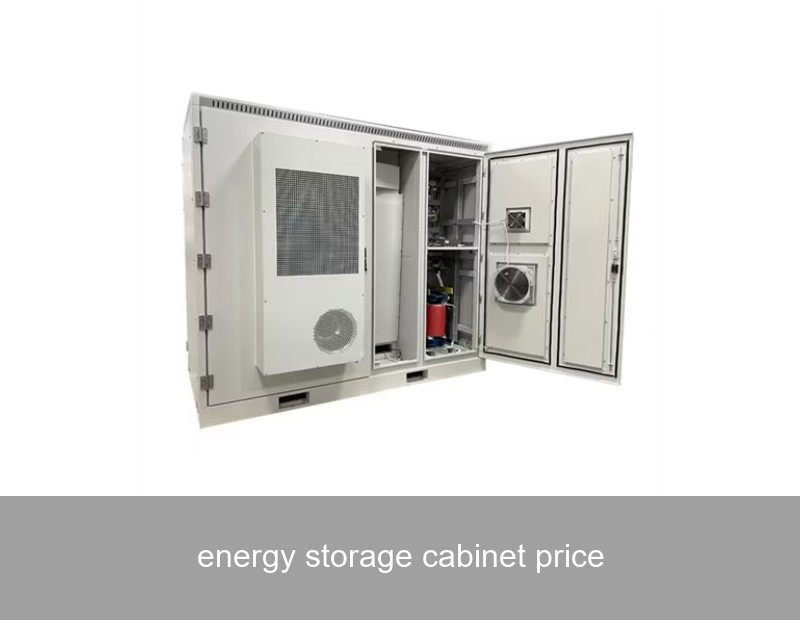
If you're exploring the world of battery energy storage systems (BESS), you've likely encountered a wide range for energy storage cabinet price. One quote might seem surprisingly low, while another gives you pause. This isn't just about the cost of a metal box; it's about the sophisticated technology, safety, and long-term value inside it. As a product technology expert at Highjoule, I often explain that the price tag is a gateway to understanding performance, longevity, and total cost of ownership. Let's demystify what goes into that number and how to make an investment that powers your future, not just your present.
Table of Contents

Modern energy storage cabinets are integrated power hubs, not simple containers. Their price reflects this complexity.
The Real Breakdown of Energy Storage Cabinet Price
So, what are you actually paying for? An energy storage cabinet is a fully integrated system. The cabinet itself is just the starting point. Inside, you have the core battery cells (typically Lithium Iron Phosphate or LFP for safety and cycle life), a sophisticated Battery Management System (BMS), power conversion systems (PCS/inverters), thermal management (cooling and heating), safety systems (fire suppression, gas venting), and the integration software that makes it all work intelligently with your energy sources and loads.
At Highjoule, our H-Series commercial cabinets are designed with this holistic view. We don't source generic components and assemble them; we engineer the subsystems to work in perfect harmony. This integration level impacts the energy storage cabinet price upfront but delivers massive dividends in efficiency, safety, and system lifespan, reducing your effective cost per kilowatt-hour over the product's life.
Key Factors Driving Cost and Value
Several technical and market factors directly influence the price. Understanding these helps you compare quotes apples-to-apples.
- Battery Chemistry & Cell Quality: LFP cells are the industry standard for stationary storage due to their safety and longevity. However, cell quality varies immensely. Premium, name-brand cells from manufacturers with proven track records cost more but offer better performance consistency and degradation profiles.
- Energy Density & Footprint: A cabinet that packs more kWh into a smaller space often uses more advanced cell technology and denser packing, which can increase cost. This is crucial where real estate is expensive.
- Power Rating & Scalability: The inverter's power rating (in kW) determines how much energy you can push in or out at once. A higher power capability for applications like demand charge reduction or grid services adds to the cost. Modular designs, like Highjoule's scalable architecture, may have a higher initial unit cost but offer lower long-term expansion costs.
- Intelligence & Software: The "brain" of the system is a major differentiator. Advanced software for energy management, predictive analytics, and grid interaction adds value. Our Highjoule EnergyOS™ platform, for instance, continuously optimizes dispatch to maximize financial returns, making the hardware investment work harder for you.
- Safety & Certifications: Compliance with stringent standards like UL 9540 in the US and IEC 62619 in Europe is non-negotiable. Achieving these certifications requires rigorous design, testing, and quality components, which is reflected in the price. Never compromise here.
Case Study: Reducing Costs at a Bavarian Dairy Plant
Let's look at a real example from our European operations. A mid-sized dairy processing plant in Bavaria faced two problems: high electricity demand charges from their refrigerated storage peaks and unreliable grid power that risked spoilage.
The Phenomenon: Their monthly utility bill showed sharp, expensive peaks.
The Data: Analysis revealed 4-5 short-duration peaks per month, each adding over €2,500 to the demand charge. Annual grid interruption risks were estimated at €15,000 in potential lost product.
The Highjoule Solution: We installed a 250 kW / 550 kWh containerized storage system (essentially multiple integrated cabinets). The system was programmed for peak shaving and provided backup power to critical cooling lines.
The Result: The system cut peak demand by 22%, saving approximately €28,000 annually on demand charges. It also provided seamless backup during two short grid outages. While the energy storage cabinet price was a significant investment, the simple payback period was under 5 years, and the system will deliver savings for well over a decade. The plant manager now sleeps better, knowing both his costs and his product are secure.

Real-time monitoring and intelligent software are key components that add value beyond the hardware price.
Looking Beyond the Initial Price Tag: TCO is Key
The smartest buyers focus on Total Cost of Ownership (TCO). A lower upfront energy storage cabinet price can be misleading if it leads to:
| Cost Factor | Cheaper System Risk | High-Value System Benefit |
|---|---|---|
| Degradation | Higher annual capacity loss, shorter useful life | Guaranteed cycle life and capacity retention (e.g., Highjoule's 10-year performance warranty) |
| Efficiency | Lower round-trip efficiency wastes more energy per cycle | High efficiency (e.g., >95% system efficiency) means more of your stored solar or cheap grid power is usable |
| Maintenance | More frequent service, higher failure rates | Predictive diagnostics and robust design minimize OPEX |
| Software Updates | Limited or paid updates, lack of new features | Continuous, free software upgrades that adapt to new grid rules and optimize revenue streams |
As the U.S. Department of Energy's research notes, the levelized cost of storage (LCOS) is the critical metric, combining capital cost, lifetime, efficiency, and maintenance.
The Highjoule Approach: Engineering Value into Every Cabinet
Since 2005, Highjoule's philosophy has been to engineer for the long haul. For our residential EcoHome and commercial H-Series lines, this means:
- Vertical Integration: We control the core BMS and system software design, ensuring deep compatibility and performance optimization.
- Passive Safety Design: Our cabinets use cell-to-pack technology with inherent LFP stability, combined with passive cooling where possible to reduce failure points and energy use.
- Grid-Interactive Ready: Every system is built to not just store energy, but to participate in grid service programs (where available), creating an additional potential revenue stream that improves ROI. You can learn more about grid services from independent authorities like NREL.
This integrated approach ensures that the energy storage cabinet price you see is an investment in a resilient, intelligent asset.
Finding the Right System for Your Needs
Before you get fixated on a price per kWh, ask yourself and your provider these questions:
- What is my primary use case? (Solar self-consumption, backup power, demand charge reduction, grid services?)
- What is the required cycle life? (Daily cycling needs a much more robust system than weekly backup).
- What are the warranty terms? Look for guaranteed throughput or capacity retention over time, not just a time-based warranty.
- Is the software included, and what does it do? Can it adapt to changing tariffs and needs?
The right partner will help you model these scenarios. For instance, the financial benefits of demand charge management can be complex; the EPA's guide on demand response provides a good foundational understanding.

Residential systems, like Highjoule's EcoHome, integrate with solar to maximize self-consumption and provide backup.
Your Next Step
The conversation about energy storage cabinet price is ultimately a conversation about your energy independence, resilience, and financial foresight. It's about choosing a partner who understands the engineering behind the cabinet and the economics behind your decision.
What specific energy challenge—be it unpredictable bills, grid instability, or a desire to use more clean solar power—is driving you to consider storage today? Defining that will guide you to the right system and the right price point for your future.
 Inquiry
 Online Chat