


How Much Does Solar Wind Energy Cost? A Real-World Guide for Homeowners and Businesses
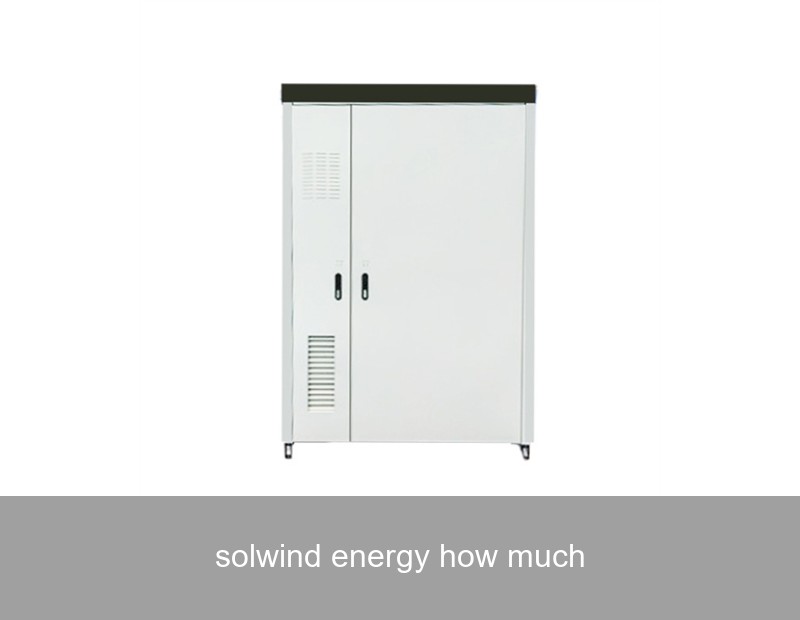
You've likely heard about the incredible potential of solar wind energy. It sounds like the ultimate clean power duo, doesn't it? But as you start researching, one question quickly rises to the top: "How much does it actually cost?" The truth is, there's no single price tag. The cost of a hybrid solar and wind system is a dynamic equation, influenced by your location, energy needs, technology choices, and crucially, the intelligence of the storage system that ties it all together. This article will demystify the real costs, moving beyond generic estimates to show you how modern technology is making this powerful combination a viable and smart investment.
Table of Contents
- The Cost Puzzle: It's More Than Just Panels and Turbines
- Breaking Down the Numbers: Hardware, Installation, and Beyond
- The Game Changer: How Advanced Storage Alters the Math
- A Real-World Case Study: The Off-Grid Dairy Farm in Bavaria
- The Highjoule Solution: Intelligent Integration for Maximum ROI
- What Could Your Energy Future Look Like?
The Cost Puzzle: It's More Than Just Panels and Turbines
Asking "how much does solar wind energy cost?" is like asking "how much does a house cost?" A suburban home and a city penthouse both provide shelter, but their prices differ vastly. Similarly, a small residential hybrid system for a rural home differs fundamentally from a commercial setup powering a remote industrial site. The core components—solar panels, a wind turbine, inverters, mounting hardware, and the essential battery storage system—each have a cost range. According to the U.S. Department of Energy, solar PV costs have dropped nearly 70% in the last decade, while wind turbine technology has also seen significant efficiencies. However, the real financial story today isn't just in the generation; it's in the integration and storage.
Breaking Down the Numbers: Hardware, Installation, and Beyond
Let's look at a typical mid-range hybrid system for a large home or small business in Europe or the US.
| System Component | Estimated Cost Range (USD/EUR) | Key Considerations |
|---|---|---|
| Solar PV Array (8-10 kW) | $12,000 - $20,000 | Roof type, panel efficiency, local sunlight hours. |
| Small Wind Turbine (5-10 kW) | $15,000 - $35,000 | Average wind speed, tower height, permitting. |
| Power Inverters & Balance of System | $5,000 - $10,000 | Needed to convert and manage DC to AC power safely. |
| Battery Energy Storage System (BESS) | $10,000 - $25,000+ | Capacity (kWh), depth of discharge, cycle life, intelligence. |
| Installation & Grid Connection | $10,000 - $20,000 | Site complexity, labor costs, utility fees for interconnection. |
| Total Estimated System Cost | $52,000 - $110,000+ | Before incentives and long-term savings. |
This upfront figure can be daunting. But this is where the narrative shifts. Government incentives like the US Investment Tax Credit (ITC) or European Union grants can reduce this cost by 30% or more. More importantly, a high-quality, intelligent storage system is the component that transforms this capital expenditure into a long-term financial asset.

Credit: Photo by American Public Power Association on Unsplash. A hybrid solar-wind setup maximizes energy harvest across different weather conditions.
The Game Changer: How Advanced Storage Alters the Math
Think of your solar panels and wind turbine as diligent workers. The sun only shines for part of the day, and the wind is intermittent. Without a battery, any excess energy they produce when you don't need it either goes back to the grid (often at a low feed-in tariff) or is wasted. A basic battery stores energy. An advanced, intelligent Battery Energy Storage System (BESS) acts as a smart energy manager, optimizing every kilowatt-hour for your financial benefit.
- Maximizes Self-Consumption: Stores cheap, self-generated energy for use during expensive peak grid hours.
- Provides Energy Resilience: Keeps critical loads running during grid outages, a value that's hard to quantify but essential for many businesses.
- Enables Revenue Streams: In some markets, advanced systems can participate in grid services, earning money by providing stability to the local network.
This is where companies like Highjoule redefine the cost equation. Our Highjoule HPS Series commercial and industrial storage systems aren't just boxes of batteries. They are integrated platforms with built-in energy management software that learns your consumption patterns, weather forecasts, and utility rate structures to autonomously decide the most economical time to charge, discharge, or hold energy. This intelligence can squeeze 20-30% more value from your solar wind investment, dramatically shortening the payback period.
A Real-World Case Study: The Off-Grid Dairy Farm in Bavaria
Let's move from theory to practice. Consider a dairy farm in Bavaria, Germany. The farm had high, stable energy needs for cooling and automation but faced high costs and unreliable grid connection in its rural location.
- Challenge: Achieve 95%+ energy independence, ensure 24/7 power for milk cooling, and stabilize costs.
- Solution: A hybrid system with 45 kW of solar, a 20 kW wind turbine, and a Highjoule HPS 120 battery storage system (120 kWh capacity).
- Outcome & Data: The system now meets 98% of the farm's annual energy demand. In the first year of operation, it saved over €18,000 in energy costs and avoided €5,000 in potential spoilage losses from grid outages. The intelligent BESS seamlessly blends power from solar, wind, and the grid, ensuring the most critical loads are always prioritized. The projected payback period, with German renewable energy support, is under 7 years—on a system with a 20+ year lifespan.
This case highlights a critical insight: The true "cost" of solar wind energy is better understood as a Total Cost of Ownership (TCO). The upfront price is offset by decades of near-zero marginal energy costs, protection from volatile utility rates, and operational resilience. A study by the National Renewable Energy Lab (NREL) confirms that hybrid renewable systems paired with storage are increasingly the lowest-cost option for off-grid and microgrid applications.
The Highjoule Solution: Intelligent Integration for Maximum ROI
At Highjoule, we believe the storage system is the brain of a modern renewable energy setup. Founded in 2005, we've spent nearly two decades refining our technology to ensure that when you invest in solar wind energy, you get the maximum possible return. Our products are designed for the specific demands of the European and North American markets, with robust certifications and grid-compliance features.
For residential customers, our Home Energy Vault offers scalable storage with an intuitive app that puts energy control in your pocket. For businesses and industrial applications, the modular HPS Series can be scaled from hundreds of kWh to multiple MWh, featuring industry-leading safety with our proprietary cell-level monitoring and thermal management. For larger community or microgrid projects, our integrated energy management platform provides the control center to optimize diverse generation sources, including solar, wind, and backup generators.
Choosing Highjoule means you're not just buying a battery; you're investing in a long-term partnership for intelligent, sustainable energy management. Our systems are designed to future-proof your investment, with software-upgradable capabilities that can adapt to new utility programs and market opportunities.

Credit: Photo by American Public Power Association on Unsplash. A modern, modular battery storage system like Highjoule's HPS Series.
What Could Your Energy Future Look Like?
The initial investment in solar wind energy is significant, but the landscape of cost is fundamentally changing. The question is evolving from "How much does it cost?" to "What is the value of energy independence, predictable costs, and operational resilience for my home or business?" With intelligent storage as the cornerstone, the long-term economics become compelling.
So, we leave you with this: If you could map your energy consumption against real-time generation, weather data, and dynamic electricity prices to automatically make the most cost-effective decision every minute of the day—how much could you save over the next 10 years? The answer to that question might be the most important figure in determining the real cost of your clean energy future.
 Inquiry
 Online Chat