


Solid State Battery Home: The Next Evolution in Residential Energy Storage
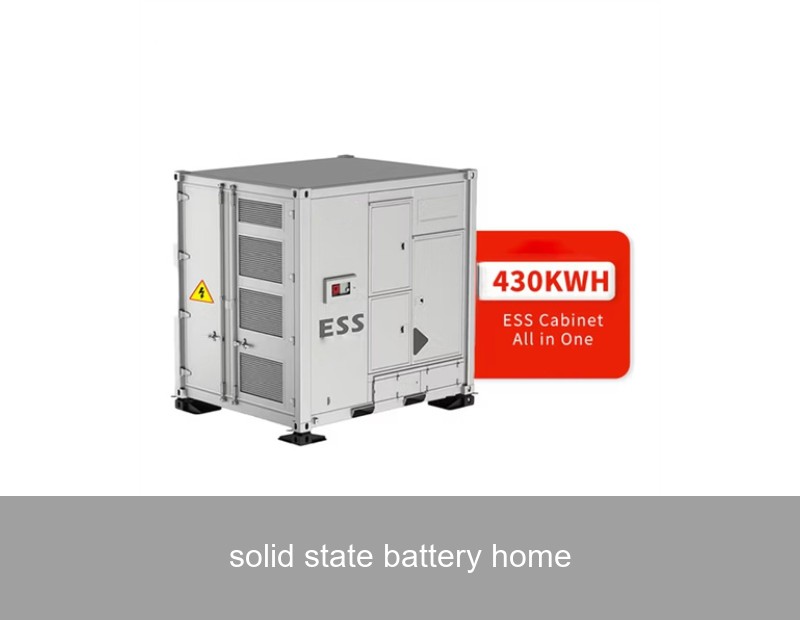
Imagine a home energy storage system so safe, so compact, and so long-lasting that it seamlessly integrates into your life, quietly powering your independence for decades. This isn't science fiction; it's the imminent reality of the solid state battery home. For homeowners in Europe and the US, the quest for true energy resilience and maximizing renewable investment is driving a significant technological shift. While lithium-ion batteries have been the workhorse of the residential storage revolution, a new, more robust contender is on the horizon. Let's explore what solid-state technology means for your home's energy future and how forward-thinking companies are preparing for this leap.
Table of Contents
The Current Standard and Its Limitations
Today, most home battery systems, like the popular Powerwall or other integrated solutions, rely on lithium-ion chemistry with liquid or gel electrolytes. They've been a game-changer, enabling solar self-consumption and backup power. However, as adoption soars, inherent challenges become more apparent. These include concerns about long-term degradation, thermal runaway risks (though rare), and performance limitations in extreme temperatures. The industry is constantly innovating within this framework, but many experts see solid-state technology as the true next step.
What is a Solid State Battery? The Core Innovation
At its heart, a solid-state battery replaces the flammable liquid electrolyte found in conventional lithium-ion batteries with a solid ceramic, glass, or polymer electrolyte. This fundamental change in internal architecture unlocks a cascade of performance improvements. Think of it as the difference between a water-filled pipe (liquid electrolyte, where dendrites—metallic whiskers—can grow and cause shorts) and a solid, impermeable metal pipe (solid electrolyte, which physically blocks dendrite formation).

Image Source: Unsplash (Representative image of advanced battery technology)
Key Benefits for Your Solid State Battery Home
So, why should you, as a homeowner, care about this lab technology? The projected advantages translate directly to real-world benefits for your energy system:
- Enhanced Safety: The removal of flammable liquid electrolyte dramatically reduces fire risk, a paramount concern for residential installations. This could simplify building codes and permit processes for home battery systems.
- Higher Energy Density: Solid-state batteries can potentially store significantly more energy in the same space. For a home, this means a physically smaller unit could provide the same or greater backup capacity, offering more installation flexibility.
- Longer Lifespan: With reduced degradation mechanisms (like dendrite growth), solid-state cells promise many more charge-discharge cycles. We're potentially looking at systems that could last the lifetime of your solar panels—30 years or more—without significant capacity loss.
- Wider Temperature Tolerance: They are expected to operate more efficiently in both cold and hot climates, a crucial factor for homes in Scandinavian winters or Arizona summers.
A Glimpse into the Future: The European Pilot Project
While fully commercial residential solid-state batteries are still emerging, significant pilots are underway. A notable example is a collaborative project in Germany, Baden-Württemberg. In 2023, a consortium including a major German research institute and an energy utility began deploying prototype solid-state battery systems in 50 single and multi-family homes. The goal is to test real-world performance over two years.
The Data Point: Early reports from the project indicate the prototype home units are achieving an impressive round-trip efficiency of over 92% at an ambient temperature of -10°C (14°F), where traditional lithium-ion systems often see a noticeable drop. Furthermore, the systems have maintained 99% of their initial capacity after the equivalent of 1,500 full cycles in accelerated testing. This data, while preliminary, points to the stability and resilience promised by the technology. You can read more about public funding for such energy storage research through the EU's Horizon Europe programme.
| Feature | Advanced Lithium-Ion (Current) | Solid-State (Projected) |
|---|---|---|
| Expected Lifespan (Cycles) | 6,000 - 10,000 | 15,000 - 20,000+ |
| Safety Profile | Good (with BMS*) | Excellent (inherently stable) |
| Energy Density | ~250-300 Wh/kg | ~400-500 Wh/kg (potential) |
| Cold Weather Performance | Moderate degradation | Minimal degradation |
*BMS: Battery Management System
Highjoule's Bridge to Your Future Solid State Battery Home
At Highjoule, with nearly two decades of experience as a global provider of intelligent storage solutions, we are actively monitoring and preparing for this technological transition. Our philosophy is to build systems today that are software-upgradable and modular, ensuring our customers are not left behind.
Our current Residential Harmony Series is designed with the future in mind. While utilizing the most robust and safe lithium-ion phosphate (LFP) chemistry available today, its modular architecture and advanced Adaptive Core BMS are being developed to potentially integrate future solid-state modules. We believe in an evolutionary, not revolutionary, path for our customers. Investing in a Highjoule system now means investing in a platform that prioritizes safety, efficiency, and longevity, principles that align perfectly with the promise of solid-state technology.
Furthermore, our work in the commercial and microgrid sectors, where we push the boundaries of battery diagnostics and grid interaction, directly informs our residential roadmap. The data we gather from thousands of deployed systems is invaluable for preparing the software and grid-response intelligence that will manage the even more powerful solid-state batteries of tomorrow. For deeper technical insights into battery evolution, resources like the National Renewable Energy Laboratory (NREL) provide excellent research.

Image Source: Unsplash (Representative image of a modern home with solar and storage)
What Should You Do Today? Considerations for the Forward-Thinking Homeowner
The arrival of mainstream solid-state home batteries is a matter of "when," not "if." However, the energy independence and savings from solar and storage are needed today. Here’s a practical approach:
- Don't Wait Indefinitely: The climate and economic benefits of installing solar + storage now are substantial. Current LFP-based systems are excellent, proven products.
- Choose a Future-Ready Partner: Select a provider whose system architecture acknowledges and plans for technological evolution. Ask about software update capabilities and hardware modularity.
- Prioritize Safety and Software: The core safety and intelligence of a system lie in its BMS and software. These are the brains that will manage any battery chemistry, now and in the future.
The journey to a fully optimized solid state battery home is a process. It begins with making an informed choice today for a system that offers resilience and paves the way for tomorrow's upgrades.
Your Home's Energy Future: A Question of Timing
As you contemplate taking control of your energy costs and carbon footprint, the technology landscape will continue to shift. The critical question isn't just "What battery should I buy?" but rather "Who is building the energy ecosystem that can evolve with my needs and the advancing technology over the next 25 years?" What aspect of future energy storage—be it ultimate safety, lifespan, or seamless grid integration—is most critical for your home's unique needs?
 Inquiry
 Online Chat