


Unlocking Solar Independence: A Deep Dive into Solar Charge Lithium Battery Systems
Have you ever watched your solar panels working hard under the midday sun and wondered, "Where does all that extra energy go?" For many homeowners and businesses across Europe and the US, the answer, unfortunately, is back to the grid, often for minimal compensation. This common scenario highlights a critical gap in the renewable energy journey. The true power of a solar installation isn't fully realized until it's paired with an intelligent storage solution. This is where the solar charge lithium battery becomes the game-changer, transforming solar from a supplemental power source into a robust, independent energy system. As a leader in advanced energy storage, Highjoule has been at the forefront of this evolution since 2005, designing smart battery systems that seamlessly capture, store, and dispatch solar energy exactly when you need it.
Table of Contents
The Challenge: Wasted Sunlight and Grid Dependency
The typical energy curve of a solar-powered home tells a clear story. Energy production peaks when the sun is highest, often coinciding with times when households are empty. Consumption, however, spikes in the early morning and evening. This mismatch means a significant portion of your self-generated, clean energy is exported. With net metering policies becoming less favorable in many regions, like parts of California and several European countries, the financial return on exporting energy is shrinking. You become dependent on the grid precisely when you need power most, often paying peak rates. A solar charge lithium battery system directly addresses this by shifting your solar energy in time, turning your daytime surplus into your evening power supply.

Image: A modern home solar and battery storage setup. Source: Unsplash (Representative image)
The Lithium Solution: Why Chemistry Matters
Not all batteries are created equal for solar storage. While lead-acid was once the standard, lithium-ion technology, specifically Lithium Iron Phosphate (LFP), has become the unequivocal choice for modern solar charge lithium battery systems. Here’s why:
- Higher Depth of Discharge (DoD): You can safely use 90-95% of an LFP battery's capacity without damaging it, compared to about 50% for lead-acid. This means you get nearly double the usable energy from a similarly rated battery.
- Longer Lifespan: LFP chemistry offers significantly more charge cycles. A quality LFP battery can last over 6,000 cycles while maintaining high capacity, often translating to 15+ years of daily use.
- Enhanced Safety: LFP is inherently more stable and less prone to thermal runaway, a critical factor for indoor residential installations. It's a safer chemistry, as noted by research from institutions like the U.S. Department of Energy.
- Compact Size & Weight: Higher energy density means more power in a smaller, lighter package, simplifying installation.
| Feature | Lithium Iron Phosphate (LFP) | Traditional Lead-Acid |
|---|---|---|
| Typical Depth of Discharge | 90-95% | ~50% |
| Cycle Life (to 80% capacity) | 6,000+ | 1,000-1,500 |
| Energy Density | High | Low |
| Maintenance | Virtually None | Regular required |
Beyond Storage: The Intelligence of Solar Charging
The magic of a modern system isn't just in the battery cells; it's in the brain. A sophisticated Battery Management System (BMS) and inverter are what transform a simple battery into an intelligent solar charge lithium battery system. This intelligence manages:
- Optimal Charging: It precisely controls the charge from your solar panels, ensuring the battery is charged at the ideal voltage and current to maximize lifespan and efficiency.
- Load Management: The system can prioritize powering critical home circuits during a grid outage, ensuring your refrigerator, lights, and medical equipment stay on.
- Grid Interaction: Advanced systems can be programmed to charge from the grid during off-peak, low-cost periods (if allowed) and discharge during expensive peak times, a strategy known as arbitrage.
This is where Highjoule's expertise shines. Our H-series residential storage systems are built on LFP chemistry and governed by our proprietary Adaptive Charge OS. This software doesn't just react; it learns your energy patterns and forecasts weather to make predictive decisions, ensuring your stored solar energy is allocated in the most economical and practical way possible.
Real-World Impact: A Case Study from California
Let's move from theory to practice. Consider the Johnson family in Sacramento, California. Facing frequent Public Safety Power Shutoffs (PSPS) and tiered electricity rates, they installed a 10 kW solar array paired with a 13.5 kWh Highjoule H2 battery system in early 2022.
The Phenomenon: High solar export in the afternoon, zero solar production at night, and unreliable grid power during fire season.
- Solar Self-Consumption Rate Increased: From 35% to 82%.
- Grid Import Reduced: By 94% during peak rate periods (4 PM - 9 PM).
- Outage Protection: The system provided seamless backup power during 7 grid outages, totaling 42 hours, with the home experiencing no interruption.
- Financial Impact: Their annual electricity bill decreased from an average of $2,200 to a net credit of $150, despite increased air conditioning use.
The Insight: For the Johnsons, the solar charge lithium battery system wasn't just an upgrade; it was a transformation of their relationship with energy. It provided financial predictability, energy security, and resilience—a value proposition that extends far beyond simple payback period calculations.

Image: Visualization of energy flow between solar, battery, home, and grid. Source: Unsplash (Representative image)
The Highjoule Approach: Integrated, Intelligent Storage
At Highjoule, we believe storage should be seamless, scalable, and smart. Our product philosophy for both residential and commercial applications is built on three pillars:
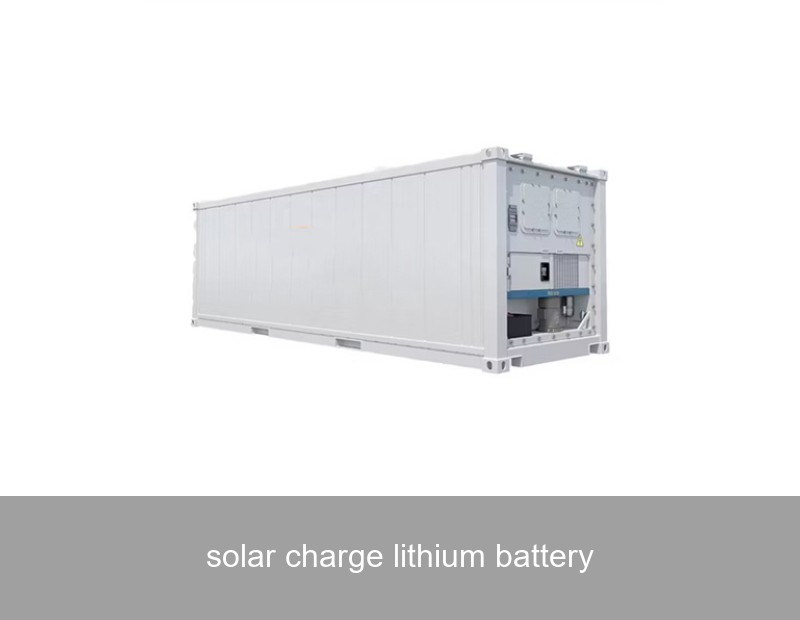
- System Integration: Our storage solutions are designed to work harmoniously with leading solar inverter brands, but we also offer fully integrated AC-coupled and DC-coupled systems for optimal performance. For commercial and microgrid applications, our containerized MegaJoule systems provide utility-scale storage in a modular, deployable format.
- Technology Depth: We focus on LFP chemistry for its safety and longevity. Our multi-layer BMS provides cell-level monitoring and active balancing, which is the key to unlocking the battery's full cycle life.
- Energy Intelligence: The Highjoule Energy Hub app gives users complete visibility and control. You can set modes like "Maximize Self-Consumption," "Backup Reserve," or "Time-Based Control" to automatically optimize for your goals, whether it's savings, sustainability, or security.
Our services extend beyond the hardware. We provide comprehensive energy assessments, system design support, and a global network of certified installers to ensure your solar charge lithium battery system delivers on its promise for decades.
Is Your Home Ready for True Energy Independence?
The transition to renewable energy is accelerating, but grid infrastructure and policies are struggling to keep pace. This creates both a challenge and an opportunity for energy consumers. The combination of solar panels and a high-performance lithium battery system is no longer a luxury; it's a strategic move towards resilience and cost control.
What would it mean for you to have power during the next grid outage, to substantially reduce your peak-demand charges, or to finally use the majority of the clean energy your roof produces? The technology is here, proven, and more accessible than ever.
We invite you to explore what a tailored energy storage solution could look like for your home or business. What is the one electrical circuit or appliance you absolutely need to keep running, no matter what?
 Inquiry
 Online Chat