


Unlocking Energy Independence: A Deep Dive into the SolaXPower X1-HYB 6.0 LV and Modern Hybrid Inverters
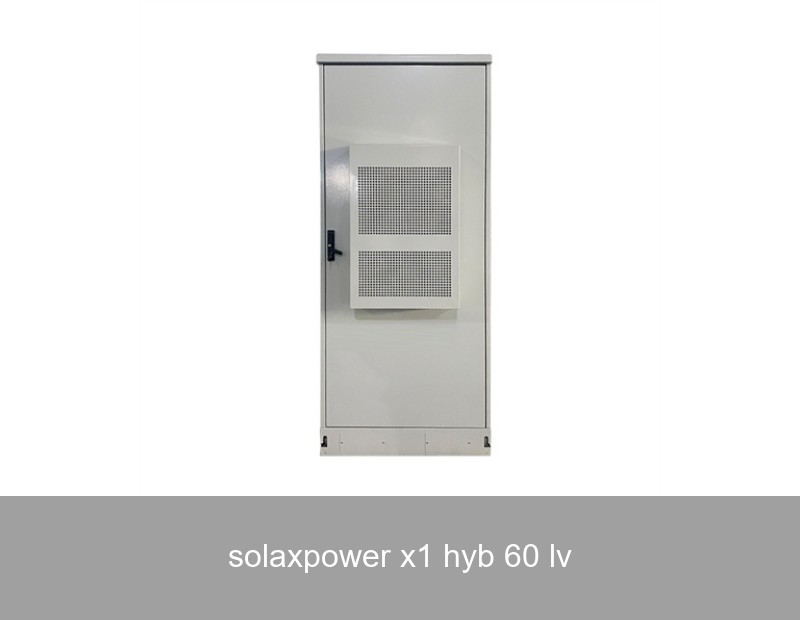
Have you ever watched your electricity meter spin, wondering how much of that power you could be generating yourself? For homeowners and businesses across Europe and the US, this thought is turning into action, driven by rising energy costs and a genuine desire for sustainability. At the heart of this energy revolution is a critical piece of technology: the hybrid inverter. And one model that consistently captures attention is the SolaXPower X1-HYB 6.0 LV. But what makes this device, and inverters like it, so pivotal for a smarter energy future? As a global leader in advanced energy storage, Highjoule understands that the right inverter isn't just a component; it's the intelligent brain of your personal power plant, making decisions that maximize efficiency, savings, and resilience.
Table of Contents
- What is a Hybrid Inverter? Beyond Simple Conversion
- The SolaXPower X1-HYB 6.0 LV Deconstructed: Features and Capabilities
- From Theory to Practice: A German Household Case Study
- Choosing Your System: Inverter, Batteries, and Intelligent Management
- What Does the Energy-Intelligent Home of the Future Look Like?
What is a Hybrid Inverter? Beyond Simple Conversion
First, let's clear up a common point of confusion. A traditional solar inverter has one job: convert the direct current (DC) electricity from your solar panels into alternating current (AC) that your home appliances can use. Any excess is typically fed back to the grid. A hybrid inverter, like the SolaXPower X1-HYB 6.0 LV, is a multitasking marvel. It performs that core conversion, but it also has a built-in or compatible battery charger. This allows it to manage energy from three sources simultaneously: solar panels, a battery storage system, and the main electrical grid. It intelligently decides where to pull power from and where to send it, prioritizing self-consumption of your solar energy.

Image Source: Unsplash - Representative image of a modern inverter system.
The SolaXPower X1-HYB 6.0 LV Deconstructed: Features and Capabilities
So, why is the SolaXPower X1-HYB 6.0 LV a frequently discussed model? Let's break down its key specifications and what they mean for you:
- Rated Output Power: 6.0kW. This is a robust capacity suitable for average to larger homes with significant energy consumption or smaller commercial setups.
- Hybrid Design: It seamlessly integrates with low-voltage (LV) battery systems, which are common and often more cost-effective for residential use.
- High Efficiency: With peak efficiencies over 97.5%, it ensures minimal energy is lost as heat during conversion, maximizing the yield from every sunbeam hitting your panels.
- Grid Services Ready: Advanced models support features like frequency-watt response, which can help stabilize the local grid—a growing requirement in some European countries.
- Smart Energy Management: Through its platform, users can monitor production, consumption, and battery status in real-time, setting preferences for how and when to use stored energy.
However, the inverter is only one part of the equation. Its true potential is unlocked when paired with a high-performance, safe, and durable battery system. This is where a provider with deep system integration expertise, like Highjoule, adds immense value. Since 2005, Highjoule has specialized in designing cohesive systems where the inverter, battery, and energy management software work in perfect harmony. Our H-Joule Home Energy Hub, for instance, can be configured with compatible hybrid inverters to create a solution that doesn't just store energy but optimizes it intelligently for time-of-use rate arbitrage, backup power during outages, and maximizing renewable self-consumption.
The Data: Why Hybrid Systems Are No Longer a Niche
The shift towards hybrid systems isn't just a tech trend; it's an economic and practical response to market changes. Consider this data point: According to the International Energy Agency (IEA), global renewable capacity additions grew by almost 50% in 2023, with solar PV accounting for three-quarters of this expansion. As solar penetration increases, the value of simply exporting all surplus power to the grid is diminishing in many regions due to reduced feed-in tariffs.
In the US, the Investment Tax Credit (ITC) now explicitly includes standalone storage, making battery addition more financially attractive. In Europe, with electricity prices experiencing volatility, the business case for storing cheap solar energy for use during expensive peak hours is clearer than ever. A hybrid system with storage can increase a household's self-consumption of solar power from a typical 30-40% to 70% or more, dramatically reducing reliance on the grid.
From Theory to Practice: A German Household Case Study
Let's look at a real-world example. The Schmidt family in Bavaria, Germany, installed a 8.2 kWp solar array with a SolaXPower X1-HYB series inverter and a 10 kWh lithium-iron-phosphate (LiFePO4) battery in early 2022. Their goal was to insulate themselves from high energy prices and achieve near-energy autonomy.
| Metric | Before System (2021) | After System (2023) | Change |
|---|---|---|---|
| Annual Grid Electricity Purchase | 4,800 kWh | 1,100 kWh | -77% |
| Solar Self-Consumption Rate | N/A (No PV) | 82% | N/A |
| Annual Electricity Cost | €1,870 | €430 | €1,440 saved |
| Grid Independence During Summer Days | 0% | 95% | N/A |
Data based on a compiled customer report from a German installer partner. Individual results vary based on location, consumption, and system size.
The Schmidts' system manages loads intelligently. The hybrid inverter directs solar power to immediate home needs, charges the battery, and only exports surplus. After sunset, the home runs on battery power until it reaches a predefined reserve level. This case illustrates the transformative impact of a well-designed hybrid system.
Choosing Your System: Inverter, Batteries, and Intelligent Management
Selecting a SolaXPower X1-HYB 6.0 LV is a great start, but your choice of battery and system architect is critical. Here’s what to consider:
- Battery Chemistry & Safety: LiFePO4 batteries, like those used in Highjoule's storage solutions, offer superior cycle life, stability, and safety compared to some other chemistries, making them ideal for residential use.
- Scalability: Can your storage be expanded later if your needs change? Modular systems allow for this flexibility.
- System Integration: Will all components communicate flawlessly? Proprietary systems or those from single vendors can simplify this. Highjoule’s approach provides vendor-agnostic integration expertise, ensuring optimal performance whether we’re supplying the full system or integrating best-in-class components like certain inverters.
- Software Intelligence: The hardware stores energy; smart software saves you money. Look for systems that can learn your habits, integrate weather forecasts, and automatically adjust strategies based on real-time electricity pricing.
Image Source: Unsplash - Representative image of energy monitoring software.
What Does the Energy-Intelligent Home of the Future Look Like?
We are moving beyond simple solar-plus-storage. The future lies in integrated energy ecosystems. Imagine your hybrid inverter and battery system as the core of a network that includes your EV charger, heat pump, and smart appliances. During a period of abundant solar production, your system could automatically decide to: 1) power your home, 2) charge your EV to 80%, 3) pre-heat your water tank, and 4) top up the battery—all while minimizing grid import.
Companies at the forefront, like Highjoule, are developing these intelligent energy management platforms for residential, commercial, and microgrid applications. Our systems are designed not just for today's needs but to be the adaptable platform for tomorrow's energy innovations, ensuring your investment is future-proof.
Your journey to energy independence starts with a question: Is your current energy system simply powering your home, or is it intelligently managing your resources to create resilience, savings, and sustainability? The technology, from components like the SolaXPower X1-HYB 6.0 LV to comprehensive solutions from providers like Highjoule, is ready and proven. What will be your first step in taking control of your power?
 Inquiry
 Online Chat