


Finding the Right Solar Supplier in the Philippines: Your Guide to Energy Resilience
You're likely here because you, like many forward-thinking business owners, community leaders, or homeowners in the Philippines, see the immense potential of solar power. The math seems obvious: abundant sunshine, rising electricity costs from the grid, and a growing desire for energy independence. But the journey from seeing that potential to enjoying reliable, clean power involves a crucial decision—selecting the right solar supplier in the Philippines. This isn't just about buying panels; it's about partnering for a resilient energy future.
The Sunshine Opportunity (and Challenge)
The Philippines is blessed with a solar energy potential of about 5 kWh/m² per day, among the highest in Southeast Asia. Yet, the country's energy mix remains heavily reliant on imported fossil fuels, leading to volatile and some of the highest electricity rates in the region. For industries, this is a direct hit to operational costs. For households, it's a constant budget strain.
This volatility creates a powerful driver for solar adoption. However, simply installing photovoltaic (PV) panels only solves part of the equation. The real challenge lies in the intermittency of solar power—what happens when the sun isn't shining, during typhoons, or at night? This is where the role of a sophisticated solar supplier in the Philippines evolves from panel provider to energy solutions architect.

Image: A commercial solar installation in the Philippines. Source: Unsplash (Representative Image)
Beyond Panels: The System View for Reliable Solar
A true energy solution requires a system-level approach. Think of it as a symphony, not a solo instrument. The key components are:
- Solar PV Panels: The primary energy harvesters.
- Inverters: The brains, converting DC solar power to usable AC power.
- Battery Energy Storage System (BESS): The heart of resilience, storing excess energy for use anytime.
- Energy Management System (EMS): The conductor, intelligently optimizing energy flow between solar, battery, grid, and loads.
Without a BESS, a solar system is limited. You export excess daytime power to the grid (often at low rates) and draw expensive power at night. With a high-performance BESS, you maximize self-consumption, provide backup power during outages, and can even participate in future grid services. According to a 2022 IEA report, coupling solar PV with storage is critical for unlocking its full value, especially in island grids and areas with unreliable infrastructure.
Case Study: A Mindanao Agro-Industrial Plant's Journey to Energy Independence
Consider a real-world example: a large fruit processing plant in Mindanao. Facing frequent grid instability and a monthly peak demand charge of over 2,000,000 PHP, their goal was to reduce costs and ensure uninterrupted cold storage operations.
Their chosen solar supplier in the Philippines designed a hybrid system featuring:
- 500 kWp of rooftop solar PV.
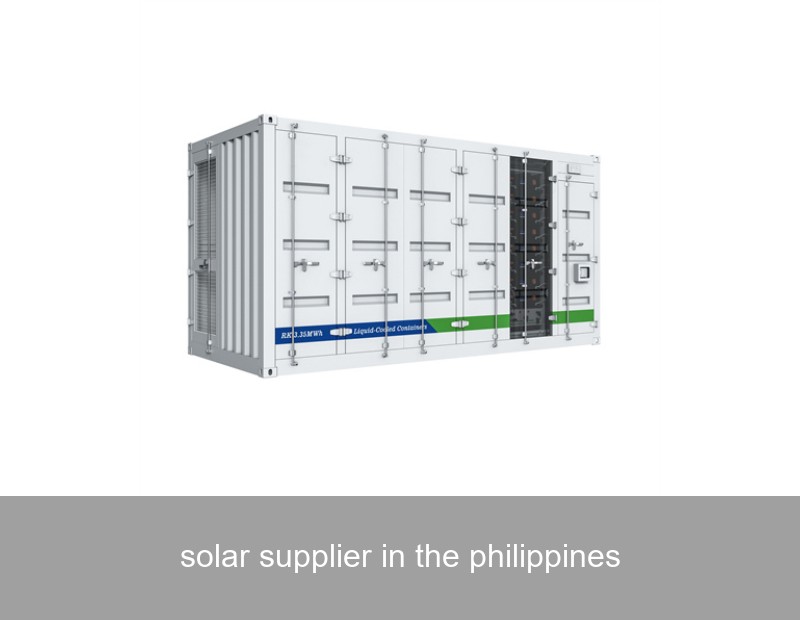
- A 1 MWh containerized Battery Energy Storage System (BESS) with advanced lithium-iron-phosphate (LFP) chemistry.
- A sophisticated EMS for peak shaving and intelligent dispatch.
| Metric | Before System | After System (12 Months) |
|---|---|---|
| Grid Electricity Cost | ~8.5 PHP/kWh average | ~5.2 PHP/kWh average |
| Peak Demand from Grid | 850 kW | 550 kW (35% reduction) |
| Production Halt Due to Outages | 15-20 hours/month | 0 hours/month (critical loads) |
| Estimated Payback Period | N/A | 5.2 years |
This case underscores that the right partnership goes beyond equipment supply—it's about delivering measurable financial and operational resilience.
Choosing the Right Solar Supplier in the Philippines
So, what should you look for in a solar supplier in the Philippines?
- System Integration Expertise: Can they seamlessly integrate panels, inverters, and most importantly, storage?
- Technology Agnosticism: Do they offer best-in-class components tailored to your needs, rather than pushing a single brand?
- Local Support & Warranty: Do they have a strong local presence for installation, maintenance, and honoring warranties?
- Financial Modeling: Can they provide clear, data-backed ROI and payback analyses?
- Proven Track Record: Ask for case studies, especially in your sector (commercial, industrial, residential, microgrid).
How Highjoule Empowers Solar Suppliers and End-Users
As a global leader in advanced energy storage solutions since 2005, Highjoule partners with top-tier solar suppliers in the Philippines to elevate what's possible. We don't sell directly to end-users; instead, we empower your local supplier with the technology and expertise to deliver superior systems.
Highjoule's IntelliBESS product line is engineered for the Philippine climate and grid challenges:
- Robust & Safe: Our LFP battery racks are built for high-temperature environments and come with a multi-layer safety design.
- Intelligent by Design: The integrated EMS uses AI-driven algorithms for optimal charging/discharging, extending battery life and maximizing savings.
- Scalable & Modular: From 50 kWh to multi-MWh installations, systems can be scaled as your energy needs grow.
- Grid-Interactive: Ready for future applications like frequency regulation, helping to stabilize the local grid.
By choosing a solar partner equipped with Highjoule technology, you're not just getting a battery; you're getting a decade of global storage expertise embedded into your local energy system.

Image: An engineer monitoring a containerized BESS unit. Source: Unsplash (Representative Image)
The Future of Solar in the Philippines: Smarter and More Resilient
The landscape is moving towards intelligent, decentralized energy networks. The Philippines Department of Energy actively promotes renewable energy and green energy auctions. The next step is virtual power plants (VPPs), where thousands of distributed solar-plus-storage systems can be aggregated to act as a single, controllable power resource. This creates new revenue streams for system owners.
The question is no longer if you should go solar, but how smart and resilient your system should be. Will your chosen solution merely lower today's bill, or will it position you as a leader in the energy landscape of tomorrow?
When you next consult with a solar supplier in the Philippines, what will be your first question to assess their capability in delivering true energy independence?
 Inquiry
 Online Chat