


Understanding the Complete Solar Panel System: More Than Just Panels on Your Roof
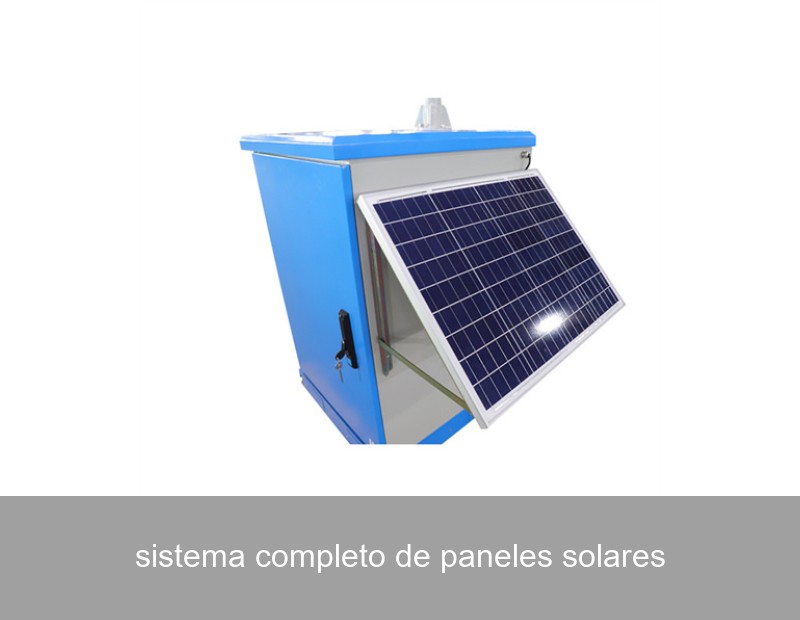
When you think of going solar, the image that likely springs to mind is a row of sleek panels on a rooftop. But here's a crucial insight: those panels are just one part of a sophisticated energy ecosystem. A true, effective sistema completo de paneles solares (complete solar panel system) is an integrated solution designed to capture, manage, and utilize solar energy efficiently and reliably. For homeowners and businesses across Europe and the U.S., understanding this holistic approach is the key to unlocking true energy independence and maximizing return on investment.
Table of Contents
- The Phenomenon: From Simple Panels to Intelligent Systems
- Core Components of a Complete Solar System
- The Data Advantage: Why Integration Matters
- Case Study: A Spanish Winery's Sustainable Transformation
- The Highjoule Difference: Intelligent Energy Management
The Phenomenon: From Simple Panels to Intelligent Systems
The solar industry has evolved dramatically. A decade ago, an installation often meant bolting panels to your roof and sending excess power back to the grid. Today, the conversation has shifted. With rising electricity prices, increased grid instability in some regions, and a stronger drive for self-sufficiency, people are seeking solutions that do more. The modern goal isn't just to generate solar power; it's to control it completely. This requires a system where all components—generation, storage, conversion, and management—are designed to work in perfect harmony. This seamless integration is what defines a genuine sistema completo de paneles solares.
Credit: Unsplash - A modern solar and storage installation
Core Components of a Complete Solar System
Let's break down the essential elements that move a setup from "partial" to "complete":
- Solar Panels (PV Modules): The visible face of the system, converting sunlight into direct current (DC) electricity.
- Inverter(s): The brain of the power conversion. It transforms the DC electricity from the panels into usable alternating current (AC) for your home or business. Modern systems often use sophisticated hybrid inverters or a combination of string and microinverters.
- Battery Energy Storage System (BESS): This is the game-changer. Storage allows you to capture excess solar energy produced during the day for use at night, during peak tariff periods, or during a grid outage. It's the cornerstone of true energy independence.
- Energy Management System (EMS): The intelligent command center. This software-based system monitors energy production, consumption, storage levels, and grid conditions. It automates energy flow to optimize for self-consumption, cost savings, or backup readiness.
- Mounting & Racking: The physical foundation that securely attaches the panels to your roof or ground, designed for durability and longevity.
- Monitoring Platform: A user-friendly app or portal that gives you real-time and historical insights into your system's performance, energy savings, and environmental impact.
| System Type | Key Components | Primary Benefit | Limitation |
|---|---|---|---|
| Grid-Tied Only | Panels, Basic Inverter | Lower upfront cost, reduces bills | No power during grid outages |
| Complete System (Grid-Hybrid) | Panels, Hybrid Inverter, Battery, EMS | Backup power, max self-use, bill management | Higher initial investment |
| Off-Grid | Panels, Inverter, Large Battery Bank, Often a Generator | Full energy independence | Most expensive, requires careful sizing |
The Data Advantage: Why Integration Matters
The synergy between components creates a value far greater than the sum of its parts. According to data from the National Renewable Energy Laboratory (NREL), pairing solar with storage can increase the self-consumption of solar electricity from a typical 30-50% to over 80-90% for a household. This directly translates to higher savings and a faster payback period. Furthermore, integrated systems with smart management can provide grid services, potentially creating new revenue streams in some markets. The key is that the inverter, battery, and management software are not just compatible, but co-engineered to communicate flawlessly. Mismatched components from different vendors can lead to efficiency losses, communication errors, and a fragmented user experience.
Case Study: A Spanish Winery's Sustainable Transformation
Consider the real-world example of Bodegas Valdelosfrailes, a winery in Castilla y León, Spain. Their challenge was twofold: reduce significant energy costs from cooling and production processes, and ensure an uninterrupted power supply critical for temperature-controlled fermentation and storage.
They installed a sistema completo de paneles solares featuring a 250 kWp solar array coupled with a 500 kWh battery energy storage system, all managed by an advanced energy management platform. The results, monitored over a full year, were compelling:
- Energy Self-Sufficiency: The system covers over 85% of the winery's annual electricity demand.
- Cost Savings: Achieved a reduction of approximately €52,000 in annual energy costs.
- Reliability: The battery system provides seamless backup power during grid fluctuations, protecting sensitive winemaking equipment.
- Sustainability: Reduced their carbon footprint by an estimated 120 tons of CO2 annually.
This case illustrates how a complete, industrial-scale system solves economic and operational challenges simultaneously, a principle that scales down to residential applications as well.

Credit: Unsplash - Agrivoltaics in a vineyard setting
The Highjoule Difference: Intelligent Energy Management
This is where Highjoule's expertise becomes pivotal. Since 2005, we have moved beyond being just a component provider to becoming a solutions architect for intelligent energy ecosystems. Our approach to a sistema completo de paneles solares is built on the principle of deep integration.
Our flagship product, the Highjoule H-Series Integrated Storage System, embodies this philosophy. It's not just a battery in a box. It's a pre-integrated unit combining a high-efficiency hybrid inverter, lithium-iron-phosphate (LiFePO4) battery modules, and our proprietary Neuron Energy Management OS all in one compact, scalable enclosure. For the homeowner or business owner, this means:
- Simplified Design & Installation: One engineered solution reduces complexity and installation time.
- Optimized Performance: Our Neuron OS makes millions of data-driven decisions per day, deciding when to store, when to consume, and when to export based on weather forecasts, usage patterns, and tariff rates.
- Unmatched Reliability: Co-engineered components ensure flawless communication and robust performance, backed by a single warranty and support team.
- Scalability: Systems can be easily expanded by adding battery modules as energy needs grow.
We provide these tailored solutions for residential, commercial, and microgrid applications, ensuring that whether you're a family in California or a factory in Germany, your complete solar system operates at its peak potential.
What to Look for in a Provider
Choosing a partner for your complete system is as important as choosing the components. Seek a provider with:
- Proven System Integration: Ask for evidence of their own co-engineered products, not just third-party bundling.
- Advanced Software: The management platform should offer intelligent automation, not just basic monitoring.
- Local Support & Warranty: Ensure they have a strong presence and service network in your region (like Highjoule's across Europe and North America).
- Financial Transparency: A reputable provider will offer a detailed performance and savings analysis based on your specific data.
Making the Right Choice for Your Complete System
The journey to energy independence is exciting, but it requires careful navigation. Start by auditing your energy consumption patterns—your utility bills are a great source. Understand your motivations: Is it purely financial savings, backup resilience, or environmental impact? Consult with experts who can model different scenarios for you.
Remember, the solar landscape is rich with information. Organizations like the Solar Energy Industries Association (SEIA) provide excellent consumer resources. The most important step is to think in terms of a system, not just panels.
Given your specific energy goals and local conditions, what would be the one feature of an energy management system that would make your daily life noticeably easier?
 Inquiry
 Online Chat